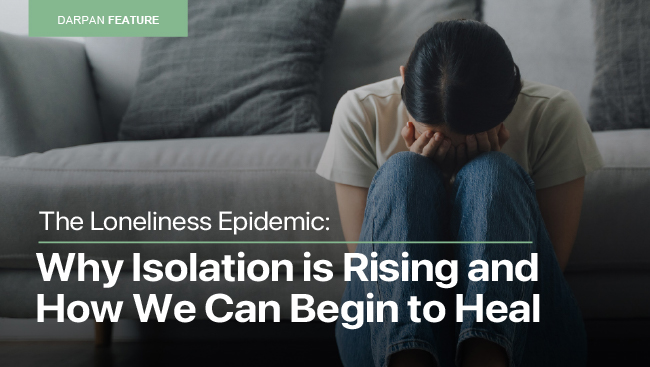
Loneliness has become one of the most pervasive public-health challenges of our time. Across age groups, cultures, and communities, people are reporting deeper disconnection, shrinking social circles, and a sense of unfamiliar emotional distance in their daily lives.
While loneliness isn’t new, counsellors, mental health practitioners, and community storytellers agree that the texture of it is changing. Perhaps, for the first time, people are naming it out loud.
Priya Gill, MCP, RCC, and certified EMDR therapist, has seen the shift firsthand. “COVID was a period of isolation that brought up things people had suppressed,” she explains. “We kept busy seeing friends and going out, but when that wasn’t possible anymore, a lot emerged.” The pandemic acted like a mirror, reflecting back wounds, unresolved identity questions, and emotional realities we could once distract ourselves from. Many never reassembled the social networks they had before, and as Gill notes, “People lost touch with their friends, and social circles became a little smaller.”
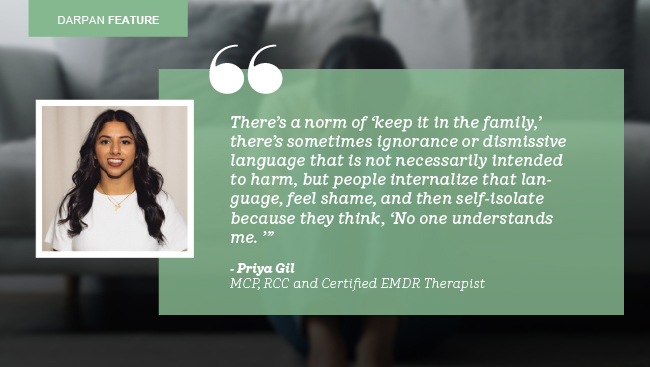
However, the rise in loneliness also opened new conversations about mental health, particularly in immigrant communities where emotional expression can be culturally complicated. “There’s a norm of ‘keep it in the family,’” Gill highlights. “There’s sometimes ignorance or dismissive language that is not necessarily intended to harm, but people internalize that language, feel shame, and then self-isolate because they think, ‘No one understands me.’” For many, loneliness isn’t the absence of people, but the feeling of being unseen.
Vijay S. Mann, MA, RCC, sees technology, economic pressures, and shifting cultural identity as major drivers of today’s loneliness. “Technology use is a significant factor,” he shares. “The overuse of digital and social media, especially among young people, reduces real-life interactions and deepens feelings of isolation.” He also points to financial realities tightening around many Canadians, “Economic challenges compound these issues. Low-wage workers and people in distressed areas experience higher loneliness because of limited social mobility and access to community resources.”
On a structural level, Mann believes modern Western values also play a role. “Individualism weakens communal bonds,” he reveals. “Profit-oriented social structures undermine community connection in lieu of individual success.” This affects South Asian communities uniquely, where belonging has long been tied to collectivism. Youth often straddle a divide: Am I South Asian enough for my family? Am I too South Asian for Canadian society? These identity conflicts can create inner loneliness even in crowded households.
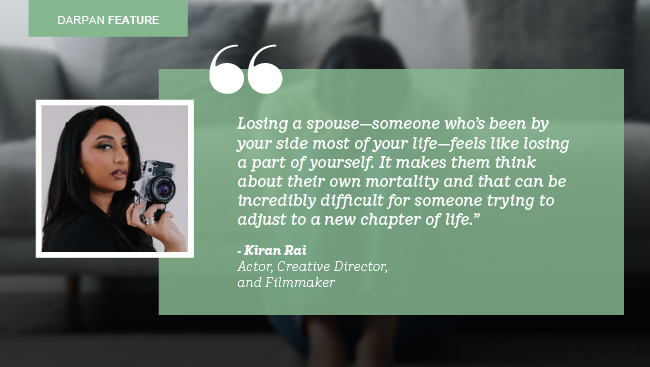
That said, loneliness is not exclusive to the younger generation. The experience has profound consequences for elders, too. Actor, Creative Director, and Filmmaker Kiran Rai has sought to spotlight elder loneliness in her short film Time, which follows the intimate emotional life of an elderly widow, Surjit. “So many elders in our community grew up in a communal lifestyle,” Rai points out. “Losing a spouse—someone who’s been by your side most of your life—feels like losing a part of yourself.” In many such cases, siblings and friends have passed on, mobility decreases, and adult children are busy navigating their own lives. “It makes them think about their own mortality,” she describes. “And that can be incredibly difficult for someone trying to adjust to a new chapter of life.”
Despite different manifestations of loneliness, the underlying longing is the same: to be understood, to be supported, to belong somewhere. So, how do we begin to mend the disconnect?
Gill emphasizes the power of presence: “If someone opens up to you, try not to see it as something that needs to be fixed,” she advises. “Practice being present. Ask, ‘How can I support you in this moment?’ Sometimes that’s what listening is. Sometimes it’s inviting them for a walk or even just sitting on the couch together.” Gill’s gentle prompt: “Join that group. Try that class. Explore cultural, religious, wellness, or hobby-based communities. Find people who share your values.”
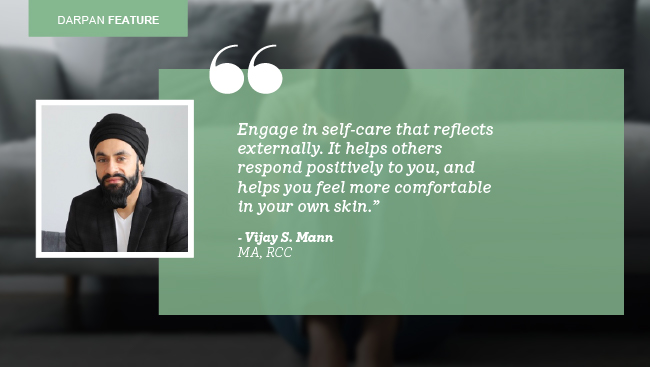
Mann offers concrete steps for rebuilding connection: “Get out of your comfort zone and engage with others. Visit family and friends. Put down your phone. Find commonalities with people.” As per his experience, vulnerability deepens connection, but so does confidence. Mann suggests, “Engage in self-care that reflects externally. It helps others respond positively to you, and helps you feel more comfortable in your own skin.” He also reminds us of something timeless: “Help those in need. Volunteering and seva (selfless service) are powerful ways to connect.”
Rai hopes her film is a reminder that empathy is a practice. “We want people to look at the elders in their life and engage in conversation,” she encourages. “Ask them about their childhood, challenges, likes, and dislikes. Document their stories.” She urges families to help elders find community, whether at local senior centers or cultural programs. “Ultimately,” she adds, “all they want and deserve is support and connection.”
Surely, the loneliness epidemic is real, but it is not irreversible. What emerges from these conversations is a blueprint not just for reducing isolation, but for rebuilding a culture of care. It asks us to be present enough to both initiate and receive; be brave enough to reach out and humble enough to reach back.