Wednesday, December 31, 2025
ADVT 
Health

'Tickle' your ears for a super heart

Darpan News Desk IANS, 20 Aug, 2014 08:02 AM
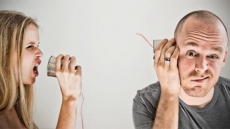
    How often do you want to kill that itchy feeling in your ears? Well if we believe researchers, tickling your ears can actually improve the health of your heart!
     
    When they applied electrical pulses to the tragus - the small raised flap at the front of the ear immediately in front of the ear canal - they found that the stimulation changed the influence of the nervous system on the heart by reducing the nervous signals that can drive failing hearts too hard.
     
    The technique works by stimulating a major nerve called the vagus that has an important role in regulating vital organs such as the heart.
     
    The researchers applied electrodes to the ears of 34 healthy people and switched on the standard TENS (Transcutaneous electrical nerve stimulation) machines for 15-minute sessions.
     
    They monitored the variability of subjects' heartbeats and the activity of the part of the nervous system that drives the heart.
     
    "The first positive effect we observed was increased variability in subjects' heartbeats. We found that when you stimulate this nerve, you get about a 20 percent increase in heart rate variability," said lead researcher Jennifer Clancy from University of Leeds' school of biomedical sciences.
     
    "You feel a bit of a tickling sensation in your ear when the TENS machine is on but it is painless. It does have the potential to improve the health of the heart and might even become part of the treatment for heart failure," claimed Jim Deuchars, a professor of systems neuroscience at University of Leeds.
     
    The second positive effect was in suppressing the sympathetic nervous system, which drives heart activity using adrenaline.
     
    "We measured the nerve activity directly and found that it reduced by about 50 percent when we stimulated the ear. This is important because if you have heart disease or heart failure, you tend to have increased sympathetic activity," Clancy explained.
     
    A lot of treatments for heart failure try to stop that sympathetic activity - beta-blockers, for instance, block the action of the hormones that implement these signals.
     
    "Using the TENS, we saw a reduction of the nervous activity itself," researchers noted.

    MORE Health ARTICLES

    Eat leafy vegetables to reset biological clock

    Eat leafy vegetables to reset biological clock
    Lipoic acid, found at higher levels in organ meats and leafy vegetables such as spinach and broccoli, may help reset and synchronise circadian rhythms or the "biological clock" found in most life forms, says a study.

    Eat leafy vegetables to reset biological clock

    Divorce can lead to high blood pressure

    Divorce can lead to high blood pressure
    Just had a divorce and facing persistent sleep problems? Check your blood pressure as you may be at the risk of potentially harmful increase in blood pressure, says a study.

    Divorce can lead to high blood pressure

    True happiness lies in your DNA

    True happiness lies in your DNA
    Looking for eternal happiness? Try to match the DNA of Danish people.

    True happiness lies in your DNA

    Statins may increase life of diabetics: Study

    Statins may increase life of diabetics: Study
    The use of cholesterol-lowering statins may help prolong the lives of people with diabetic cardiovascular disease, says a new research.

    Statins may increase life of diabetics: Study

    Influenza patients in US wrongly prescribed antibiotics?

    Influenza patients in US wrongly prescribed antibiotics?
    Taking antibiotics does not help patients suffering from influenza, a viral disease, but nearly 30 percent of the flu patients who were treated during the 2012-2013 influenza season in the US may have been prescribed unnecessary antibiotics instead of antiviral therapy, says a study.

    Influenza patients in US wrongly prescribed antibiotics?

    Food strikes obese women with learning impairment

    Food strikes obese women with learning impairment
    In what could result in specific behavioural interventions to treat obesity, researchers have found that obese women are better able to identify cues that predict monetary rewards than those that predict food rewards.

    Food strikes obese women with learning impairment