Tuesday, December 23, 2025
ADVT 
Health

Tiny needles hold promise for two key eye diseases

Darpan News Desk IANS, 14 Nov, 2014 11:11 AM
    Needles too tiny to be seen with naked eyes can soon deliver drugs to specific areas relevant to two of the world's leading eye diseases - glaucoma and corneal neovascularisation, researchers report.
     
    By targeting the drugs only to specific parts of the eye instead of the entire eye, researchers hope to increase effectiveness, limit side effects and reduce the amount of drug needed.
     
    “We are developing different microneedle-based systems that can put the drug precisely into the part of the eye where it is needed. In many cases, we hope to couple that delivery with a controlled-release formulation that would allow one application to treat a condition for weeks or months,” explained Mark Prausnitz, a Regents' professor in school of chemical and biomolecular engineering at Georgia Institute of Technology.
     
    The micro-needles range in length from 400 to 700 microns.
     
    The research was done using animal models and could become the first treatment technique to use micro-needles for delivering drugs to treat diseases in the front of the eye.
     
    “The ultimate goal for us would be for glaucoma patients visiting the doctor to get an injection that would last for the next six months, until the next time the patient needed to see the doctor,” added Prausnitz.
     
    In corneal neovascularisation, corneal injury results in the growth of unwanted blood vessels that impair vision.
     
    To treat it, researchers have developed solid micro-needles for delivering a dry antibody-based drug compound that stops the vessel growth.
     
    Both potential treatments would require additional animal testing before human trials could begin.
     
    The research was reported in the journal Investigative Ophthalmology & Visual Science.
    MORE Health ARTICLES

    New diabetes, obesity drug: Indian-American's promising research

    New diabetes, obesity drug: Indian-American's promising research
    Two researchers at Indiana University, including an Indian-American, are leading the way towards developing a new potential non-insulin drug for diabetes and obesity, which needs to be taken only once a week.

    New diabetes, obesity drug: Indian-American's promising research

    Build super muscles with soy-dairy protein

    Build super muscles with soy-dairy protein
    Not happy with gym results on your muscles? Try a blend of soy and dairy proteins after resistance exercises as this has now been touted as the best way to build muscle mass.

    Build super muscles with soy-dairy protein

    'Love hormone' bonds animals like humans

    'Love hormone' bonds animals like humans
    And you thought you had a patent on 'love hormone' when it comes to showing affection! Dogs too have oxytocin and release it in a good quantity when in love or looking for bonding.

    'Love hormone' bonds animals like humans

    Can you believe it? Metabolism existed even before origin of life, reveales study

    Can you believe it? Metabolism existed even before origin of life, reveales study
    The mystery behind how the first organisms on earth could have become metabolically active has been unlocked.

    Can you believe it? Metabolism existed even before origin of life, reveales study

    Fly's genome study offers hope for sleeping sickness

    Fly's genome study offers hope for sleeping sickness
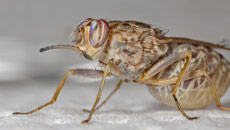
    With genome decoding of tsetse fly that causes the potentially fatal sleeping sickness disease, scientists have discovered new clues to the diet, vision and reproductive strategies of the insect.

    Fly's genome study offers hope for sleeping sickness

    Technology to catch dozing drivers on the go

    Technology to catch dozing drivers on the go
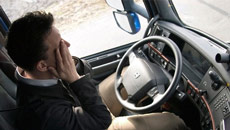
    Long rides at night can now become a lot more pleasant and safe if you listen to researchers who have developed an inexpensive and easier way to find out when the person behind the wheel is about to nod off.

    Technology to catch dozing drivers on the go