Tuesday, December 23, 2025
ADVT 
Health

Tiny needles hold promise for two key eye diseases

Darpan News Desk IANS, 14 Nov, 2014 11:11 AM
    Needles too tiny to be seen with naked eyes can soon deliver drugs to specific areas relevant to two of the world's leading eye diseases - glaucoma and corneal neovascularisation, researchers report.
     
    By targeting the drugs only to specific parts of the eye instead of the entire eye, researchers hope to increase effectiveness, limit side effects and reduce the amount of drug needed.
     
    “We are developing different microneedle-based systems that can put the drug precisely into the part of the eye where it is needed. In many cases, we hope to couple that delivery with a controlled-release formulation that would allow one application to treat a condition for weeks or months,” explained Mark Prausnitz, a Regents' professor in school of chemical and biomolecular engineering at Georgia Institute of Technology.
     
    The micro-needles range in length from 400 to 700 microns.
     
    The research was done using animal models and could become the first treatment technique to use micro-needles for delivering drugs to treat diseases in the front of the eye.
     
    “The ultimate goal for us would be for glaucoma patients visiting the doctor to get an injection that would last for the next six months, until the next time the patient needed to see the doctor,” added Prausnitz.
     
    In corneal neovascularisation, corneal injury results in the growth of unwanted blood vessels that impair vision.
     
    To treat it, researchers have developed solid micro-needles for delivering a dry antibody-based drug compound that stops the vessel growth.
     
    Both potential treatments would require additional animal testing before human trials could begin.
     
    The research was reported in the journal Investigative Ophthalmology & Visual Science.
    MORE Health ARTICLES

    Astronauts may face attention deficit risks

    Astronauts may face attention deficit risks
    Astronauts who are radiation-sensitive need to take extra care to protect their brains as they may face risks of attention deficit and slower reaction times, a study suggests.

    Astronauts may face attention deficit risks

    Befriend a cyber buddy to stay motivated

    Befriend a cyber buddy to stay motivated
    Although a human partner is a better motivator during exercise, a software-generated cyber partner can also be effective in making you work a little extra, research reveals.

    Befriend a cyber buddy to stay motivated

    New method to treat cocaine addiction effectively

    New method to treat cocaine addiction effectively
    There is hardly any effective medications for cocaine addiction, but researchers have now discovered a new compound that can halt cocaine addiction, raising hope for new treatment for drug addicts.

    New method to treat cocaine addiction effectively

    How bariatric surgery can help control diabetes

    How bariatric surgery can help control diabetes
    That bariatric surgery, or obesity surgery, leads to weight loss is well known, but researchers have now identified the mechanism why obesity surgery also leave positive effects on diabetes and heart diseases.

    How bariatric surgery can help control diabetes

    Now, 3D-printed plaster cast to heal wound faster

    Now, 3D-printed plaster cast to heal wound faster
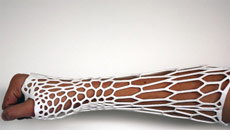
    In what could revolutionise plaster cast technology, a Turkish design student has unveiled a slick 3D-printed cast with ventilation holes that reduces healing time by around 40 percent than currently used plaster casts.

    Now, 3D-printed plaster cast to heal wound faster

    Smart cup that delivers coffee, news too!

    Smart cup that delivers coffee, news too!
    Reading the morning newspaper while sipping a cup of coffee is set to become an even smoother experience as a Finnish coffee roastery company has developed a smart coffee cup that could also display an e-paper.

    Smart cup that delivers coffee, news too!