Monday, February 2, 2026
ADVT 
Health

True happiness lies in your DNA

Darpan News Desk IANS, 18 Jul, 2014 01:33 PM
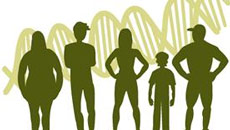
    Looking for eternal happiness? Try to match the DNA of Danish people.
     
    According to an interesting study, genetics could be the key to explaining a nation's level of happiness.
     
    The closer a nation is to the genetic makeup of the people of Denmark, the happier that country is, University of Warwick researchers found.
     
    "We found that the greater a nation's genetic distance from Denmark, the lower the reported wellbeing of that nation. Our research adjusted for influences like Gross Domestic Product, culture, religion and the strength of the welfare state and geography," explained Eugenio Proto from the University's centre for competitive advantage in the global economy (CAGE).
     
    Eugenio Proto and his team found three forms of evidence for a link between genetic makeup and a nation's happiness.
     
    Firstly, they used data on 131 countries from a number of international surveys including the Gallup World Poll, World Value Survey and the European Quality of Life Surveys.
     
    The researchers linked cross-national data on genetic distance and well-being.
     
    The second form of evidence looked at existing research suggesting an association between mental wellbeing and a mutation of the gene that influences the re-uptake of serotonin - believed to be linked to human mood.
     
    The short version of the gene has been associated with lower life satisfaction.
     
    "We found that Denmark and the Netherlands appear to have the lowest percentage of people with this short version," Proto suggested.
     
    The final form of evidence looked at whether the link between genetics and happiness also held true across generations and continents.
     
    "There are reasons to believe that genetic patterns may help researchers understand international well-being levels and more research in this area is needed," they concluded.
     

    MORE Health ARTICLES

    Living heart tissue grown

    Living heart tissue grown
    In a first, scientists have merged stem cell and 'organ-on-a-chip' technologies to grow functioning human heart tissue carrying an inherited cardiovascular disease.

    Living heart tissue grown

    Insects in the frying pan! Take a bite

    Insects in the frying pan! Take a bite
    Ever fancied eating insects for lunch? A whole lot of people in the world, especially the impoverished parts, do it. Now it is your turn.

    Insects in the frying pan! Take a bite

    How your immune system can fight back cancer

    How your immune system can fight back cancer
    In a groundbreaking treatment, researchers at the National Cancer Institute in the US have harnessed a female patient's own immune system to fight cancer.

    How your immune system can fight back cancer

    Certainty on sea levels rise by 2030: Scientists

    Certainty on sea levels rise by 2030: Scientists
    The burning question whether sea level rise is accelerating can only be answered with a degree of certainty by 2030, an international team of scientists has claimed.

    Certainty on sea levels rise by 2030: Scientists

    Genes decide if medicine will work for you or not

    Genes decide if medicine will work for you or not
    Ever wondered why a particular medicine is effective for certain people but not for others? That is largely decided by genes, research reveals.

    Genes decide if medicine will work for you or not

    Ancient Egyptians were largely veggies

    Ancient Egyptians were largely veggies
    What exactly did people living along the banks of the Nile river thousands of years ago exactly eat? New research has unlocked the secret: Like most modern people, their diet was wheat and barley-based.

    Ancient Egyptians were largely veggies