Monday, February 2, 2026
ADVT 
Health

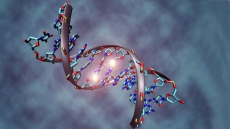
True happiness lies in your DNA

Darpan News Desk IANS, 18 Jul, 2014 01:33 PM
    Looking for eternal happiness? Try to match the DNA of Danish people.
     
    According to an interesting study, genetics could be the key to explaining a nation's level of happiness.
     
    The closer a nation is to the genetic makeup of the people of Denmark, the happier that country is, University of Warwick researchers found.
     
    "We found that the greater a nation's genetic distance from Denmark, the lower the reported wellbeing of that nation. Our research adjusted for influences like Gross Domestic Product, culture, religion and the strength of the welfare state and geography," explained Eugenio Proto from the University's centre for competitive advantage in the global economy (CAGE).
     
    Eugenio Proto and his team found three forms of evidence for a link between genetic makeup and a nation's happiness.
     
    Firstly, they used data on 131 countries from a number of international surveys including the Gallup World Poll, World Value Survey and the European Quality of Life Surveys.
     
    The researchers linked cross-national data on genetic distance and well-being.
     
    The second form of evidence looked at existing research suggesting an association between mental wellbeing and a mutation of the gene that influences the re-uptake of serotonin - believed to be linked to human mood.
     
    The short version of the gene has been associated with lower life satisfaction.
     
    "We found that Denmark and the Netherlands appear to have the lowest percentage of people with this short version," Proto suggested.
     
    The final form of evidence looked at whether the link between genetics and happiness also held true across generations and continents.
     
    "There are reasons to believe that genetic patterns may help researchers understand international well-being levels and more research in this area is needed," they concluded.
     

    MORE Health ARTICLES

    Now, a DNA tool to spot cancer

    Now, a DNA tool to spot cancer
    Detecting cancer could soon become a lot easier as scientists have used DNA to develop a tool that detects and reacts to chemical changes caused by cancer cells.

    Now, a DNA tool to spot cancer

    What you were waiting for! A device that detects pee in pool

    What you were waiting for! A device that detects pee in pool
    Those who have a habit of peeing in a swimming pool, beware. Here comes a device glows green the moment it detects traces of human waste in water.

    What you were waiting for! A device that detects pee in pool

    Do humans have spiders' genes?

    Do humans have spiders' genes?
    Not only the spiderman, even you may share certain genomic similarities with spiders, a study that for the first time sequenced the genome of a spider has revealed.

    Do humans have spiders' genes?

    Anger a better motivator for volunteers than sympathy?

    Anger a better motivator for volunteers than sympathy?
    Angry people do not always raise a ruckus; they may also bring about positive changes to society with a new study showing that anger may be more effective at motivating people to volunteer than other motives.

    Anger a better motivator for volunteers than sympathy?

    Impulsive people at greater risk of food addiction

    Impulsive people at greater risk of food addiction
    Impulsive people are at greater risks of food and drug addition as impulsivity is a result of cellular activities in the part of the brain involved with reward and not a result of dysfunctional eating behaviour, a study indicated.

    Impulsive people at greater risk of food addiction

    'Lung disease linked to diabetes under-diagnosed in India'

    'Lung disease linked to diabetes under-diagnosed in India'
    An infectious lung disease - melioidosis - which is linked to diabetics is grossly under-diagnosed in India, according to a British expert.

    'Lung disease linked to diabetes under-diagnosed in India'