Tuesday, December 16, 2025
ADVT 
Health

Why stress, fear trigger heart attacks

Darpan News Desk IANS, 11 Jun, 2014 11:25 AM
    In a first, scientists have come up with an explanation to why a sudden shock, stress and fear may trigger heart attack and they found that multiple bacterial species living as biofilms on arterial walls could hold the key to such attacks.
     
    Hormones released during these events appear to cause bacterial biofilms on arterial walls to disperse, allowing plaque deposits to rupture into the bloodstream, the findings showed.
     
    Because the biofilms are closely bound to arterial plaque, the dispersal of a biofilm could cause sudden release of the surrounding arterial plaque, triggering a heart attack.
     
    "Our hypothesis fitted with the observation that heart attack and stroke often occur following an event where elevated levels of catecholamine hormones are released into the blood and tissues, such as occurs during sudden emotional shock or stress, sudden exertion or over-exertion," said David Davies of Binghamton University in the US.
     
    The researchers isolated and cultured different species of bacteria from diseased carotid arteries that had been removed from patients with atherosclerosis.
     
    Their results showed multiple bacterial species living as biofilms in the walls of every atherosclerotic (plaque-covered) carotid artery tested.
     
    The researchers added norepinephrine, at a level that would be found in the body following stress or exertion, to biofilms formed on the inner walls of silicone tubing.
     
    "At least one species of bacteria - Pseudomonas aeruginosa - commonly associated with carotid arteries in our studies, was able to undergo a biofilm dispersion response when exposed to norepinephrine, a hormone responsible for the fight-or-flight response in humans," Davies stated.
     
    This research suggests that management of bacteria within an arterial plaque lesion may be as important as managing cholesterol.
     
    The study was published in the journal mBio.
    MORE Health ARTICLES

    Build super muscles with soy-dairy protein

    Build super muscles with soy-dairy protein
    Not happy with gym results on your muscles? Try a blend of soy and dairy proteins after resistance exercises as this has now been touted as the best way to build muscle mass.

    Build super muscles with soy-dairy protein

    'Love hormone' bonds animals like humans

    'Love hormone' bonds animals like humans
    And you thought you had a patent on 'love hormone' when it comes to showing affection! Dogs too have oxytocin and release it in a good quantity when in love or looking for bonding.

    'Love hormone' bonds animals like humans

    Can you believe it? Metabolism existed even before origin of life, reveales study

    Can you believe it? Metabolism existed even before origin of life, reveales study
    The mystery behind how the first organisms on earth could have become metabolically active has been unlocked.

    Can you believe it? Metabolism existed even before origin of life, reveales study

    Fly's genome study offers hope for sleeping sickness

    Fly's genome study offers hope for sleeping sickness
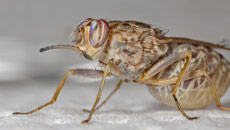
    With genome decoding of tsetse fly that causes the potentially fatal sleeping sickness disease, scientists have discovered new clues to the diet, vision and reproductive strategies of the insect.

    Fly's genome study offers hope for sleeping sickness

    Technology to catch dozing drivers on the go

    Technology to catch dozing drivers on the go
    Long rides at night can now become a lot more pleasant and safe if you listen to researchers who have developed an inexpensive and easier way to find out when the person behind the wheel is about to nod off.

    Technology to catch dozing drivers on the go

    Astronauts may face attention deficit risks

    Astronauts may face attention deficit risks
    Astronauts who are radiation-sensitive need to take extra care to protect their brains as they may face risks of attention deficit and slower reaction times, a study suggests.

    Astronauts may face attention deficit risks