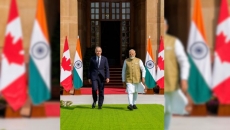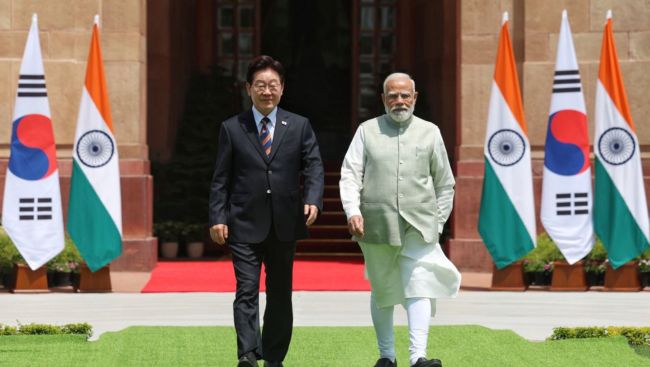
India and South Korea have taken a major step toward strengthening their bilateral relationship, with Prime Minister Narendra Modi and South Korean President Lee Jae Myung announcing a comprehensive roadmap to deepen cooperation across trade, technology, and strategic sectors. The announcements came during President Lee's first visit to India since assuming office, following delegation-level talks in New Delhi.
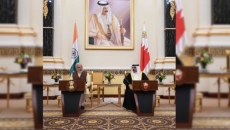
During a joint press statement, the two leaders oversaw the exchange of multiple Memorandums of Understanding (MoUs). The agreements signal a broad-based effort to expand economic engagement and reinforce cooperation in emerging and traditional industries.
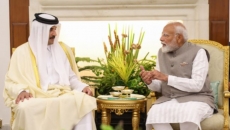
Prime Minister Modi welcomed President Lee, describing his life as “an inspiring example of struggle, service, and dedication,” and noted that the visit marks an important step in further strengthening the strategic partnership between the two democracies. Highlighting shared democratic values, PM Modi emphasised that the relationship is evolving from a trusted partnership into a futuristic strategic alliance.
A key outcome of the summit was the decision to significantly scale up bilateral trade. Both countries have set a target to increase trade to $50 billion by 2030, nearly doubling the current volume of around $25–27 billion. To achieve this goal, the leaders agreed to upgrade the Comprehensive Economic Partnership Agreement (CEPA) within the next year to align it with evolving global trade dynamics.
To further strengthen industrial collaboration, Prime Minister Modi announced the development of dedicated Korean industrial townships in India. These townships are aimed at facilitating the entry and expansion of South Korean companies, particularly small and medium enterprises, by providing improved infrastructure and regulatory support.
An Industrial Cooperation Committee will also be established as a ministerial platform to enhance business engagement and promote trade and investment between the two countries.
To support growing economic ties, both sides announced the creation of new institutional frameworks. The India-Korea Financial Forum will facilitate smoother capital flows and strengthen investment collaboration, while an Economic Security Dialogue will focus on critical technologies and supply chain resilience.
In addition, measures were discussed to ease regulatory frameworks for micro, small, and medium enterprises (MSMEs), enabling more seamless industrial cooperation and business operations.
A major highlight of the summit was the launch of the 'India-Korea Digital Bridge', a long-term initiative aimed at deepening collaboration in high-technology sectors such as artificial intelligence, semiconductors, and information technology.
The initiative reflects the shared vision of both nations to build resilient supply chains and future-ready industries. Cooperation in areas such as chip manufacturing, advanced technologies, and innovation ecosystems is expected to play a crucial role in shaping the partnership.
Beyond economic and technological cooperation, both leaders highlighted the importance of cultural and people-to-people connections. They noted the growing popularity of Korean culture in India and identified films, animation, gaming, and entertainment as emerging areas of collaboration.
On cultural ties, the Prime Minister remarked, “India and Korea share cultural ties dating back thousands of years. The story of Princess Suriratna of Ayodhya and King Kim Suro of Korea from 2,000 years ago is our shared heritage.” He added, "Today, K-Pop and K-Dramas are becoming very popular in India. Similarly, the recognition of Indian cinema and culture is growing in Korea. We are delighted that President Lee himself is a fan of Indian cinema. To strengthen this cultural connect, we will organise the India-Korea Friendship Festival in 2028.”
Quoting Rabindranath Tagore, the Prime Minister concluded, “Nearly 100 years ago, India’s great poet, Gurudev Rabindranath Tagore, called Korea the ‘Lamp of the East.’ Today, Korea is a vital partner in realizing our resolve for a ‘Viksit Bharat 2047’ (Developed India 2047). Let us, through our partnership, pave the way for the progress and prosperity of both our countries and the entire world.”
The leaders also discussed regional and global issues, emphasising the importance of stability and cooperation in the Indo-Pacific region. They agreed to strengthen collaboration in areas such as green energy, critical technologies, and supply chain security.
Prime Minister Modi welcomed South Korea’s participation in global initiatives such as the International Solar Alliance and the Indo-Pacific Oceans Initiative, underlining the shared commitment to sustainable development and environmental responsibility.
President Lee praised India's development trajectory and its vision for long-term growth, while both leaders reiterated their commitment to building a forward-looking partnership. The visit, the first by a South Korean president to India in over eight years, is being seen as a significant milestone in bilateral relations.
The summit concluded with Prime Minister Modi accepting an invitation to visit South Korea in the near future, signalling continued high-level engagement between the two nations.
With expanded cooperation across economic, technological, cultural, and strategic domains, India and South Korea have set the stage for a deeper and more comprehensive partnership in the years ahead.
Picture Courtesy: X/Narendra Modi