

In China, wait times for U.S. visa interviews are so long that some students have given up. Universities in Hong Kong are fielding transfer inquiries from foreign students in the U.S., and international applications for British undergraduate programs have surged.
President Donald Trump’s administration has been pressuring U.S. colleges to reduce their dependence on international enrollment while adding new layers of scrutiny for foreign students as part of its crackdown on immigration.
The U.S. government has sought to deport foreign students for participating in pro-Palestinian activism. In the spring, it abruptly revoked the legal status of thousands of international students, including some whose only brush with law enforcement was a traffic ticket. After reversing course, the government paused new appointments for student visas while rolling out a process for screening applicants’ social media accounts.
The U.S. remains the first choice for many international students, but institutions elsewhere are recognizing opportunity in the upheaval, and applicants are considering destinations they might have otherwise overlooked. The impact on U.S. universities — and the nation's economy — may be significant.
New international enrollment in the U.S. could drop by 30% to 40% this fall, according to an analysis of visa and enrollment data by NAFSA, an agency that promotes international education.
That would deprive the U.S. economy of $7 billion in spending, according to the analysis. Many international students pay full price, so their absence would also hurt college budgets.
Britain stands to gain as the US takes ‘a massive hit’
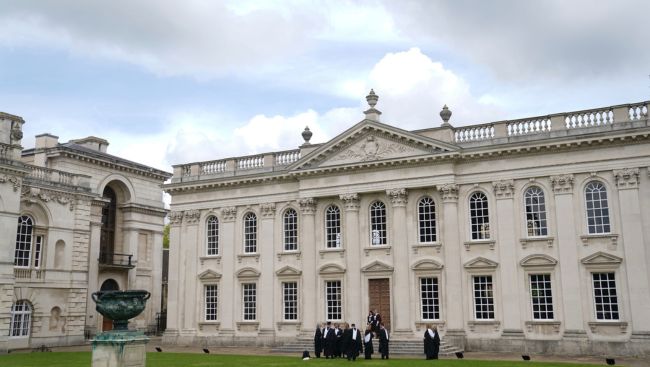
As the second most popular destination for international students, Britain is positioned to benefit.
The country's new Labour government has vowed to cut migration, and officials have imposed time limits on post-study visas allowing graduates to stay and work. But admissions consultants say the United Kingdom is still seen as the most welcoming of the traditional “big four” English-speaking destinations in higher education — the U.S., U.K., Canada and Australia.
After declining last year, the number of international applications for undergraduate study in the U.K. this fall grew by 2.2%, official figures show.
A record number of applications came from China, up 10% compared with the previous year. Applications from the U.S. also reached nearly 8,000 students — an increase of 14% and a 20-year high.
Acceptances of international students for graduate programs in the U.K. grew an estimated 10% from last year, driven by demand for business and management courses in particular, according to data from UniQuest, which works with many British universities on admissions.
Data showing the extent of any impact will not be available until fall, said Mike Henniger, CEO of Illume Student Advisory Services, a consultancy that works with colleges in the U.S., Canada and Europe. “But the American brand has taken a massive hit, and the U.K. is the one that is benefiting," he said.
Staying in Asia is becoming more popular
Demand from Chinese students has risen rapidly for universities places in Hong Kong, Singapore and Malaysia, said Will Kwong, managing director of AAS Education, a consultancy in Hong Kong. Many Western universities have offshore campuses there that are more affordable than going to the U.S. or U.K.
“Opting for study in Asia has been a trend since the easing of COVID-19,” Kwong said. “But obviously it’s been exacerbated by the change of administration in the U.S.”
Some Asian families have told him the U.S. is no longer their clear first choice because of political turbulence and visa difficulties, many are still waiting for U.S. visa interviews and will likely miss the start of the fall term, Kwong said.
Chinese college student Alisa, who is studying data science, plans to attend an exchange program this fall at the University of California, Berkeley. She hopes to pursue a master's degree in the U.S.
But she is also looking into other options “just so I could still go to school if the extreme scenario occurs,” said Alisa, who spoke on condition of partial anonymity out of fear of being targeted.
Hong Kong will welcome any students who are denied entry to the U.S., the city's leader John Lee has said. Last year, the Chinese territory decided to allow international students to work part-time.
Hong Kong University said it has received over 500 inquiries from students in the U.S. and is processing around 200 applications for transfer. At another school, the Hong Kong University of Science and Technology, international undergraduate applications have surged by 40% from last year, said Alison Lloyd, associate provost on institutional data and research.
Upheaval could be a boon for countries with satellite campuses
Countries including the United Arab Emirates have invested heavily in attracting international students by partnering with universities elsewhere to host branch campuses. These arrangements could appeal to students who fear being denied access to the U.S.
Dubai, which has designs on becoming a global education hub, hosts dozens of international institutions’ satellite campuses. It saw international student numbers grow by a third in 2024-2025.
Lisa Johnson, principal of Dubai's private American Academy for Girls, said her mostly Emirati student body is increasingly looking away from the U.S. for college.
“Every student wants and dreams to go to Harvard,” she said. “But as college options increase in the United Arab Emirates, more and more students are staying."
Kazakhstan has similar ambitions, said Daniel Palm, who has helped U.S. universities set up campuses abroad. Illinois Tech and the University of Arizona are among colleges offering degree programs in the Central Asian country, drawing students mostly from China and Russia.
“All of a sudden U.S. colleges are asking how to provide diversity, provide access," Palm said, “because you have students who want to come to the U.S. and can't.”
Picture Courtesy: Joe Giddens/PA via AP, File


