Sunday, December 21, 2025
ADVT 
International

Revealed: What sets tectonic plates in motion

Darpan News Desk IANS, 18 Sep, 2014 11:15 AM
    The mystery of what kick-started the motion of our earth's massive tectonic plates across its surface has been solved by researchers at the University of Sydney.
     
    There are eight major tectonic plates that move above the earth's mantle at rates of up to 150 millimetres every year and Earth is the only planet in our solar system with such a system in place.
     
    The geological record suggests that until three billion years ago, the earth's crust was immobile so what sparked this unique phenomenon has fascinated geologists for decades.
     
    "We suggest it was triggered by the spreading of early continents and then eventually became a self-sustaining process," said Professor Patrice Rey from the University of Sydney's school of geosciences.
     
    In simple terms, the process involves plates being dragged into the mantle at certain points and moving away from each other at others, in what has been dubbed "the conveyor belt".
     
    Plate tectonics depends on the inverse relationship between density of rocks and temperature.
     
    At mid-oceanic ridges, rocks are hot and their density is low, making them buoyant or more able to float.
     
    As they move away from those ridges they cool down and their density increases until, where they become denser than the underlying hot mantle, they sink and are dragged under.
     
    But three to four billion years ago, the earth's interior was hotter, volcanic activity was more prominent and tectonic plates did not become cold and dense enough to spontaneously sink.
     
    "So the driving engine for plate tectonics did not exist," Rey added.
     
    Instead, buoyant early continents erupted in the middle of immobile plates.
     
    "Our model shows that these early continents could have placed major stress on the surrounding plates. Because they were buoyant they spread horizontally, forcing adjacent plates to be pushed under at their edges," Rey pointed out.
     
    The article appeared in the journal Nature.
    MORE International ARTICLES

    Press freedom in India declines with elections: Report

    Press freedom in India declines with elections: Report
    India's score in press freedom declined by a point, to 39, to reflect increased interference in content by media owners in the run-up to the 2014 elections, according to a Freedom House report released Thursday.

    Press freedom in India declines with elections: Report

    Sri Lanka condemns Chennai bomb blasts

    Sri Lanka condemns Chennai bomb blasts
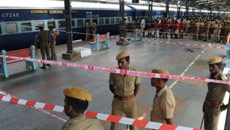
    Sri Lanka has strongly condemned the twin blasts that took place at the Chennai Central railway station Thursday morning killing one woman and injuring 14 others, the country's foreign ministry said in a statement.

    Sri Lanka condemns Chennai bomb blasts

    Sikhs, Muslims object to headgear ban at US amusement park

    Sikhs, Muslims object to headgear ban at US amusement park
    They have filed complaints alleging religious discrimination against a California amusement park after a couple of families wearing religious headgear were denied access to riding go-karts due to "safety concerns".

    Sikhs, Muslims object to headgear ban at US amusement park

    Pakistan eager to work with new Indian government, says envoy

    Pakistan eager to work with new Indian government, says envoy
    Pakistan is closely watching the unfolding parliamentary elections in India and is eager to work with whichever government come to power, its High Commissioner Abdul Basit said here Wednesday.

    Pakistan eager to work with new Indian government, says envoy

    US places India on IPR Priority Watch List

    US places India on IPR Priority Watch List
    The US Wednesday put India and nine other countries on its Priority Watch List to highlight what it called "growing concerns with respect to the environment for Intellectual Property Rights (IPR) protection and enforcement".

    US places India on IPR Priority Watch List

    'Pakistani journalists live under constant threats'

    'Pakistani journalists live under constant threats'
    Pakistani journalists live under constant threat of being killed, harassment and other violence from all sides, including intelligence services, political parties and armed groups like the Taliban, the Amnesty International said in a report Wednesday.

    'Pakistani journalists live under constant threats'