Thursday, June 18, 2026
ADVT 
National

2020 worst year for refugee resettlement: UN

Darpan News Desk The Canadian Press, 14 Dec, 2020 05:50 PM
  • 2020 worst year for refugee resettlement: UN

The year 2020 will go down as the worst for refugee resettlement in recent history, says the UN refugee agency's Canadian representative.

With nearly 168 countries implementing border and travel restrictions, millions of displaced people around the globe were stuck, unable to either return to their home countries or move to others.

Canada, however, was one of only a few that did listen to urgent pleas from the United Nations High Commissioner for Refugees, said Rema Jamous Imseis, the UNHCR's Canadian representative.

Even at the height of the pandemic, when most countries were looking entirely inward, Canada did accept emergency cases and as travel has resumed continues to take in more, she told The Canadian Press in an interview.

"It hasn't, unfortunately, been at the levels that we had planned for prior to the pandemic, but it still is offering that critical lifeline to people who desperately need it," she said.

"And we hope that next year actually is going to bring us a very different context and an ability not only to meet those targets, but to perhaps even exceed them."

Canada had planned to resettle around 30,000 refugees in 2020.

By the end of September, just under 6,000 had arrived, and a spokesman for Immigration Minister Marco Mendicino said the end-of-year figure will be closer to 7,000.

The target for resettlement next year is 35,000, but how realistic that goal is considering the unknowns around the end of the pandemic is unclear.

Mendicino's spokesman said in an email that the entire resettlement "ecosystem" continues to operate at a reduced capacity, but is slowly spooling back up.

"While our operations have been affected, we’ve come a long way since the onset of the pandemic and are now processing nearly six times as many refugee cases as in a similar period last year," Alexander Cohen said in an email.

The border closures weren't the only challenge this year for refugees, said Jamous Imseis.

Many of the world's displaced people were just scraping by economically before the pandemic hit, but their sources of income completely dried up, she said.

"The ability to sustain themselves and their families has been wiped out," she said.

"So you saw entire populations going from vulnerable, but with the ability to sustain themselves overnight to becoming really vulnerable."

There's also been a massive blow to the ability of children to be in school. A pivot to online learning possible in some developed nations just isn't applicable elsewhere, she said.

Some studies suggest more than half of refugee girls may never go back to post-secondary education after the pandemic, she said.

"They haven't been at school this whole time, and they may never go back because life circumstances have changed so dramatically," she said.

Monday is the UNHCR's 70th anniversary. It was created to help displaced Europeans after the Second World War and originally was only supposed to exist for a few years.

"But sadly, we're still here and it signals the failure of the international community to really address long-standing issues, and drivers of displacement globally," said Jamous Imseis.

"We look forward to the day when our services are no longer needed."

Photo courtesy of Istock. 

MORE National ARTICLES

Search for missing B.C. woman prompts homicide fears, second death

Search for missing B.C. woman prompts homicide fears, second death
Police are releasing more details about a British Columbia woman they fear may be the victim of a homicide. Metro Vancouver's Integrated Homicide Investigation Team says 45-year-old April Parisian was last heard from on March 28 and was declared missing earlier this month.

Search for missing B.C. woman prompts homicide fears, second death

Reports of hate crimes are up in Vancouver: police

Reports of hate crimes are up in Vancouver: police
An assault on a 92-year-old Asian man with dementia in Vancouver is being investigated as a hate crime and police say they have recently noticed an increase in reports of hate-motivated incidents. Vancouver police say the man has "severe dementia" and wandered into a convenience store on March 13 when another man yelled racist remarks that included comments about COVID-19.    

Reports of hate crimes are up in Vancouver: police

More signs COVID-19 is slowing in Canada; students to get federal help

More signs COVID-19 is slowing in Canada; students to get federal help
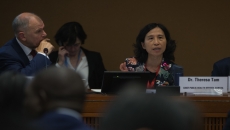
Chief Public Health Officer Dr. Theresa Tam said Canada was making progress in slowing the epidemic but warned against letting down its guard. The focus, Tam said, must be placed on stopping outbreaks in places like seniors homes and in other places where vulnerable populations live together in close quarters. How exactly Canada gets on the road to normalization will largely depend on the provinces, Prime Minister Justin Trudeau said on Wednesday. However, the closure of the Canada-U.S. border will stay in place until May 21st at least, he said.

More signs COVID-19 is slowing in Canada; students to get federal help

Prime Minister Justin Trudeau defends not creating universal COVID-19 benefit, announces student aid

Prime Minister Justin Trudeau defends not creating universal COVID-19 benefit, announces student aid
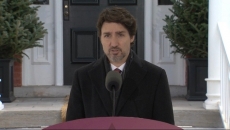
As he announced yet another emergency financial aid package Wednesday — this one aimed at students — Prime Minister Justin Trudeau defended his decision not to create a universal benefit that would ensure no Canadians affected by COVID-19 fall through the cracks. His focus for specific help Wednesday was students, announcing a $9-billion suite of programs for students whose education and job prospects are disrupted by the novel coronavirus.  Trudeau says his government's approach has been to try to target its emergency financial assistance in stages to those who need it most, rather than to everyone at once, including those who don't need it.      

Prime Minister Justin Trudeau defends not creating universal COVID-19 benefit, announces student aid

What BC is doing to fight COVID-19

What BC is doing to fight COVID-19
B.C. declared a provincial state of emergency on March 18, a day after announcing a public health emergency, and it has been extended to April 28. The measure gives the province authority to take any action necessary to protect people and communities, including charging people who ignore public health orders.

What BC is doing to fight COVID-19

Feds scramble to bring stranded Canadian travellers home from India PM: Canadians stranded in India need more help

Feds scramble to bring stranded Canadian travellers home from India PM: Canadians stranded in India need more help
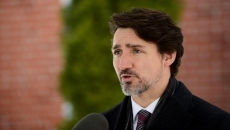
Prime Minister Justin Trudeau says 20,000 Canadian travellers stranded abroad have been repatriated to Canada. But he says many more flights are needed to bring back large numbers of Canadians from India in particular.

Feds scramble to bring stranded Canadian travellers home from India PM: Canadians stranded in India need more help