Wednesday, June 17, 2026
ADVT 
National

Agriculture minister says Alberta BSE case will not affect beef trade

Darpan News Desk The Canadian Press, 13 Feb, 2015 10:32 AM

    CALGARY — Mad cow disease has been confirmed in a beef cow on an Alberta farm, but the federal agriculture minister says the discovery won't affect Canada's international beef trade.

    "We have a very fulsome testing procedure. We don't change from our controlled risk status ... so we don't see this interfering with any of our trade corridors at this time," Gerry Ritz said Friday after the Canadian Food Inspection Agency confirmed the case.

    Canada works under international protocols that allow for up to a dozen cases a year of bovine spongiform encephalopathy, or BSE, Ritz said.

    "We have stayed well below that."

    Alberta did initial testing on the cow and Ottawa was informed a few days ago, Ritz said. The CFIA followed up with further tests.

    The agency said no part of the animal's carcass entered the human food or animal feed systems.

    It's the first case to be reported in Canada since 2011.

    Ritz said the infected animal was not born on the farm where it was discovered. The CFIA said it is still trying to determine the cow's history and how it became infected.

    "The investigation will focus in on the feed supplied to this animal during the first year of its life," the agency said in a release. "The agency will also trace out all animals of equivalent risk. Equivalent risk animals will be ordered destroyed and tested for BSE."

    It says Canada continues to be designated a "controlled BSE risk" country by the World Organisation for Animal Health.

    Doug Gillespie, president of the Saskatchewan Stock Growers Association, said the new case isn't surprising.

    "They expect to find one of these from time to time ... It really shows our system is working, that beef is safe. It really never reached the food chain or anything," he said from his farm near Swift Current, Sask.

    "Of course there's always concern, but we'll see where it goes from here."

    BSE is a fatal and untreatable wasting disease of the brain and nervous systems and is caused by rogue proteins called prions.

    Humans who eat infected beef can develop a fatal disease called variant Creutzfeldt-Jakob disease. Fewer than 250 human cases have been reported worldwide.

    Canada's first known case was discovered in 1993 in a cow from a farm near Red Deer, Alta. The animal had been imported from Britain.

    The first instance of BSE in a Canadian-born beef cow was in May 2003. It's suspected that animal became infected through contaminated animal feed that contained a protein supplement made with ground meat and bone meal.

    The first home-grown case of BSE devastated Canada's beef industry. About 40 markets immediately closed their borders to Canadian cattle and beef products, although many of those markets have since reopened.

    Testing of cattle was strengthened following the mad cow crisis and specified risk materials, such as brains and spinal columns, were banned for use in feed and other products.

    MORE National ARTICLES

    Stateless Yukon Man, 60, Ponders Declaring Refugee Status In Canada

    Stateless Yukon Man, 60, Ponders Declaring Refugee Status In Canada
    VANCOUVER — Donovan McGlaughlin admits his story is hard to believe, but he wants Canadians to keep an open mind as he explains why he may have to apply as a political refugee in the country he's called home for his 60 years.

    Stateless Yukon Man, 60, Ponders Declaring Refugee Status In Canada

    Decision to build Site C dam 'incredibly stupid': First Nations leader

    Decision to build Site C dam 'incredibly stupid': First Nations leader
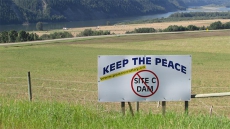
    VANCOUVER — A look at what was said about the B.C. government's decision to proceed with the controversial $8.8 billion Site C hydroelectric dam.

    Decision to build Site C dam 'incredibly stupid': First Nations leader

    Not criminally responsible defence not a 'get out of jail free card': expert

    Not criminally responsible defence not a 'get out of jail free card': expert
    TORONTO — Critics may see it as an easy way out, but defence lawyers argue those seeking to be declared not criminally responsible for their crimes must overcome serious hurdles at trial and may end up spending more time in custody than if they had pleaded guilty.

    Not criminally responsible defence not a 'get out of jail free card': expert

    How could cozier U.S.-Cuba relationship affect Canadian business interests?

    How could cozier U.S.-Cuba relationship affect Canadian business interests?
    OTTAWA — Experts believe closer ties between the United States and Cuba will eventually make economic waves for Canadian business.

    How could cozier U.S.-Cuba relationship affect Canadian business interests?

    What does hunger look like in Nunavut? One man's struggle to feed his kids

    What does hunger look like in Nunavut? One man's struggle to feed his kids
    IQALUIT, Nunavut — Israel Mablick's youngest son clings to his neck as another one of his children and his nephew bounce around on a thin mattress stuffed into a cramped space that doubles as a bedroom and a living room.

    What does hunger look like in Nunavut? One man's struggle to feed his kids

    Dalhousie University students face restorative justice for Facebook posts

    Dalhousie University students face restorative justice for Facebook posts
    HALIFAX — Dalhousie University says it is proceeding with a restorative justice process to resolve complaints about sexually violent comments posted on a Facebook group page about female students at its dentistry school.

    Dalhousie University students face restorative justice for Facebook posts