
Sunday, June 14, 2026
ADVT 
National

AI regulations needed to protect rights: watchdog

Darpan News Desk The Canadian Press, 12 Nov, 2020 08:49 PM
  • AI regulations needed to protect rights: watchdog

Artificial intelligence must be regulated to protect Canadians' privacy and human rights, a federal watchdog says.

In issuing new recommendations for regulating AI Thursday, Canada's privacy commissioner Daniel Therrien said he is calling for legislation to regulate the use and development of AI systems.

Such legislation will help to reap the benefits of AI while upholding individuals’ fundamental right to privacy, he said in a statement.

Therrien said these changes should entrench privacy as a human right and a necessary element for the exercise of other fundamental rights.

AI models analyze and try to predict aspects of human behaviour and interests that can be used to make automated decisions about people.

Those can include whether to issue job offers or qualify applicants for loans, setting insurance premiums, and even raising suspicions of unlawful behaviour, Therrien said.

"Artificial intelligence has immense promise, but it must be implemented in ways that respect privacy, equality and other human rights," Therrien said.

"Such decisions have a real impact on lives, and raise concerns about how they are reached, as well as issues of fairness, accuracy, bias, and discrimination."

Therrien said legal changes are needed to address these concerns. Those include amending the Personal Information Protection and Electronic Documents Act to allow, but restrict, the use of personal information in AI innovation.

He recommended creating a right to meaningful explanation for automated decisions and a right to contest those decisions.

Also, he called for strengthening accountability by requiring demonstrations of privacy compliance, and empowering his office to issue binding orders and proportional financial penalties for violations.

Last month, the federal, Alberta and B.C. privacy commissioners said that five million images of shoppers’ faces were collected without their consent at a dozen of Canada’s most popular malls.

Real estate company Cadillac Fairview used cameras and facial-recognition technology to discern shoppers' ages and genders, according to the watchdogs' investigation.

The commissioners had no legal power to issue fines against the firm, or any companies that violate Canadians’ personal information.

B.C. information and privacy commissioner Michael McEvoy said the inability to address these violations is an "incredible shortcoming of Canadian law that should really change."
MORE National ARTICLES

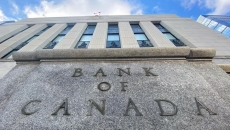
The Bank of Canada announced that it is holding its interest rate target at 0.25 per cent

The Bank of Canada announced that it is holding its interest rate target at 0.25 per cent
The Bank of Canada is warning that the downturn tied to COVID-19 will be the worst on record and that the economic recovery will depend on the effectiveness of current measures to bring the pandemic under control. The bank announced that it is keeping its key interest rate target on hold at 0.25 per cent, saying that it is effectively as low as it can go to combat the economic impacts of COVID-19.

The Bank of Canada announced that it is holding its interest rate target at 0.25 per cent

Liberals ease access to emergency COVID-19 benefit, plan to top-up wages

The federal government is making changes to its COVID-19 programs to send emergency aid to seasonal workers without jobs and those whose hours have been drastically cut but who still have some income. The changes will also allow people who are making up to $1,000 a month to qualify for the Canada Emergency Response Benefit, as well as those whose employment insurance benefits have run out since the start of the calendar year.    

Liberals ease access to emergency COVID-19 benefit, plan to top-up wages

Canada focused on fighting COVID-19 Trudeau steers clear of WHO controversy

Prime Minister Justin Trudeau refused Wednesday to join the escalating global debate about the World Health Organization's handling of the COVID-19 crisis, insisting Canada remains focused on working with experts around the world to combat the pandemic. Trudeau repeatedly batted back questions about Donald Trump's plan to halt funding to the UN agency and review what the U.S. president says was a failure to properly assess the threat posed by the novel coronavirus back in January.

Canada focused on fighting COVID-19 Trudeau steers clear of WHO controversy

With strong control measures, the federal public health agency projects that 11,000 to 22,000 Canadians could die of COVID-19 in the coming months

Canada could see the end of the first wave of the COVID-19 epidemic before autumn, according to federal projections, but only if strong physical distancing measures are strictly maintained the whole time. Even in that best-case scenario, the federal public health agency projects that a total of 4,400 to 44,000 Canadians could die of COVID-19 in the coming months.    

With strong control measures, the federal public health agency projects that 11,000 to 22,000 Canadians could die of COVID-19 in the coming months

Canada lost more than a million jobs in March, but April may be even worse

The Canadian economy lost an unprecedented one million jobs in March — the worst recorded single-month change — as the COVID-19 crisis began to take hold, lifting the unemployment rate to 7.8 per cent, Statistics Canada reported Thursday. The loss is eight times worse than the previous one-month record, yet economists warned it will likely be even worse in April, when the impact of physical distancing practices and other measures became clearer and millions of Canadians began receiving emergency federal aid.

Canada lost more than a million jobs in March, but April may be even worse

The latest numbers on COVID-19 in Canada

Total number of cases broken down by province and the total number right across the country. 

The latest numbers on COVID-19 in Canada