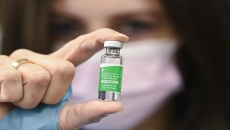
A - The National Advisory Committee on Immunization says people who got the Oxford-AstraZeneca vaccine for the first dose can be offered either Pfizer-BioNTech or Moderna for the second.
The advice affects more than two million Canadians who received the Oxford-AstraZeneca vaccine before provinces stopped using it for first doses last month.
The vaccine is potentially linked to a rare but serious blood clotting syndrome.
In Canada, 41 confirmed or suspected cases of vaccine-induced thrombotic thrombocytopenia have been diagnosed and five people have died.
NACI's published report says AstraZeneca recipients can be offered the same vaccine if they want it, or can be given either Pfizer or Moderna.
They say they are basing their advice on the risk of VITT, and emerging evidence that mixing and matching different types of vaccines is not only safe but may produce a better immune response.
The guidance is not binding but most provincial governments have indicated they were waiting for the information before setting their policies for second doses.
Manitoba didn't wait for the report to be published, announcing Monday they would offer AstraZeneca recipients Pfizer or Moderna if they wanted.
Quebec currently recommends getting the same vaccine twice but says with informed consent people who got AstraZeneca first can get Pfizer or Moderna.
The province is expected to update this later in the week, along with shortening the wait to get second doses of mRNA vaccines.
NACI's advice comes after interim results were published in May from two studies looking at mixing and matching vaccines.
A Spanish study concluded a second dose of Pfizer after a first dose of AstraZeneca produced more than twice the antibodies as a second dose of AstraZeneca.
A United Kingdom study reported there were more frequent reports of short-lived side-effects such as fever and fatigue in people whose second dose was a different vaccine. It is still waiting for results on how effective mixing and matching is but as second doses ramp up across Canada, health officials say they need to make decisions now.
Several European countries are giving Pfizer or Moderna as second doses to AstraZeneca recipients, including Denmark, Finland, France, Germany, Sweden, Norway and Spain.
More than two-thirds of Canadians over the age of 12 now have at least their first dose, but only about 10 per cent of them are fully vaccinated. With vaccine supplies limited in the first months of the immunization program, provinces delayed second doses up to four months to try and get more people one dose faster.
The plan has worked to that end, with Canada now one of the most vaccinated countries in the world when it comes to first doses. As of May 30, Canada is now in the top 10 countries for first doses in the world, and is likely to surpass the United Kingdom on first doses by the end of the week.
It's not even in the top 50 for second doses.
Second doses are starting to be given faster now, with several provinces moving to fully vaccinate the highest risk populations, including seniors and those with compromised immune systems.
Until a week ago, fewer than one-tenth of new doses given out each were for second doses, but over the last week one-sixth of new doses were for second shots.
For some people, getting a different second dose is a supply issue, particularly for Moderna recipients, with that company unable to deliver expected doses on time so far.
For AstraZeneca however it is a question of safety. Provinces stopped using AstraZeneca for first doses in mid-May as the number of Canadians diagnosed with vaccine-induced thrombotic thrombocytopenia grew.
The rare blood clotting disorder believed to be caused by an unexpected immune response to the AstraZeneca vaccine, has occurred in about one in every 53,000 Canadians given the AstraZeneca vaccine as a first dose.
While health experts say the risks of the clots is extremely low and is outweighed by the risks of COVID-19, NACI said people should only get AstraZeneca if they are over the age of 30, and live in an area where they are more likely to be exposed to the virus that causes COVID-19.
Many provinces have been holding off giving second doses of AstraZeneca pending NACI's advice on whether it should be given as second doses.
NACI has already said people can mix and match vaccines within the same vaccine family — so the mRNA vaccines from Pfizer and Moderna can be mixed and matched, or the viral vector vaccines from AstraZeneca and Johnson & Johnson.
That latter advice was theoretical since Canada hasn't started using the J&J vaccine at this point. The 300,000 doses received in April remain in quarantine in freezers at Innomar Strategies pending a quality assurance check.
The drug substance in those doses was made at a facility in Maryland that has since been cited for numerous safety violations.