Saturday, December 13, 2025
ADVT 
National

B.C. first province to introduce hydrogen strategy

Darpan News Desk The Canadian Press, 06 Jul, 2021 02:58 PM
  • B.C. first province to introduce hydrogen strategy

British Columbia is Canada's first province to introduce a business and environmental strategy on how renewable and low-carbon hydrogen can reduce emissions and create jobs in the clean technology sector.

Bruce Ralston, minister of energy, mines and low carbon innovation, says the strategy uses actions involving government, industry and innovators to help achieve net-zero carbon emissions by 2050.

He says the short-term goals include establishing regional hydrogen hubs to supply fuel to industries and consumers, while increasing the numbers of medium and heavy-duty vehicles powered by hydrogen on highways and at industrial sites.

Ralston says hydrogen produces no carbon emissions when burned or used in a fuel cell and is considered a climate-friendly solution to industrial activities where the use of electricity is not practical.

Hydrogen can be produced from many sources, including both fossil fuels and renewable resources, although the B.C. plan would support the so-called green pathway, using hydro electricity to create the fuel.

Ralston acknowledges B.C.'s previous attempt to embrace the technology more than a decade ago that included development of a hydrogen highway from B.C. to California, were ahead of their time and are now better positioned to succeed.

Ralston says B.C. is a global leader in the area, with more than 50 per cent of Canada's hydrogen and fuel-cell companies located in the province and where about 60 per cent of research investment is conducted.

The ministry estimates hydrogen has the potential to reduce B.C.'s emissions by 7.2 million tonnes of carbon dioxide each year by 2050.

"The B.C. hydrogen strategy outlines 63 actions for government, industry and innovators to take aim at accelerating the production, use and export of renewable and low carbon hydrogen," Ralston told a news conference, adding transitioning heavy-duty vehicles to hydrogen power as "the next frontier."
MORE National ARTICLES

No 'silver bullet' to vaccinate world: Trudeau

No 'silver bullet' to vaccinate world: Trudeau
Prime Minister Justin Trudeau spent his last day in Europe on Tuesday thanking leaders and local workers for getting COVID-19 vaccines to Canada, saying there is no "silver bullet" that results in shots being available around the world.

No 'silver bullet' to vaccinate world: Trudeau

Canada might lack full pandemic record: info czar

Canada might lack full pandemic record: info czar
In her annual report tabled in Parliament today, information commissioner Caroline Maynard says working remotely has meant using different tools, such as online meeting technology and instant messaging.

Canada might lack full pandemic record: info czar

Former Liberal MP in conflict for hiring sister

Former Liberal MP in conflict for hiring sister
Ethics Commissioner Mario Dion says former Liberal MP Yasmin Ratansi violated Parliament's conflict of interest code when she hired her sister in her constituency office.

Former Liberal MP in conflict for hiring sister

Aritzia signs deal to buy Reigning Champ

Aritzia signs deal to buy Reigning Champ
Under the agreement, Aritzia will acquire a 75 per cent stake in the company based on an enterprise value of approximately $63 million.

Aritzia signs deal to buy Reigning Champ

277 COVID19 cases over 3 days

277 COVID19 cases over 3 days
There have been 4 new COVID-19 related deaths over a 3 day period, for a total of 1,734 deaths in British Columbia. 75.9% of all adults in B.C. and 74.1% of those 12 and older have now received their first dose of a COVID-19 vaccine. 

277 COVID19 cases over 3 days

Vancouver residents could be paying up to $1000 for parking permits for new vehicles

Vancouver residents could be paying up to $1000 for parking permits for new vehicles
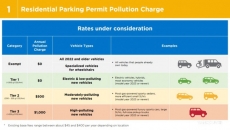
An annual pollution charge the city’s “Climate Emergency Parking Program” proposes Vancouverites who own a 2023 or newer “high-polluting” vehicle — described as a gas-powered luxury sports car, large SUV or full-size pickup truck — would be charged $1,000 per year to get a residential parking permit.

Vancouver residents could be paying up to $1000 for parking permits for new vehicles