
Wednesday, December 17, 2025
ADVT 
National

B.C. task force aims to grow agriculture, food processing industries

Darpan News Desk The Canadian Press, 20 Feb, 2025 03:19 PM
  • B.C. task force aims to grow agriculture, food processing industries

British Columbia is launching a task force focused on growing the agriculture and food processing industries after years of struggle due to climate, labour concerns and now the threat of tariffs from the United States.

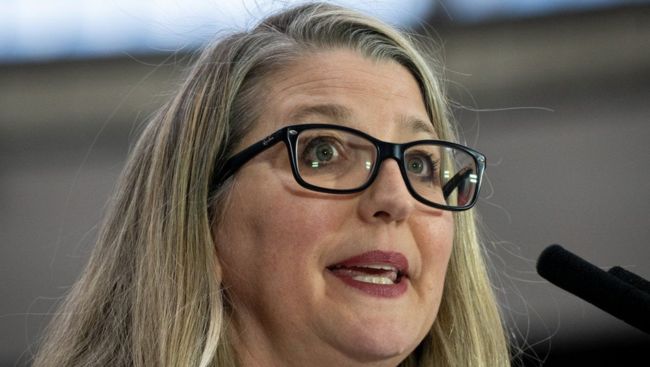
Agriculture Minister Lana Popham says the task force will provide recommendations to government in the next 10 months on topics such as access to water, land and labour, as well as competitiveness and investment.

Popham says plans for the task force were underway before threats from U.S. President Donald Trump to put 25 per cent tariffs on Canadian goods, but the added economic uncertainty means now is the time to be focused on buying B.C. goods.

Danielle Synotte, executive director of the BC Agriculture Council and co-chair of the new task force, says many farmers and ranchers are concerned about the "double whammy" of having to deal with both possible tariffs and counter-tariffs.

She says farmers are adaptable and are already looking to diversify or are considering other markets as a way to respond to the U.S. threats.

Task force co-chair James Donaldson, CEO of BC Food & Beverage, says even if the tariff threat goes away in the short term it is having a permanent effect on U.S. buying behaviour as Americans look to buy U.S. products to avoid uncertainty in their own supply.

"That's going to cause us to change the way we do things, and we're going to have to be able to find ways to keep more Canadian products in Canada," he said. "So, it'll be really key for industry to work with government as well as Canada's retailers." 

Popham said B.C. shoppers are already "voting with their pocketbooks" and Canadian fruit is being sold more quickly in some B.C. stores than American varieties.

"But we have a lot of work to do also, as government and industry, to make it easier for people to grow food here, to process food, and then also to establish new markets that are stable," she said.

"We thought we had a stable partner with (the) United States. That's proven to be wrong. And so we need to find different measures to move our goods, but that also includes provinces and territories right here in our own country."

MORE National ARTICLES

Canada's chief justice decries misinformation as top court turns 150

Canada's chief justice decries misinformation as top court turns 150
Canada's top court is expanding its public outreach to build trust at a time of increasing misinformation as more people get their news from social media. Chief Justice Richard Wagner and other justices of the Supreme Court of Canada launched a cross-country tour in Victoria, B.C., on Monday to mark the court's 150th anniversary.

Canada's chief justice decries misinformation as top court turns 150

Weak loonie signals economy is 'in trouble': currency expert

Weak loonie signals economy is 'in trouble': currency expert
The Bank of Canada's end-of-day exchange rate Monday had the loonie trading at 68.48 cents US, but the Canadian dollar neared 70 cents in the minutes after Prime Minister Justin Trudeau said the planned tariffs would be paused for at least 30 days. The overall trend for the Canadian dollar however has been weak, which has implications for the economy. 

Weak loonie signals economy is 'in trouble': currency expert

Interprovincial trade barriers: what they are, why they exist and how to cut them

Interprovincial trade barriers: what they are, why they exist and how to cut them
The Trump administration's on-again, off-again threat to impose damaging tariffs has boosted an old idea for driving economic growth in Canada: eliminating interprovincial trade barriers. Here's a look at how interprovincial trade barriers work and why years of efforts to tear them down them have largely failed.

Interprovincial trade barriers: what they are, why they exist and how to cut them

Trudeau says U.S. tariffs on Canada will be paused for 30 days

Trudeau says U.S. tariffs on Canada will be paused for 30 days
Prime Minister Justin Trudeau says "proposed tariffs" between Canada and the United States will be paused for at least 30 days while the countries work together on the border.

Trudeau says U.S. tariffs on Canada will be paused for 30 days

Canada's forestry sector faces uncertainty with 25 per cent U.S. tariffs

Canada's forestry sector faces uncertainty with 25 per cent U.S. tariffs
A wide shadow of uncertainty has been cast over Canada's forestry sector by U.S. President Donald Trump's decision to impose a 25-per-cent tariff on its lumber products. Several industry groups have released statements criticizing the tariff as unnecessary and harmful for both sides, a sentiment echoed by British Columbia Premier David Eby who vows full support for the provincial sector.

Canada's forestry sector faces uncertainty with 25 per cent U.S. tariffs

Trump mistaken, U.S. banks can and do operate in Canada says finance professor

Trump mistaken, U.S. banks can and do operate in Canada says finance professor
A finance professor at the University of Toronto says American banks do operate in Canada despite assertions by U.S. President Donald Trump that they are not allowed to do business in the country. The Office of the Superintendent of Financial Institutions lists Amex Bank of Canada, Citibank Canada and J.P. Morgan Bank Canada on Schedule II, all having U.S. parent companies. 

Trump mistaken, U.S. banks can and do operate in Canada says finance professor