
Wednesday, December 17, 2025
ADVT 
National

B.C. task force aims to grow agriculture, food processing industries

Darpan News Desk The Canadian Press, 20 Feb, 2025 03:19 PM
  • B.C. task force aims to grow agriculture, food processing industries

British Columbia is launching a task force focused on growing the agriculture and food processing industries after years of struggle due to climate, labour concerns and now the threat of tariffs from the United States.

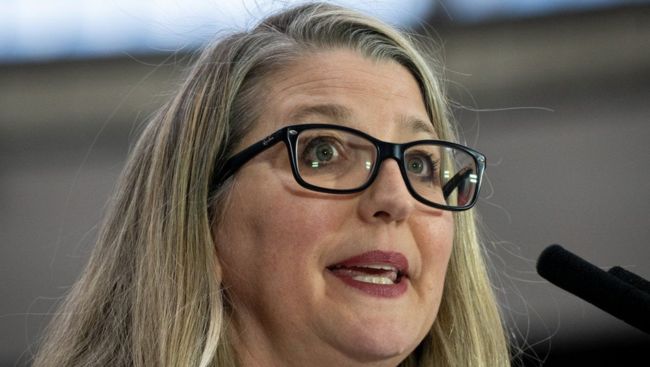
Agriculture Minister Lana Popham says the task force will provide recommendations to government in the next 10 months on topics such as access to water, land and labour, as well as competitiveness and investment.

Popham says plans for the task force were underway before threats from U.S. President Donald Trump to put 25 per cent tariffs on Canadian goods, but the added economic uncertainty means now is the time to be focused on buying B.C. goods.

Danielle Synotte, executive director of the BC Agriculture Council and co-chair of the new task force, says many farmers and ranchers are concerned about the "double whammy" of having to deal with both possible tariffs and counter-tariffs.

She says farmers are adaptable and are already looking to diversify or are considering other markets as a way to respond to the U.S. threats.

Task force co-chair James Donaldson, CEO of BC Food & Beverage, says even if the tariff threat goes away in the short term it is having a permanent effect on U.S. buying behaviour as Americans look to buy U.S. products to avoid uncertainty in their own supply.

"That's going to cause us to change the way we do things, and we're going to have to be able to find ways to keep more Canadian products in Canada," he said. "So, it'll be really key for industry to work with government as well as Canada's retailers." 

Popham said B.C. shoppers are already "voting with their pocketbooks" and Canadian fruit is being sold more quickly in some B.C. stores than American varieties.

"But we have a lot of work to do also, as government and industry, to make it easier for people to grow food here, to process food, and then also to establish new markets that are stable," she said.

"We thought we had a stable partner with (the) United States. That's proven to be wrong. And so we need to find different measures to move our goods, but that also includes provinces and territories right here in our own country."

MORE National ARTICLES

A short list of some of the U.S. goods to be hit with Canadian tariffs on Tuesday

A short list of some of the U.S. goods to be hit with Canadian tariffs on Tuesday
Effective Tuesday, Canada is imposing 25 per cent tariffs on $30 billion in goods originating in the United States — part of Canada's response to sweeping tariffs on Canadian goods ordered by U.S. President Donald Trump. Here are some of the major categories of imported items being hit with Canadian tariffs, along with their approximate annual dollar values:

A short list of some of the U.S. goods to be hit with Canadian tariffs on Tuesday

Ontario, Quebec and B.C. among provinces pulling U.S. booze from provincial retailers

Ontario, Quebec and B.C. among provinces pulling U.S. booze from provincial retailers
Canadian alcohol producers are cheering decisions from several provinces to yank U.S. booze from provincial liquor stores. They say the move will deliver a boost to homegrown business while adding ammunition to a federal plan aimed at getting the U.S. to back down from tariffs.

Ontario, Quebec and B.C. among provinces pulling U.S. booze from provincial retailers

Canada slaps retaliatory tariffs on hundreds of U.S. goods, outlines response plan

Canada slaps retaliatory tariffs on hundreds of U.S. goods, outlines response plan
Ottawa is imposing 25 per cent tariffs on hundreds of goods originating in the United States — from meat and milk to carpets and curtains — in response to steep new American levies against Canada. A federal official also signalled that Canada will pursue available legal remedies in response to the U.S. breaching its international trade commitments.

Canada slaps retaliatory tariffs on hundreds of U.S. goods, outlines response plan

Employment Outlook 2025: Opportunities and Challenges in BC and Canada

Employment Outlook 2025: Opportunities and Challenges in BC and Canada
The employment landscape in British Columbia (BC) and Canada is undergoing dynamic transformations shaped by economic shifts, evolving labor market demands, and demographic changes. As we move into 2025, a comprehensive outlook reveals both opportunities and challenges for job seekers, particularly for immigrants, underrepresented groups, and youth entering the workforce.  

Employment Outlook 2025: Opportunities and Challenges in BC and Canada

Ottawa defers effective date of capital gains changes to 2026, promises exemptions

Ottawa defers effective date of capital gains changes to 2026, promises exemptions
The federal government says it is deferring the implementation of a hike to the capital gains inclusion rate to next year and plans to introduce new exemptions to ensure most middle-class Canadians do not pay more tax if the rate becomes official. The deferral announced by Finance Minister Dominic LeBlanc on Friday delays the implementation of the change from June 25, 2024 to Jan. 1, 2026.

Ottawa defers effective date of capital gains changes to 2026, promises exemptions

Surrey mayor joins alliance of border communities ahead of possible tariffs

Surrey mayor joins alliance of border communities ahead of possible tariffs
Surrey Mayor Brenda Locke said potential U.S. tariffs would put hundreds of jobs in her community at risk, as she became the latest mayor to join an alliance advocating for Canadian border communities. Locke said Thursday that more than 20 per cent of businesses in Surrey have direct trade ties with the United States amounting to roughly $2.8 billion in cross-border commerce each year.

Surrey mayor joins alliance of border communities ahead of possible tariffs