
Friday, June 5, 2026
ADVT 
National

B.C. to extend unpaid leave for 'catastrophic' illness, injury: Eby

Darpan News Desk The Canadian Press, 20 Oct, 2025 03:04 PM
  • B.C. to extend unpaid leave for 'catastrophic' illness, injury: Eby

The British Columbia government is proposing changes to the province's Employment Standards Act to allow up to 27 weeks of unpaid leave each year for people facing what Premier David Eby described as "catastrophic" illness or injury.

Eby told a news conference in Victoria that the change would take effect this fall if the bill is passed by his New Democrat majority government.

He says the leave would ensure people undergoing treatment such as chemotherapy could take the time they need without worrying about job security.

Labour Minister Jennifer Whiteside joined Eby, saying workers deserve to return to their jobs once their health-care providers confirm they're ready.

Whiteside says B.C.'s Human Rights Code prohibits discrimination on the basis of disability, but the current employment standards law does not include provisions to protect the jobs of people unable to work due to a long-term illness or injury.

The minister says the proposed changes will ensure the protection in the Human Rights Code is "built in" to the legislation.

"For people facing a difficult diagnosis and maybe well a life-altering situation, whether it's short term or long term, the certainty of knowing that their job will be there for them provides relief," Whiteside told the news conference. 

"It alleviates an unnecessary burden on their journey to recovery," she said.

She says survivors of intimate partner violence, many of whom show signs and symptoms of traumatic brain injury, would also be covered by the law.

"We know that 90 per cent of intimate partner violence cases reported to police involve survivors ages 15 to 54 in their prime working years," she said.

"For them, the guarantee of job protection may help invite survivors to feel safe in seeking services for their recovery."

More than 31,000 people are diagnosed with cancer each year in B.C., Whiteside noted.

"It's vital that we provide this important assurance to workers and their families," Whiteside said of the proposed changes.

She said the changes would bring B.C.'s legislation in line with standards already in place in other Canadian jurisdictions, including Manitoba, Ontario and Quebec, as well as federally regulated industries and workplaces.

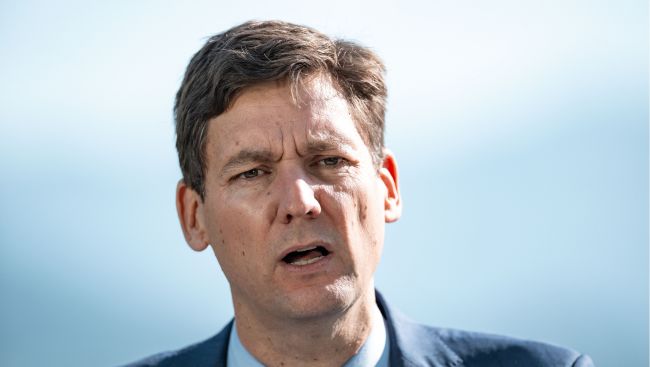
Picture Courtesy: THE CANADIAN PRESS/Ethan Cairns

MORE National ARTICLES

'All bets are off': B.C. pulls liquor, changes procurement after U.S. tariffs

'All bets are off': B.C. pulls liquor, changes procurement after U.S. tariffs
British Columbia Premier David Eby says the province and the country is strong enough to weather the storm in the threat to Canada's sovereignty coming from a former friend. Eby took the unusual step of interrupting B.C.'s budget lockup to address how the province will respond after U.S. President Donald Trump imposed tariffs on Canadian goods.

'All bets are off': B.C. pulls liquor, changes procurement after U.S. tariffs

B.C. budget to buffer province against Trump's 'uncertainty and disorder': minister

B.C. budget to buffer province against Trump's 'uncertainty and disorder': minister
Brenda Bailey's budget is being handed down on the same day that Trump says a 25 per cent U.S. tariff will be placed on Canadian goods, while Canadian energy will face 10 per cent tariffs. Bailey says Trump's tariffs came "completely out of nowhere" when he announced them last November and they've already changed B.C.'s financial circumstances.

B.C. budget to buffer province against Trump's 'uncertainty and disorder': minister

Poilievre says Canadian counter-tariffs should go to fund tax cuts

Poilievre says Canadian counter-tariffs should go to fund tax cuts
Conservative Leader Pierre Poilievre says Canada needs to retaliate against American tariffs by targeting U.S. goods Canada can make, does not need or can obtain elsewhere. Poilievre says Canada needs to cut taxes to counteract the domestic impact of tariffs and points to the carbon price, the capital gains tax and income tax.

Poilievre says Canadian counter-tariffs should go to fund tax cuts

Canadians say they will stop buying U.S. products as Trump’s tariffs take effect

Canadians say they will stop buying U.S. products as Trump’s tariffs take effect
Canadians say they are ready to use their wallets to fight the trade war with the United States, which began today as President Donald Trump imposed 25 per cent tariffs on Canadian goods. Haligonians interviewed today said they are focused on buying Canadian whenever possible, and many said they had already stopped purchasing American products, as Trump had been threatening tariffs for months.

Canadians say they will stop buying U.S. products as Trump’s tariffs take effect

How Canadians are reacting to Donald Trump's tariffs

How Canadians are reacting to Donald Trump's tariffs
Canada is immediately imposing 25 per cent retaliatory tariffs on $30 billion worth of American products, and will expand that to cover another $125 billion in U.S. goods in 21 days. Here’s how political, business and union leaders reacted Tuesday.

How Canadians are reacting to Donald Trump's tariffs

The trade war is on between Canada and the U.S. Here's what you need to know

The trade war is on between Canada and the U.S. Here's what you need to know
A trade war between Canada and its largest trading partner has begun, with tariffs imposed by U.S. President Donald Trump now in effect and Prime Minister Justin Trudeau responding with a package of retaliatory tariffs. Stocks are tumbling, businesses are warning of impending layoffs and further measures from both countries are likely in the coming days.

The trade war is on between Canada and the U.S. Here's what you need to know