Friday, June 19, 2026
ADVT 
National

B.C. warns of landslide risk during heavy rain

Darpan News Desk The Canadian Press, 17 Sep, 2021 03:29 PM
  • B.C. warns of landslide risk during heavy rain

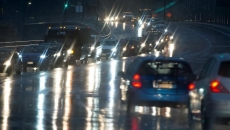
Heavy rainfall that has increased the risk of landslides caused the B.C. government to announced the closure of a section of the Trans-Canada Highway on Friday.

The Ministry of Transportation announced Highway 1 was being closed starting at 4 p.m. on Friday between Spences Bridge and Lytton, most of which was destroyed by a wildfire in late June.

It says in a statement that intense rainfall over land scorched by wildfire poses the risk of landslides and motorists should expect to encounter debris in burned areas.

Drivers are also advised not to stop along their journeys when it's raining.

Additional roads and highways in B.C. may be affected by landslides and the ministry says further closures may be announced with limited notice.

Earlier on Friday, BC Hydro advised residents across the province to prepare a well-stocked emergency kit for what the Crown utility warned could be a stormy fall and winter made worse by the effects of a severe summer drought.

The latest report from BC Hydro says record-breaking heat between June and August in many parts of B.C. killed trees or weakened their root systems.

It says unstable trees combined with forecast stormier La Nina weather conditions create the potential for more power outages if they topple across power lines.

The utility says conditions heading into the fall mirror those in 2015 and 2018, two major wildfire seasons, when it was hit by its two most damaging storms.

It says a storm following the 2015 summer drought caused more than 710,000 outages and lasted multiple days.

BC Hydro has some of the highest densities of trees per kilometre of power line in North America.

It stepped up its program to manage vegetation near those lines in an effort to reduce the risk of outages over the coming months, the utility says.

But customers should have flashlights, batteries, a first aid kit, water and non-perishable food on hand in case the lights go out, it says.

It notes the duration of blackouts has been declining.

"Power service is restored for most customers within the first few hours of an outage," says a news release.

MORE National ARTICLES

Vancouver council set to vote on decriminalization

Vancouver council set to vote on decriminalization
Dr. Patricia Daly, chief medical health officer for Vancouver Coastal Health, says the COVID-19 pandemic has worsened the crisis, disrupting and intensifying the toxicity in the supply of illicit drugs and interrupting harm reduction and treatment services.

Vancouver council set to vote on decriminalization

Canada, U.S. border closed 30 more days: source

Canada, U.S. border closed 30 more days: source
Visits such as vacations, day trips and cross-border shopping excursions have been forbidden since March in an effort to limit the spread of the novel coronavirus.

Canada, U.S. border closed 30 more days: source

Vancouver approves climate emergency action plan

Vancouver approves climate emergency action plan
Green Coun. Pete Fry says in a social media post that council voted in favour of the plan Tuesday night.

Vancouver approves climate emergency action plan

New COVID peaks in B.C. with 717 cases, 11 deaths

New COVID peaks in B.C. with 717 cases, 11 deaths
A joint statement from Dr. Bonnie Henry and Health Minister Adrian Dix urges people to work together to stay small and stay local to help slow the spread of the illness.

New COVID peaks in B.C. with 717 cases, 11 deaths

Meng's border exam was necessary: officer

Meng's border exam was necessary: officer
Supt. Sanjit Dhillon says he would not have authorized the immediate execution of the provisional arrest warrant by the RCMP in the case because there were outstanding national security and criminality concerns about Meng.

Meng's border exam was necessary: officer

Canada seeing 'exceptionally low' levels of flu

Canada seeing 'exceptionally low' levels of flu
Many health experts feared that a fall wave of COVID-19 would not only be worse than the first wave in the spring, but it would come just as seasonal flu infections started to spread, making it impossible for hospitals to keep up.

Canada seeing 'exceptionally low' levels of flu