VANCOUVER — British Columbia's government is celebrating record-high graduation rates for aboriginal students, but indigenous high-school completion levels, provincially and for the rest of Canada, still fall significantly short of the national average.
The number of aboriginal students finishing secondary school in the province has increased steadily from about 54 to 63 per cent over the past six years, as indicated by data from B.C.'s Education Ministry.
But that is still more than 20 percentage points shy of the 84-per-cent average for the general population in B.C.
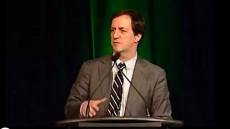
"Seeing any kind of increase in those numbers is of course very welcome," said Linc Kesler, a professor at the University of British Columbia and director of the school's First Nations House of Learning.
Kesler predicted the upward trend will continue with further efforts to bridge the funding gap between aboriginal and non-aboriginal students and by increasing the amount of aboriginal content being taught in school.
"The curriculum piece is really critical," he said.
"Overcoming the silence and exclusion of aboriginal people in the way, for instance, Canadian history is taught ... is really important and I think has a really significant impact."
Kesler pointed to a big push underway in the Prairie provinces to overhaul school curricula to include First Nations content.
The word aboriginal is an all-encompassing term that includes First Nations, Metis and Inuit. There are about 1,175,000 aboriginals in Canada, of which about 700,000 identify as First Nations.
A 2011 Assembly of First Nations report pegged the 2004-2009 First-Nations graduation rate at 36 per cent, compared to a Canadian average of 72 per cent over the same time period.
The Canadian Press obtained a 2014 Manitoba government internal report earlier this year that noted the province had the lowest First Nations secondary-school graduation rate in the country at 28 per cent. However, a Statistics Canada publication from 2011 found 50 per cent of Manitoba's indigenous people between 25 and 64 have at least a high-school degree.
A shifting culture is also having an impact on improved graduation rates, said Kesler, with more encouragement for aboriginal students to carry on to university or college.
"There was once a time when ... there wasn't such an interest in seeing them graduate or proceed to post-secondary," he said. "People were being tracked out of academic courses with a fair degree of regularity."
B.C.'s Education Minister Mike Bernier was unavailable for comment, but said in a statement that he's encouraged to see so many aboriginal students graduating at the same time.
"There is still work to do so every aboriginal student has the skills they need to succeed in a changing world," said an additional statement from the ministry.
University of Manitoba academic Frank Deer says there are still remote communities in the North that don't offer kindergarten to Grade 12 schools, and that graduation rates tend to be higher in southern Canada, closer to urban centres.
Deer referenced a program that sees First Nations students in a Winnipeg school district placed in health-care work settings between Grades 9 to 12 in order to focus on the connection between education and a career.
The retention rate for the initial group was an "amazing" 100 per cent, he said.
"We're in an exciting era where many school districts, many provincial authorities, are beginning to engage in program development, engage in community supports," said Deer.
"I do see the glass half full. In fact, better than that — I'm very encouraged for the future."