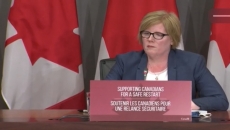
OTTAWA - Canada's new minister of mental health and addictions, Carolyn Bennett, says she is "very interested" in proposals from British Columbia on how to proceed with a plan for addressing the opioid crisis in the country.
She said her meetings with the B.C. Centre on Substance Use Thursday, and with her B.C. counterpart, Sheila Malcolmson, Friday, will be "really important."
"We have an obligation to listen to the people who are actually doing this work, and then respond appropriately," Bennett said
They will be able to "drill down" on seeking an approach toward safe supply that also considers decriminalizing possession, she said.
"We don't want to do anything that makes things worse, that recriminalizes people," said Bennett.
B.C. has sought to decriminalize possession of small amounts of illicit drugs by seeking from Health Canada an exemption from the federal Controlled Drugs and Substances Act.
The B.C. Ministry of Mental Health and Addictions could not immediately be reached for comment Friday.
Following the discussions, Bennett said she will see what can be done in a "timely manner" to begin the work that is required on decriminalization and safe supply.
The Trudeau government has so far rejected wholesale decriminalization of simple drug possession while rolling out some pilot projects to provide safer pharmaceutical alternatives to toxic street drugs.
Leslie McBain, founder of advocacy group Moms Stop The Harm, who also met with Bennett Thursday, said the minister "is interested in the pathways that we are on," adding that the topic of decriminalization was broached.
"Decriminalization in and of itself is not going to save lives, per se," said McBain. "It's going to end stigma. It's going to end the fear of people who have to go out and buy the drugs on the streets. It will do a lot of really good things, and it is essential."
Asked about how she will address the opioid crisis as it affects Indigenous communities, Bennett said, "I think everything that we do has to be culturally safe, culturally competent, as well as trauma-informed."
Bennett, who previously held the position of Crown-Indigenous relations minister, said that she will "listen and learn from the people who have been leading this work in Indigenous communities for a very long time," adding that this work will be done in partnership not just with experts but those with lived experience.
The opioid crisis has worsened during the pandemic, with fatal overdoses and emergency room visits related to opioids having increased in different parts of the country.