Friday, June 12, 2026
ADVT 
National

Blanchet vows to press PM on prof's use of slur

Darpan News Desk The Canadian Press, 22 Oct, 2020 06:50 PM
  • Blanchet vows to press PM on prof's use of slur

Bloc Québécois Leader Yves-François Blanchet says he plans to ask Prime Minister Justin Trudeau later today for his position on the suspension of a professor who used a derogatory word for Black people in class.

"We all need to be conscious of the power of our words.," Trudeau said Wednesday in the House of Commons.

"We support respect for others and listening to communities. Our priority is to always take real action to combat racism in all its forms."

Blanchet said Thursday he wasn't satisfied with that response and wants to see if Trudeau will support the University of Ottawa professor.

Verushka Lieutenant-Duval has been at the centre of a controversy for using the notorious word as part of an academic course.

She has apologized for using the term during a class discussion, but not before the university suspended her.

Blanchet says those subject to hateful words deserve compassion and support, but using the term in an educational context isn't prejudicial.

Asked what he would say to those who believe otherwise, Blanchet said: "I have to say that you have very rightfully expressed your sensibility and opinion, which I respect absolutely, but which I do not share."

Trudeau isn't expected to be in the House of Commons during Thursday afternoon's question period, with his schedule showing other, digital engagements.

The issue has been of particular interest in Quebec where provincial politicians have come to Lieutenant-Duval's defence. So have Bloc Québécois MPs on Parliament Hill.

On Wednesday, University of Ottawa president and vice-chancellor Jacques Frémont issued an appeal for calm amid rising tensions between faculty and students over the incident, saying the decision to remove Lieutenant-Duval from the classroom was not taken arbitrarily, nor was her academic freedom threatened at any point.

"We are currently witnessing a disagreement between two diametrically opposed camps attacking each other through various media channels. In such a hostile and disrespectful environment, little progress can be made," Frémont wrote.

"The more tension we have around these social issues, the more radicalized and polarized the discourse becomes and the more difficult it is to find a viable way forward."

Conservative Leader Erin O'Toole weighed in earlier Thursday, saying his party believes university campuses should have freedom of speech and healthy debate, noting the importance of doing with respect for professors and students.

He said a similar context of respect was needed if ever the offensive word is to be used under the umbrella of academic freedom, pointing to literary works from a different era.

"The discussions about racism lately have been good in raising awareness of inequalities and unacceptable outcomes," O'Toole said.

"So how do you find that balance? I think universities are trying to look at that and there should be respect as part of that process."
MORE National ARTICLES

Peter MacKay calls for China sanctions over COVID-19

Peter MacKay calls for China sanctions over COVID-19
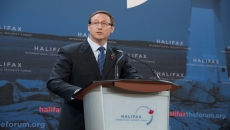
Conservative leadership hopeful Peter MacKay is calling for use of the Magnitsky Act if specific individuals in China can be identified as having suppressed information related to COVID-19 A full inquiry, perhaps an international one, into how the novel coronavirus turned into a pandemic is required, MacKay told supporters.    

Peter MacKay calls for China sanctions over COVID-19

Despite jarring jobs numbers, Canada, U.S. charting different courses

Despite jarring jobs numbers, Canada, U.S. charting different courses
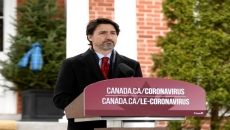
Prime Minister Justin Trudeau says it's a fundamental principle of life in Canada that no one should have to go to work if they don't feel safe doing so. Trudeau made the comments today as the country confronted some of the worst unemployment numbers in history — nearly two million jobs lost last month and an unemployment rate of 13 per cent.    

Despite jarring jobs numbers, Canada, U.S. charting different courses

B.C. government, Translink make agreement to keep transit rolling amid COVID

B.C. government, Translink make agreement to keep transit rolling amid COVID
Metro Vancouver's transportation authority has reversed its plans to cut service and rescinded layoff notices to 1,500 people as it works out an emergency funding plan with the provincial government. Translink and the province say in a joint news release that they are working on a comprehensive solution to address the financial impact on the service because of the COVID-19 pandemic.

B.C. government, Translink make agreement to keep transit rolling amid COVID

Trudeau says wage-subsidy program to be extended as steep job losses continue

Trudeau says wage-subsidy program to be extended as steep job losses continue
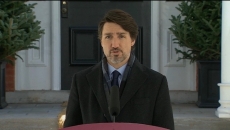
Prime Minister Justin Trudeau says the federal government's emergency wage-subsidy program will be extended beyond its early-June endpoint. The program covers 75 per cent of worker pay up to $847 a week to try to help employers keep employees on the job in the face of steep declines in revenue due to the COVID-19 pandemic.

Trudeau says wage-subsidy program to be extended as steep job losses continue

Huge job losses in B.C. indicate a 'hard road ahead': finance minister

Huge job losses in B.C. indicate a 'hard road ahead': finance minister
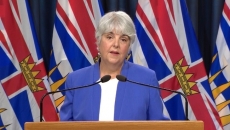
British Columbia Finance Minister Carole James says she doesn't want to sugar coat what will be a hard road ahead as labour force figures show the province lost a quarter of a million jobs in April. Combined with jobless figures in March, almost 400,000 people were unemployed.

Huge job losses in B.C. indicate a 'hard road ahead': finance minister

Canadians trust doctors, scientists and government more since pandemic began

Canadians trust doctors, scientists and government more since pandemic began
A new survey suggests the COVID-19 pandemic has given Canadians almost absolute trust in doctors. The Proof Strategies annual trust index is usually completed in January but when Canada went into a nationwide lockdown to slow the spread of the novel coronavirus the public-relations firm decided to ask the same questions again in early May.    

Canadians trust doctors, scientists and government more since pandemic began