Analysts at the Bank of Canada say prices on goods affected by Ottawa's counter-tariffs against the United States last year were roughly six per cent higher on average than non-tariffed goods.
The federal government imposed tariffs of 25 per cent on a variety of grocery items, clothing and other household staples coming from the United States for about six months starting in March 2025 as retaliation to U.S. President Donald Trump's initial tariff campaign.
Bank of Canada researchers compared the costs of more than 100,000 tariffed goods at seven retailers to a control group of products unaffected by duties and found nearly a quarter of Ottawa's counter-tariffs were passed on in prices paid by consumers by mid-June 2025.
The central bank's report published today also says that the bulk of those higher prices on tariffed goods fell back to normal three months after the federal government removed most of the counter-tariffs in September.
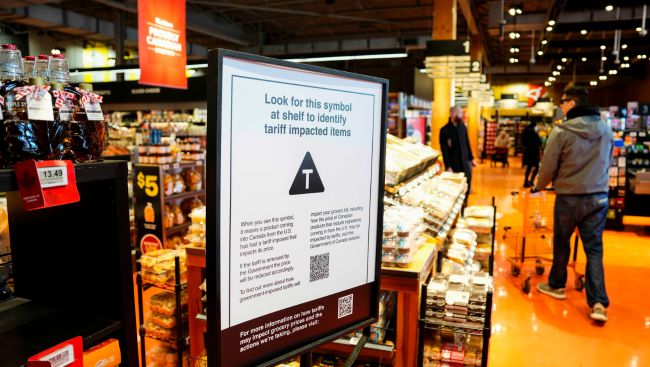
Researchers found products that were flagged to consumers as being subject to tariffs were also more likely to sport higher prices than tariffed goods that didn't advertise the impact of duties.
Bank of Canada analysts say the tariff banners helped skirt customer backlash and appeared to give retailers more room to pass on tariff costs to consumers.
Picture Courtesy: THE CANADIAN PRESS/Justin Tang