
Tuesday, May 12, 2026
ADVT 
National

Budget watchdog reports sharp improvement in home affordability — but not everywhere

Darpan News Desk The Canadian Press, 02 Oct, 2025 08:23 AM
  • Budget watchdog reports sharp improvement in home affordability — but not everywhere

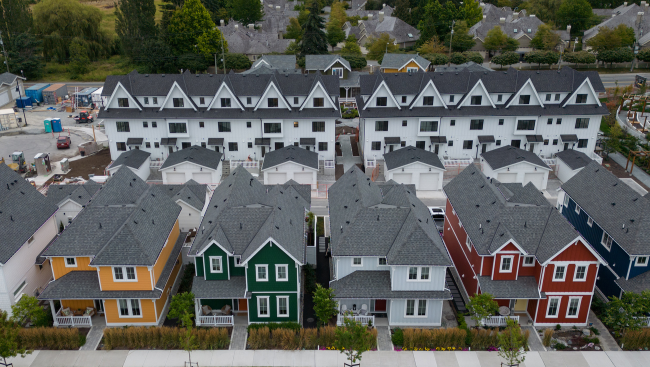
As Parliamentarians spar over how to make housing more affordable, Ottawa's fiscal watchdog is reporting significant progress in closing that affordability gap nationally — but the picture looks very different across the country.

Interim Parliamentary Budget Officer Jason Jacques put out an updated housing report Thursday. The report gauges affordability based on the gap between average home prices and what the typical household can afford.

That gap narrowed from 80 per cent in September 2023 to 34 per cent in August, the report said.

The PBO said cheaper borrowing costs, stronger wages and lower home prices are making it easier for Canadians to afford a home and pay their mortgage.

Home prices peaked in 2022 during the pandemic recovery era but subsequently cooled in many markets after the Bank of Canada rapidly increased its benchmark interest rate to above five per cent.

Today, the policy rate stands at 2.5 per cent following a series of cuts, helping to bring down mortgage costs. Home prices, meanwhile, have not returned to earlier highs.

Canada's most expensive markets broadly saw the biggest gains in affordability over the past three years, the PBO said.

The most significant improvements were seen in Toronto and Hamilton, but the PBO noted home prices in those markets are still well above affordable levels.

At 74 per cent, the affordability gap is widest in Halifax, while Edmonton's four per cent gap is the smallest of any major metropolitan area included in the analysis.

Calgary, Montreal and Québec saw the most deterioration in affordability, but the PBO said the cost of carrying a mortgage in those cities is still relatively low.

The report also gauged households' financial stability based on mortgage debt service ratios — the share of household income that goes toward paying off a home loan.

The first half of 2025 has seen "significant progress" in restoring housing affordability to 2019 levels based on mortgage debt service ratios, the PBO said.

While those ratios have improved in Toronto, Vancouver and Victoria, the PBO warned households in those still-expensive markets are more financially vulnerable than those elsewhere in Canada.

Picture Courtesy: THE CANADIAN PRESS/Darryl Dyck

MORE National ARTICLES

Interprovincial trade barriers: what they are, why they exist and how to cut them

Interprovincial trade barriers: what they are, why they exist and how to cut them
The Trump administration's on-again, off-again threat to impose damaging tariffs has boosted an old idea for driving economic growth in Canada: eliminating interprovincial trade barriers. Here's a look at how interprovincial trade barriers work and why years of efforts to tear them down them have largely failed.

Interprovincial trade barriers: what they are, why they exist and how to cut them

Trudeau says U.S. tariffs on Canada will be paused for 30 days

Trudeau says U.S. tariffs on Canada will be paused for 30 days
Prime Minister Justin Trudeau says "proposed tariffs" between Canada and the United States will be paused for at least 30 days while the countries work together on the border.

Trudeau says U.S. tariffs on Canada will be paused for 30 days

Canada's forestry sector faces uncertainty with 25 per cent U.S. tariffs

Canada's forestry sector faces uncertainty with 25 per cent U.S. tariffs
A wide shadow of uncertainty has been cast over Canada's forestry sector by U.S. President Donald Trump's decision to impose a 25-per-cent tariff on its lumber products. Several industry groups have released statements criticizing the tariff as unnecessary and harmful for both sides, a sentiment echoed by British Columbia Premier David Eby who vows full support for the provincial sector.

Canada's forestry sector faces uncertainty with 25 per cent U.S. tariffs

Trump mistaken, U.S. banks can and do operate in Canada says finance professor

Trump mistaken, U.S. banks can and do operate in Canada says finance professor
A finance professor at the University of Toronto says American banks do operate in Canada despite assertions by U.S. President Donald Trump that they are not allowed to do business in the country. The Office of the Superintendent of Financial Institutions lists Amex Bank of Canada, Citibank Canada and J.P. Morgan Bank Canada on Schedule II, all having U.S. parent companies. 

Trump mistaken, U.S. banks can and do operate in Canada says finance professor

B.C. critical minerals being diverted away from United States: David Eby

B.C. critical minerals being diverted away from United States: David Eby
Companies in British Columbia are in the process of redirecting critical minerals and energy products to markets outside the United States, Premier David Eby said, as the reality of U.S. President Donald Trump's tariffs sets in. Eby noted B.C. has opened new trade offices in Taiwan, Vietnam and the Philippines over the last 18 months.

B.C. critical minerals being diverted away from United States: David Eby

Winter's first widespread snowfall hits Metro Vancouver, with more on the way

Winter's first widespread snowfall hits Metro Vancouver, with more on the way
The first widespread snowfall of winter has hit Metro Vancouver, with Environment Canada warning the ongoing wintry blast could eventually bring up to 25 centimetres to start off a frigid week. The weather agency says in a snowfall warning for the region that "intense flurries" could bring heavy accumulation and cut visibility on roads.

Winter's first widespread snowfall hits Metro Vancouver, with more on the way