Wednesday, June 10, 2026
ADVT 
National

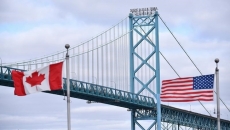
Canada and U.S. extend border closure to Nov. 21

Darpan News Desk The Canadian Press, 19 Oct, 2020 05:34 PM
  • Canada and U.S. extend border closure to Nov. 21

Incidental visits like vacations, day trips and cross-border shopping excursions have been forbidden since March in an effort to limit the spread of COVID-19.

The restrictions do not apply to those who must cross to ensure the continued flow of goods and essential services, including truckers and health workers who live in one country but work in the other. Canada has also added certain exemptions to reunite extended family members.

But despite alarming signs of the pandemic making a comeback on the cusp of colder weather and flu season, President Donald Trump and his officials have persisted in playing down the dangers, and speak straight-faced about lifting the ban sooner rather than later.

In an interview last week with a Detroit radio station, Secretary of State Mike Pompeo echoed Trump's claim last month that Canada is keen to resume travel — a sentiment that's at odds with both public opinion and the official position north of the border.

"We’ve got to get America back going again. And the Canadians want this, too," Pompeo told WJR Detroit.

"We’re working to create a set of international protocols so that we can do the right thing, make sure people stay safe and healthy, but make sure also that people can do the things they need to do to take care of their families and their businesses."

An online poll released last week by Leger and the Association for Canadian Studies suggested two out of three Canadians would not be comfortable travelling to the U.S. even once the restrictions are lifted.

The strongest reservations were expressed in Ontario and B.C., where 77 per cent said they would not travel. Quebec and Atlantic Canada were somewhat less concerned at 63 per cent and 65 per cent, respectively.

Online surveys cannot be assigned a margin of error because they do not generate a random sample of the population.

Prime Minister Justin Trudeau has said the travel ban won't be eased until there's clear evidence the pandemic is slowing in the United States.

                 WATCH: Canda Border clsoure extended til Nov 21st

"We keep extending the border closures because the United States is not in a place where we would feel comfortable reopening those borders," Trudeau told the Global News podcast The Start last week.

"We see the cases in the United States and elsewhere around the world, and we need to continue to keep these border controls in place."

Trump, however, seems to see it differently, raising eyebrows last month when he suggested the border would reopen by the end of the year.

"Canada would like it open, and, you know, we want to get back to normal business," he said.

"We have a great trade deal right now, and so we’re going to be opening the borders pretty soon."

MORE National ARTICLES

Here are some of the deadliest mass killings in recent Canadian history:

Here are some of the deadliest mass killings in recent Canadian history:
April 19, 2020: Seventeen people are killed after a man who at one point wore a police uniform and drove a mock-up cruiser travelled across northern Nova Scotia. An RCMP officer is among the dead. Police say the suspected shooter, 51-year-old Gabriel Wortman, was killed after being intercepted by officers in Enfield, N.S.

Here are some of the deadliest mass killings in recent Canadian history:

Those who knew Nova Scotia gunman shocked by rampage

Those who knew Nova Scotia gunman shocked by rampage
Neighbours and schoolmates of the man responsible for a killing rampage that left at least 19 people dead in northern Nova Scotia were attempting Monday to come to terms with the tragedy.  A 23 year member of the RCMP police force Const Heidi Stevenson was killed, a mother of two, and another officer is recovering from non life threating injuries. 

Those who knew Nova Scotia gunman shocked by rampage

COVID-19 prompts bus driver layoffs, service cuts for Metro Vancouver transit

COVID-19 prompts bus driver layoffs, service cuts for Metro Vancouver transit
There have been significant layoffs of bus drivers and deep service cuts on buses, SeaBus, SkyTrain and West Coast Express across Metro Vancouver. Nearly 1,500 bus drivers and other transit workers across Metro Vancouver are being laid off as TransLink faces plunging ridership during the COVID-19 pandemic.    

COVID-19 prompts bus driver layoffs, service cuts for Metro Vancouver transit

Demand will fuel B.C. real estate in 2021 after COVID recession: report

Demand will fuel B.C. real estate in 2021 after COVID recession: report
A report from the B.C. Real Estate Association says the 2020 COVID-driven recession will be deep, although it could be shorter than other Canadian economic downturns. The market intelligence report released Monday by the association says it expects home sales to sink 30 to 40 per cent for April 2020. 

Demand will fuel B.C. real estate in 2021 after COVID recession: report

Prime Minister Justin Trudeau confirms border closure, which began on March 21 and was set to expire on Tuesday.

Prime Minister Justin Trudeau confirms border closure, which began on March 21 and was set to expire on Tuesday.
Canadian officials acknowledged some regions of the country could be closer to re-opening parts of the economy than others, but continued to stress a careful approach as the border closure with the hard-hit United States was extended for another 30 days during the COVID-19 crisis. Prime Minister Justin Trudeau confirmed the extension on Saturday for the closure restricting non-essential travel across the border, which began on March 21 and was set to expire on Tuesday.

Prime Minister Justin Trudeau confirms border closure, which began on March 21 and was set to expire on Tuesday.

Feds pledge $306M aid for Indigenous businesses suffering COVID-19 losses

Feds pledge $306M aid for Indigenous businesses suffering COVID-19 losses
Prime Minister Justin Trudeau says the government will provide $306 million in funding to help small and medium-sized Indigenous businesses suffering the economic effects of the COVID-19 pandemic. 

Feds pledge $306M aid for Indigenous businesses suffering COVID-19 losses