Statistics Canada says economic growth stalled in the first quarter, leading to a second consecutive decline in real gross domestic product.
That meets some definitions for a technical recession, though not all economists weighing in on StatCan's Friday report were convinced the label was necessary.
Real gross domestic product by expenditure was essentially unchanged on a quarter-over-quarter basis, StatCan said. Converting that to an annualized rate — the figure most economists pay close attention to — magnifies the quarterly changes and results in a decline of 0.1 per cent in real GDP for the first quarter.
That follows a real GDP drop of one per cent in the fourth quarter of 2025, a figure StatCan revised lower on Friday. Three of the last four quarters in Canada have now posted negative real GDP growth.
Heading into Friday’s release, the consensus among economists had called for real gross domestic product growth of 1.5 per cent on an annualized basis in the first quarter.
BMO chief economist Doug Porter said in a note to clients that there was "no sense sugar-coating this sour result, as the economy has clearly been struggling to grow since the start of the trade war."
"While there will be plenty of debate over whether this constitutes a recession (we would say 'no, not really'), there is little debate that the economy has struggled to make any headway over the past year amid the ongoing trade conflict," Porter said.
Higher imports of gold dragged down activity in the quarter, and exports were mildly negative.
Business capital investment fell for a fifth consecutive quarter, and weak resale activity in the housing market also hurt the first-quarter figures. Government capital spending, which had been strong through 2025, also fell off in the first quarter.
Those drops were offset by a ramp-up in businesses accumulating inventory.
While two quarters in a row of negative growth meets the bar for a technical recession, many economists also gauge the breadth and depth of a downturn before declaring a formal recession.
"Is Canada in a recession? Probably not, but whatever you want to call it, it’s not good," said KPMG chief economist Ali Jaffery in a note.
Jaffery said the two-quarter-contraction rule is a "crude" bar for measuring a recession that fails to take into account income and labour market conditions. Slowing population growth has meant fewer new households are adding to spending in the economy, weighing down overall activity, he said.
Real GDP rose 0.2 per cent on a quarterly basis in the first three months of the year, StatCan said, as Canada’s population shrank for a second quarter in a row.
StatCan mainly blamed weakness in Canada’s resource extraction industries and in construction activity for a 0.1 per cent decline in real GDP in March.
The last two quarterly contractions are mostly due to real GDP declines in October and March. Growth was either flat or modestly positive for the four months in between.
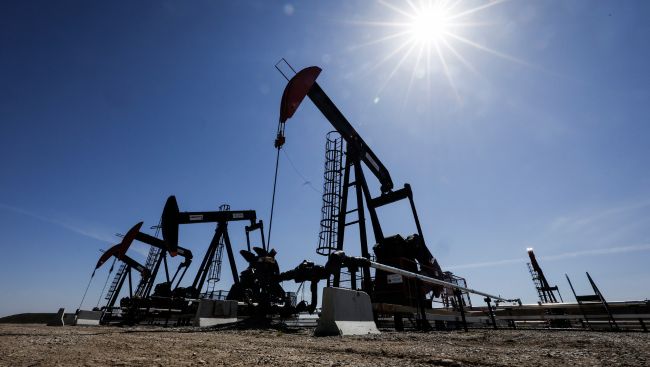
Bradley Saunders, North America economist at Capital Economics, said in a note that the "trade-induced" technical recession was likely already over as rising oil and gas activity mean the second quarter of 2026 is tracking for a solid rebound.
StatCan's early estimates for real GDP in April call for a sharp rebound to 0.4 per cent growth in the month as the mining, quarrying and oil and gas sectors returned to growth. Those figures are expected to be revised next month.
Adding to the murky view was that the monthly figures used to track real GDP by industry suggest growth was mildly positive in the first quarter of the year, compared with the annualized contraction in real GDP by expenditure.
It’s not uncommon for these two measures of the economy to differ by a few tenths of a percentage point, as each metric uses slightly different data sources and methodology to arrive at the final figures.
The Bank of Canada will be scrutinizing the latest GDP figures ahead of its next interest rate decision on June 10. The central bank has held its benchmark interest rate steady at 2.25 per cent at its last four meetings as monetary policymakers wait for clarity on the Iran war and U.S. trade developments.
Porter said the soft first-quarter GDP figures should "really throw a wet blanket" over rate-hike talk in financial markets, "as the economy is in no condition to deal with higher rates."
Picture Courtesy: THE CANADIAN PRESS/Jeff McIntosh