Monday, May 11, 2026
ADVT 
National

Canada's 2030 emissions target is out of reach after progress stalled in 2024: report

Darpan News Desk The Canadian Press, 18 Sep, 2025 09:41 AM
  • Canada's 2030 emissions target is out of reach after progress stalled in 2024: report

Canada's short-term targets for reducing its emissions are now out of reach after emission levels remained unchanged last year, and recent federal policies have set back Canada's progress, Canada's leading climate policy research organization says in a new report.

The Canadian Climate Institute released its early analysis of national emissions for 2024 on Thursday. It suggests they totalled 694 million tonnes — the equivalent of what 146 million gas-powered cars emit over the course of a year.

The latest government figures estimate Canada's emissions hit the same level in 2023.

The institute says a drop in emissions in sectors like electricity production and heavy industry were offset by increased emissions from the oil and gas sector.

Canada has committed to reducing its greenhouse gas emissions to 40 to 45 per cent below 2005 levels by 2030. Currently, Canada's emissions are about 8.5 per cent below what they were in 2005.

To reach its target, Canada would need to lower emissions by 40 million tonnes a year. The climate institute says that's impossible.

"It really is a combination of time left (and) technical feasibility. I mean, rolling out the scale of emission reductions required to close that gap is massive," said Dave Sawyer, principal economist with the Canadian Climate Institute.

"It's a challenge when you've got emissions growing as we do, especially in the oil and gas sector. I mean, that's the bottom line."

The news that Canada is set to miss its 2030 target comes as no surprise, as Canada continues to be the worst-performing country in the G7 on reducing emissions.

Environment Commissioner Jerry DeMarco warned a year ago that Canada was going to miss the target and said there was still 20 to 30 years' worth of emissions reduction work ahead of it before it could catch up.

Researchers with the climate institute say Canada is only on track to reduce emissions to 20 to 25 per cent of 2005 levels.

In its report, the institute says Canada's Canada's progress toward lowering its emissions is "fragile."

"Basically we see momentum is going in the wrong way," Sawyer said.

"Most other sectors are either flat or stalled, and maybe declining slightly. But really it's the upward pressure of oilsands that is driving emissions and methane reductions aren't accelerating as fast as they had."

The institute's report estimates emissions from the oil and gas sector increased 1.9 per cent in 2024, accounting for nearly a third of Canada's overall emissions. Transportation emissions were flat, accounting for 23 per cent of Canada's total emissions, while emissions from buildings, heavy industry and electricity were all lower.

Sawyer said the slowing momentum on reducing emissions also stems from federal and provincial policy shifts prioritizing economic growth over climate policy.

Those shifts include Prime Minister Mark Carney repealing the consumer carbon price and pausing the electric vehicle mandate, Saskatchewan moving to prolong its coal plants and Alberta maintaining a frozen industrial carbon price for 2026.

"These things all contribute to less emission reductions in the future or rising emissions," Sawyer said.

Carney and his ministers have refused in recent weeks to say whether Canada is still committed to its 2030 and 2035 targets, though the government says it is still focused on hitting net-zero by 2050.

Carney has said he wants to make Canada "climate competitive" and has said his climate plan is forthcoming.

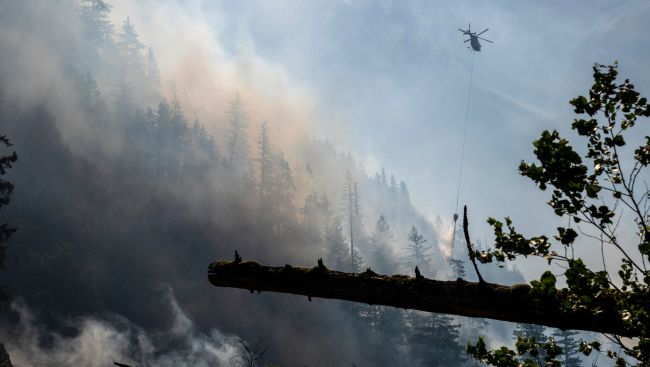
Picture Courtesy: THE CANADIAN PRESS/ Tijana Martin
MORE National ARTICLES

Canada to impose 25% tariffs on $29.8B in U.S. goods starting Thursday

Canada to impose 25% tariffs on $29.8B in U.S. goods starting Thursday
The federal government will impose 25 per cent tariffs on U.S. goods worth $29.8 billion in retaliation for steel and aluminum tariffs the administration of U.S. President Donald Trump imposed today. All countries, including Canada, were hit Wednesday with 25 per cent tariffs on steel and aluminum imports into the United States — part of Trump's attempts to realign global trade.

Canada to impose 25% tariffs on $29.8B in U.S. goods starting Thursday

White House says Trump dropping plan to double steel, aluminum tariffs

White House says Trump dropping plan to double steel, aluminum tariffs
After another chaotic day in Canada-U.S. relations, U.S. President Donald Trump dropped his threat to double tariffs on Canadian steel and aluminum imports after Ontario agreed to pause a surcharge on electricity exports. White House spokesman Kush Desai confirmed a 25 per cent tariff on steel and aluminum, with no exceptions, will go into effect for Canada and all other countries on Wednesday.

White House says Trump dropping plan to double steel, aluminum tariffs

B.C. takes advantage of U.S. 'chaos,' trade war to attract more doctors and nurses

B.C. takes advantage of U.S. 'chaos,' trade war to attract more doctors and nurses
The "chaos" in the United States provides an opportunity for British Columbia to recruit more American doctors and nurses, the province's health minister said as she announced changes aimed at fast-tracking the recognition of their credentials. Josie Osborne said "now is the time" for U.S. health workers to make the move.

B.C. takes advantage of U.S. 'chaos,' trade war to attract more doctors and nurses

Ford says Trump dropping plan to double steel, aluminum tariffs

Ford says Trump dropping plan to double steel, aluminum tariffs
Premier Doug Ford says U.S. Commerce Secretary Howard Lutnick has committed to lowering U.S. President Donald Trump's tariff on Canadian aluminum and steel back to 25 per cent after Ontario agreed to pause a surcharge on electricity exports to the United States.

Ford says Trump dropping plan to double steel, aluminum tariffs

Slower B.C. real estate sales blamed on U.S. tariff uncertainty, association says

Slower B.C. real estate sales blamed on U.S. tariff uncertainty, association says
The British Columbia Real Estate Association says tariff uncertainty has slowed housing activity.  A board report says there were 4,947 residential sales in the province last month, down 9.7 per cent from the same time last year. 

Slower B.C. real estate sales blamed on U.S. tariff uncertainty, association says

Explainer: What's a recession and why is rising anxiety about it roiling markets?

Explainer: What's a recession and why is rising anxiety about it roiling markets?
Stock markets are plunging, consumers and businesses have started to sour on the economy, and economists are marking down their estimates for growth this year, with some even seeing rising odds of a recession. The tech-heavy Nasdaq stock index slipped into a correction last week, defined as a 10% drop from its most recent peak. The broader S&P 500 neared that level Tuesday.

Explainer: What's a recession and why is rising anxiety about it roiling markets?