The second of Canada's "two Michaels" went on trial in Beijing on Monday after being detained for more than two years in apparent retaliation for the arrest in Vancouver of a top executive of Chinese telecom giant Huawei.
Canadian diplomats have been denied access to the trials with the explanation the hearings were being held behind closed doors because of alleged national security concerns.
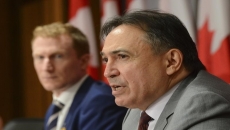
“We are deeply troubled by the total lack of transparency surrounding these hearings and we continue to work toward an immediate end to their arbitrary detention," Foreign Affairs Minister Marc Garneau said in a statement Monday.
As Minister of Foreign Affairs, securing the safe return to Canada of Mr. Kovrig and Mr. Spavor is my top priority.
— Marc Garneau (@MarcGarneau) March 22, 2021
We are deeply troubled by the lack of transparency surrounding the hearings and we continue to work to end their arbitrary detention.
Statement: pic.twitter.com/K5lugcjEwo
Diplomats and journalists have showed up nonetheless to seek information and show support.
Outside Beijing's No. 2 Intermediate Court, Jim Nickel, the Canadian Embassy’s deputy chief of mission, said he'd been told the trial had begun, but was barred from entry in what he complained was a violation of China's international and bilateral treaty obligations.
“Michael Kovrig has been detained for more than two years now. He's been arbitrarily detained and now we see that the court process itself is not transparent," Nickel told reporters.
“We're very troubled by this but we thank those who have come out from the embassies here in Beijing and the international support that we've had for Michael, for Canada and the call that many of us are making for their immediate release."
Nickel said 26 countries had sent representatives to show their support, including the U.S., the U.K, Australia and many European nations.
Garneau thanked them all for their efforts.
“The eyes of the world are on these cases and proceedings," he said.
The Chinese government has provided almost no information about the accusations against the two, but a newspaper run by the ruling Communist party alleges they collaborated in stealing state secrets and sending them abroad.
No verdict has been announced in Spavor's case and it wasn't clear if additional hearings would be held.
However, such cases are almost always predetermined in China, and Beijing is seen as using Kovrig and Spavor as leverage to obtain the release of Huawei executive Meng Wanzhou, who was arrested at the request of the U.S. at the airport in Vancouver in December 2018.
The two Canadians were detained in China just days later and have been held ever since, while Meng has been released on bail and remains under house arrest at her Vancouver mansion.
Kovrig and Spavor were finally charged in June 2020 under China’s broadly defined national security laws.
Meng, meanwhile, is wanted by the U.S. on fraud charges related to Huawei’s dealings with Iran, which is under American financial sanctions.
At a news briefing in Ottawa on Friday, Prime Minister Justin Trudeau said the arbitrary imprisonment of Spavor and Kovrig was completely unacceptable, "as is the lack of transparency around these court proceedings."
The secretive nature of the Spavor hearing means "it becomes extremely difficult to make judgments around whether or not the trial was fair," Trudeau added.
"I can certainly say that in Canada we are a country of an independent justice system that values transparency as part of the process in terms of ensuring that justice is fair and done properly.
"China needs to understand that it is not just about two Canadians, it is about the respect for the rule of law and relationships with a broad range of Western countries that is at play with the arbitrary detention and the coercive diplomacy they have engaged in."
China's Foreign Ministry has denied any wrongdoing in the handling of Kovrig and Spavor's cases, attributing the timing of their trials to little more than coincidence.
Meng’s case has deeply angered China’s government, which sees her detention as a deliberate attempt to malign Chinese companies and impede the nation's growing economic and political clout.
Beijing has demanded her immediate and unconditional release and has also restricted various Canadian exports, including canola seed, and handed death sentences to another four Canadians convicted of drug smuggling.
Canada and the U.S. have pledged to work together with China to seek the release of the two Michaels, but meetings between top U.S. and Chinese diplomats last week seemed to offer little hope.