OTTAWA — The Canadian military has been routinely deploying a counter-intelligence team to guard against possible spying, terrorism and sabotage during its annual Arctic exercise, according to internal documents.
In the view of intelligence experts, the move is unusual because Operation Nanook is conducted on Canadian soil in remote locations of the Far North. Foreign involvement is limited to friendly, close allies.
It is also curious because guarding against such threats at home is usually the purview of either the Canadian Security Intelligence Service or the RCMP, said Wesley Wark, a University of Ottawa professor and one the country's leading experts on intelligence.
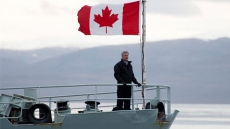
A spokesman for the military's intelligence branch says the team has been deployed every year since 2008, which is two years after Prime Minister Stephen Harper began attending the military exercise with members of the Parliamentary Press Gallery in tow.
The only regular foreign media presence on those trips has involved the Chinese, including the country's official news service and — in 2013 — a representative of a major daily, both of whom are accredited members of the gallery in Ottawa.
Capt. Travis Smyth said the military intelligence branch has a legal responsibility to protect the Forces. The Arctic exercise, despite being within the country's borders, is "highly visible and the potential for threats to security exist."
He would not say what potential threats were posed in the remote region, citing it as an operational security matter.
When asked directly whether the media was targeted, Smyth replied in an email: "For reasons related to operational security, any individuals or groups that may have been under investigation cannot be publicly released."
Another unusual aspect is the fact the Canada's top brass has for years insisted that the country faces no significant military threat in the Arctic.
Yet, a series of briefing documents released to The Canadian Press under access to information legislation show the counter-intelligence team was ordered — both "prior to and during" the exercise — to "detect, identify and mitigate the threats of espionage, terrorism, sabotage and subversion" against the military, its personnel, equipment and infrastructure.
The group was told to focus on "direct threats" within the "immediate area of operations," which would involve both a few hundred regular and reserve force soldiers camped on the tundra and a handful warships supporting them in empty inlets.
A heavily censored July 5, 2013 operations order shows the deployment had five distinct phases and that regular briefings were to be given to the country's joint northern commander.
Unlike CSIS and the RCMP, there is no dedicated civilian review committee for defence intelligence activities. However Smyth points out that counter-intelligence has an internal watchdog that examines investigation requests and operations. It is chaired by the military's head of intelligence.
Wark said it is curious and wondered how much of it was a so-called "table top exercise" meant to get counter-intelligence officers thinking.
There is also, in terms of the overall intelligence community, a dearth of awareness and knowledge about the Arctic, a gap that Wark says the army may be able to plug with its capabilities.
"This is supposed to be CSIS's bailiwick, but as we heard from (the security and intelligence review committee) recently, CSIS has not been devoting a lot of organized resources to the North," he said.
The integrated threat assessment centre, which brings together experts from across the security and intelligence communities — including National Defence — looked at potential threats in the Arctic back in 2010. While foreign jihadists were considered a remote possibility, the group said "issue-based" domestic extremism — or those opposed to development in North — represented the biggest cause for concern.