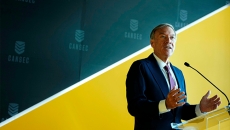
Prime Minister Mark Carney and nine European leaders issued a joint statement on Wednesday, welcoming the reported two-week ceasefire agreement between the United States and Iran.
The deal was announced Tuesday evening after President Donald Trump threatened in a social media post earlier that day that "a whole civilization" would "die" if a deal to reopen the Strait of Hormuz — a crucial shipping lane — was not reached.
Trump said on social media the U.S. and Iran will be talking about reconstruction, sanctions relief and resuming tanker traffic in the Strait of Hormuz — traffic that may be subject to Iranian tolls going forward.
Speaking to reporters on his way into his office in Ottawa Wednesday, Carney said it was a "good day."
"I think we should recognize the positive developments of the last few hours," Carney said, thanking Trump and Pakistan's Prime Minister Shehbaz Sharif, along with Iranian leaders.
"Canada joins our allies … in supporting these efforts, and that will include efforts to support the reopening of the Strait of Hormuz, which is important for re-establishing stability, lowering prices in commodities, prices at the pump even here in Canada, price of fertilizer for farmers, price of aluminum for manufacturers and others."
Carney said there is still much more to do to address "tricky issues" and said peace in the Middle East must include peace in Lebanon.
The statement from Carney and European leaders encouraged "quick progress towards a substantive negotiated settlement."
"This will be crucial to protect the civilian population of Iran and ensure security in the region. It can avert a severe global energy crisis," the statement said.
"We support these diplomatic efforts. To this end, we are in close contact with the United States and other partners."
Hours after the ceasefire deal was announced, Iran and Gulf Arab countries reported new attacks Wednesday.
It was not clear if the strikes would scuttle the deal, which U.S. Vice President JD Vance called “fragile.”
Even before the new attacks, much about the agreement was unclear as the sides presented vastly different versions of the terms.
Iran said the deal would allow it to formalize its new practice of charging ships for the right to pass through the Strait of Hormuz, a crucial transit lane for oil. But it was not clear Wednesday whether vessels would feel safe using the channel or whether ship traffic had resumed. It also was not clear whether any other country has agreed to this condition.
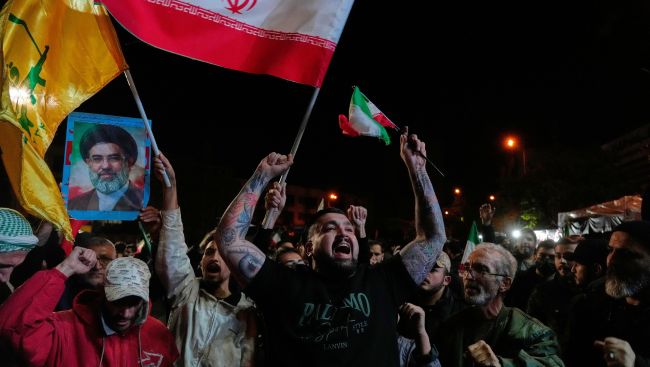
Pakistan — which helped to mediate the deal — and other countries said fighting would pause in Lebanon, where Israel has launched a ground invasion against the Iran-backed Hezbollah militant group. Israel said it would not, and strikes hit Beirut on Wednesday.
The fate of Iran’s missile and nuclear programs — the elimination of which were major objectives for the U.S. and Israel going into this war — also remained unclear. Trump said the U.S. would work with Iran to remove buried enriched uranium, though Iran did not confirm that.
Picture Courtesy: AP Photo/Vahid Salemi