Thursday, December 25, 2025
ADVT 
National

CFIB says internal trade barriers coming down, but patchwork could create challenges

Darpan News Desk The Canadian Press, 30 Jun, 2025 09:38 AM
  • CFIB says internal trade barriers coming down, but patchwork could create challenges

A new report by the Canadian Federation of Independent Business says progress has been made on removing trade barriers within Canada, but it adds that the patchwork of approaches could create new issues.

The organization's latest "internal trade report card" grades the federal and provincial governments based on factors related to interprovincial and territorial co-operation. It said Nova Scotia ranked highest in its 2025 evaluation, as the first province to introduce and implement mutual recognition legislation.

Mutual recognition refers to an arrangement where provinces or territories agree to accept the standards, regulations or laws in other jurisdictions.

Ontario was a close second after eliminating all of its Canadian Free Trade Agreement exceptions.

The federal and provincial governments have been working to remove internal trade barriers in the face of U.S. tariffs imposed by President Donald Trump.

SeoRhin Yoo, CFIB’s senior policy analyst for interprovincial affairs, said the internal trade file is "finally getting the attention is has desperately needed" since the CFTA was signed in 2017.

"Three years ago, we challenged governments to blow a hole through Canada’s internal trade barriers by adopting mutual recognition policies to get the flow of goods, services and people moving across the country. At the time, we heard all the reasons why it couldn’t be done," Yoo said in a press release.

"But just in the past six months we’ve seen seven jurisdictions with mutual recognition legislation on the books."

Ryan Mallough, CFIB's vice-president of legislative affairs, said the progress has been encouraging, but he pointed out the risk of having seven different jurisdictions taking seven different approaches to mutual recognition.

"That kind of patchwork can wind up recreating the barriers it was meant to knock down," said Mallough in a statement.

Prime Minister Mark Carney repeatedly vowed to "eliminate" interprovincial trade barriers and create "free trade by Canada Day" throughout the spring federal election campaign.

Carney's government has since passed its planned changes into law ahead of Canada Day. Bill C-5, the omnibus bill that reduces federal restrictions on interprovincial trade and also speeds up permitting for large infrastructure projects, became law on June 26.

But experts have said that law is only the first step of the process.

When Carney made his campaign promise, he was talking about cutting red tape put up by the federal government — not the rules set by the provinces, which have the most authority in this area.

"We’re marching the ball down field, but we haven’t reached the end zone just yet," said Mallough.

"The premiers and the prime minister have instructed the Committee on Internal Trade to reach a pan-Canadian mutual recognition agreement for December. We’ll be watching those conversations closely to ensure we cross the goal line and finally eliminate Canada’s internal trade barriers once and for all."

The CFIB has estimated that existing internal trade hurdles cost the economy some $200 billion a year.

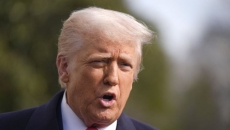
Picture Courtesy: THE CANADIAN PRESS/Sean Kilpatrick
MORE National ARTICLES

Explainer: What's a recession and why is rising anxiety about it roiling markets?

Explainer: What's a recession and why is rising anxiety about it roiling markets?
Stock markets are plunging, consumers and businesses have started to sour on the economy, and economists are marking down their estimates for growth this year, with some even seeing rising odds of a recession. The tech-heavy Nasdaq stock index slipped into a correction last week, defined as a 10% drop from its most recent peak. The broader S&P 500 neared that level Tuesday.

Explainer: What's a recession and why is rising anxiety about it roiling markets?

Poilievre wants to impose 50 per cent metal tariffs on U.S. after latest Trump threat

Poilievre wants to impose 50 per cent metal tariffs on U.S. after latest Trump threat
Trump says he will double the steel and aluminum tariffs he promised to deploy on Canadian products tomorrow — to 50 per cent — in response to Ontario's 25 per cent surcharge on electricity exports to the U.S. Trump originally vowed to impose 25 per cent tariffs on all steel and aluminum imports.

Poilievre wants to impose 50 per cent metal tariffs on U.S. after latest Trump threat

Confused about tariff deadlines? Here's what we know right now

Confused about tariff deadlines? Here's what we know right now
The trade war between the U.S. and Canada took another turn Tuesday as U.S. President Donald Trump vowed to double the tariff on steel and aluminum imports coming from Canada in response to Ontario's surcharge on electricity exports. Trump said 50 per cent tariffs will be placed on Canadian steel and aluminum starting Wednesday, up from the 25 per cent tariffs that had been expected to apply to those materials.

Confused about tariff deadlines? Here's what we know right now

PM-designate Carney demands respect from U.S. as Trump doubles tariffs

PM-designate Carney demands respect from U.S. as Trump doubles tariffs
Prime minister-designate Mark Carney says he will keep Canadian retaliatory tariffs in place until "Americans show us respect" and commit to free trade again. Carney is reacting after U.S. President Donald Trump moved today to double incoming tariffs on Canadian steel and aluminum, which Carney calls an attack on Canadian workers and businesses.

PM-designate Carney demands respect from U.S. as Trump doubles tariffs

Doctors thrust into COVID-19 celebrity reflect on backlash, threats and Thank You letters

Doctors thrust into COVID-19 celebrity reflect on backlash, threats and Thank You letters
Doctors who were thrust into national fame when COVID-19 hit five years ago say they try to focus on positive feedback from the public rather than the angry backlash and threats of violence they faced. British Columbia public health chief Dr. Bonnie Henry still has a security detail to this day because of threats against her and her family from people angry about lockdowns or opposed to COVID vaccination. 

Doctors thrust into COVID-19 celebrity reflect on backlash, threats and Thank You letters

Carney's win kills Liberals' much-delayed plan to change capital gains tax

Carney's win kills Liberals' much-delayed plan to change capital gains tax
Mark Carney's victory in the Liberal leadership race puts the final nail in the coffin of Ottawa's controversial plan to hike the inclusion rate on capital gains. When they tabled their budget last spring, the federal Liberals presented the plan to change capital gains as a way to get wealthy Canadians and corporations to pay more — but the plan has faced a series of delays ever since.

Carney's win kills Liberals' much-delayed plan to change capital gains tax