Monday, June 8, 2026
ADVT 
National

COVID-19 cases rise in Indigenous communities

Darpan News Desk The Canadian Press, 30 Sep, 2020 08:00 PM
  • COVID-19 cases rise in Indigenous communities

Indigenous Services Minister Marc Miller says Indigenous communities have been facing an alarming rise in COVID-19 cases during the last few weeks.

Miller says 673 COVID-19 cases have been reported in First Nations communities in all, and about 130 of them are active cases now.

He says Indigenous communities were successful in facing the first wave of COVID-19 with measures that limited the spread of the virus.

The measures included closing communities to outsiders, imposing local restrictions on gatherings and making sure that people were observing basic health and hygiene protocols.

Reopening schools and businesses and places where physical distancing is not possible are all factors in the rise.

Kluane Adamek, Yukon regional Chief of the Assembly of First Nations, said Wednesday that Indigenous people get their strength from connecting to their land, culture and languages.

"We need resources to support community-led, community-driven solutions," she said.

Being out on the land, spending time with elders and being able to harvest are things that help First Nations to face the COVID-19 pandemic, she said. "The connection through spirituality, through ceremony and through cultural practices is incredibly important."

A lot of these practices have been impacted by COVID-19, she said.

Many Indigenous communities are also dealing with the opioid crisis and more mental health issues because of the COVID-19 pandemic, she said.

"It's absolutely something that across the country isn't dealt with in the same way that we have to response to it as northerners," she said. "These are people from small communities that we know.

Perry Bellegarde, the national chief of the Assembly of First Nations, says First Nations communities are among the most vulnerable populations in Canada and need more assistance to keep them safe.

"First Nations face unique realities that require unique approaches," Bellegarde said.

"Those living in poverty or in rural areas need more support and resources, including social and health supports for families."

Dr. Evan Adams, the deputy chief medical officer of health at Indigenous Services Canada, said the biggest concern is ensuring that the more than 650 Indigenous communities are ready for potential COVID-19 outbreaks.

His home community on Vancouver Island, the Tla'amin Nation, had a cluster of over 30 cases.

"It is scary for them and it's scary for us," he said. "We want them to be prepared and not scared."

Miller said the federal government has provided a total of $2.2 billion for Indigenous communities. "That has been deployed according to a formula based on population and community wellness."

He said the government made the funding programs flexible so Indigenous communities have a lot of options on how to deal with COVID -19 outbreaks.

Miller said there is also a "hidden epidemic" of mental health problems hitting Indigenous people.

"We are deploying $82.5 million to tackle the mental health epidemic, which in fact has claimed more Indigenous lives than the COVID has during the same time period."

These challenges come on top of issues Indigenous people have been facing for long time including overcrowding, underfunding, lack of infrastructure and limited access to clean drinking water in some communities.

"All these other things are exacerbated by COVID but still are present in the top of people's minds," said Miller.

He said Canadians have to recognize that Indigenous communities started off with a socio-economic gap that made them more vulnerable to COVID-19.

"The fact that they have performed exceedingly well doesn't change the fact that that socio-economic gap still exists."

Adams said Indigenous communities are concerned about having enough personal protective equipment and about whether they will have access to enough medical staff during the second wave of the pandemic across Canada.

"We're doing everything we can to make sure their plans are dusted off and ready," he said.

He said many Indigenous people can take advantage of the foraging and hunting season to stay outside, especially those who are living in remote and isolated communities.

MORE National ARTICLES

Local restaurants feel squeezed by delivery apps' commission fees

Local restaurants feel squeezed by delivery apps' commission fees
Restaurants struggling to survive during the COVID-19 crisis have turned to take-out and delivery, but the fees charged by food-delivery companies are eating away their bottom line, some operators say. Physical distancing measures have decimated dine-in service, which accounts for most industry revenue, said Mark von Schellwitz, a vice-president of the non-profit Restaurants Canada.

Local restaurants feel squeezed by delivery apps' commission fees

Ottawa helping guide, but not dictating, provincial reopening plans: Trudeau

Ottawa helping guide, but not dictating, provincial reopening plans: Trudeau
With Canada's two most populous provinces poised to outline plans for a gradual return to normalcy, Prime Minister Justin Trudeau said Monday that Ottawa will help guide, but not dictate, how provinces and territories should start easing restrictions. Ontario and Quebec together account for more than 80 per cent of the country's COVID-19 cases.    

Ottawa helping guide, but not dictating, provincial reopening plans: Trudeau

Crisis lines face volunteer, cash crunch even as COVID-19 drives surge in calls

Crisis lines face volunteer, cash crunch even as COVID-19 drives surge in calls
Despite a surge in demand due to COVID-19, many distress centres across Canada are dangerously close to folding thanks to major declines in both volunteers and revenue. Stephanie MacKendrick, CEO of Crisis Services Canada, which runs the only national suicide-specific helpline in Canada, says her organization relies on a network of approximately 100 community distress centres across the country to field calls from people.

Crisis lines face volunteer, cash crunch even as COVID-19 drives surge in calls

Conservatives gear up to grill government in modified return of House of Commons propose and oppose: Tories

Conservatives gear up to grill government in modified return of House of Commons propose and oppose: Tories
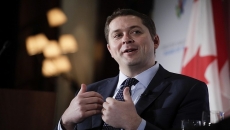
Conservative Leader Andrew Scheer laid out Monday the numerous lines of inquiry his party intends to follow this week as a modified version of a House of Commons sitting gets underway. They include the state of the nation's emergency supply stockpile, the mishmash of federal economic benefit programs that allow some to fall through the cracks and to what extent the minority Liberals are backstopping provincial efforts to reopen their economies, Scheer said.

Conservatives gear up to grill government in modified return of House of Commons propose and oppose: Tories

Learning to live with COVID-19 requires permanent fixes to vulnerable settings

Learning to live with COVID-19 requires permanent fixes to vulnerable settings
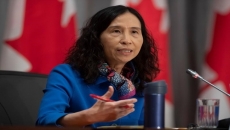
Canada's chief public health officer warned Monday there is still a lot we don't know about the virus that causes COVID-19, but said stopping this pandemic or preventing a future one will require more than just physical distancing and handwashing. Dr. Theresa Tam said we simply do not know yet whether someone who has had COVID-19 will be immune from getting it again, or how long that immunity will last.

Learning to live with COVID-19 requires permanent fixes to vulnerable settings

B.C. university creates institute to take microscope-telescope view of pandemic

B.C. university creates institute to take microscope-telescope view of pandemic
The COVID-19 pandemic has placed the world at a tipping point that's challenging social, political, economic and environmental structures, says the director of a new academic research institute at British Columbia's Royal Roads University. Dr. Thomas Homer-Dixon said Monday the pandemic is an event with the power to cause those structures to fall like dominos or shift radically to new paths.

B.C. university creates institute to take microscope-telescope view of pandemic