Data from the Canada Revenue Agency shows its recent efforts to combat tax evasion by the super-rich have resulted in zero prosecutions or convictions.
In response to a question tabled in Parliament by NDP MP Matthew Green, the CRA said it referred 44 cases on individuals whose net worth topped $50 million to its criminal investigations program since 2015.
Only two of those cases proceeded to federal prosecutors, with no charges laid afterward.
The lack of prosecutions follows more than 6,770 audits of ultra-wealthy Canadians over the past six years.
It also comes amid a roughly 3,000 per cent increase in spending on the agency's high-net-worth compliance program between 2015 and 2019 due to a beefed-up workforce, according to an October report from the parliamentary budget officer.
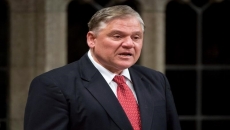
Green said federal authorities avoid pursuing Canada's biggest tax cheats but go after small business owners who don't pay their taxes under a "two-tiered system" pocked with "loopholes."
“The CRA is not pursuing Canada’s largest and most egregious tax cheats. And yet for a small mom-and-pop shop if you don’t pay your taxes long enough — two or three years — then they will absolutely go in and garnish your wages ... because they know you don't have the ability to take it to court," he said.
“There's a tax code for the ultra-wealthy ... and then there's a tax code for the rest of us," Green said. "The rich are taking advantage of the holes in our tax system. And this Liberal government continues to allow them to do so.”
The issue is top of mind for federal lawmakers this week as a parliamentary committee convenes to discuss the CRA's attempts to combat tax evasion and avoidance. Diane Lebouthillier, minister of national revenue, is slated to appear before the panel Tuesday afternoon.
A spokesman for the minister's office referred questions to the CRA, which did not respond immediately to requests for comment.
Denis Meunier, former deputy director of the Financial Transactions and Reports Analysis Centre of Canada, known as Fintrac, said the dearth of criminal charges is striking. But authorities often lack resources to carry out pricey, painstaking prosecutions across international borders and can opt instead for hefty non-criminal penalties.
"They may have some of the best lawyers fighting, so you may see that more in tax court, rather than convictions," Meunier said of proceedings against the ultra-wealthy.
"You need a search warrant to go kick in — well we don’t kick in doors, but you knock on them."
Often tax evasion boils down to unreported incomes or exaggerated expenses, which can then be deducted from income declared on tax filings.
"It’s not atypical to see individuals pay out invoices from foreign consulting companies. You pay a million bucks for a specialized report, and the company is a consulting firm based in a tax haven (where the real, or 'beneficial,' owner is hidden from view) and basically the company is owned by the same guy in Canada whose business it is," Meunier said.
It can be extraordinarily tough to trace money through the warren of shell companies and tax havens used by those seeking to stash their loot.
"Those persons who set up those shell companies and trusts in all those jurisdictions, they hear you coming. They know CRA Is after them," said Kevin Comeau, author of a 2019 C.D. Howe report on money laundering.
"They can just put in a couple more trusts and companies in other jurisdictions to make the trail longer at any time. It's a never-ending rabbit hole."
The Liberal budget in April allotted $2.1 million over two years for the Industry Department to launch a new beneficial ownership registry by 2025.
Comeau, a retired lawyer and member of Transparency International Canada’s working group on beneficial ownership transparency, said the registry could be a "game changer” for tax avoidance.
“Even if it is legal, they're not paying their fair share. So there's going to be huge social pressure on those persons to unwind those dealings and actually start bringing their money back to Canada,” he said.
“Many of these people are very highly respected people in the Canadian establishment.”
The absence of criminal prosecutions against high-net-worth residents comes in an era of rising wealth inequality, a disparity laid bare by the COVID-19 pandemic.
The top one per cent of Canada's families hold about 26 per cent of the wealth — some $3 trillion — up from the roughly 14 per cent estimated under previous methodology, according to modelling in a report from parliamentary budget officer Yves Giroux in June 2020.
The same report found that families with $29.3 million and more rank among Canada's 0.1 per cent.
Tax evasion — a predicate offence, meaning it forms a component of a more serious crime, such as money laundering — differs categorically from tax avoidance, a legal means of keeping wealth out of tax collectors' hands through clever accounting.
But critics say the vast troves wealth that remain untouchable to government authorities reveal the need to tighten tax rules as well as crack down on cheats.
“In former times we didn’t see tax avoidance as a crime," said Brigitte Unger, professor of economics at Utrecht University and head of the world’s biggest tax evasion project, run by the European Union.
"But now we see the public sector needs money, and this is effectively stealing money from public coffers, and should be treated as such," she said.