OTTAWA - It's the end of days for plastic grocery bags and Styrofoam takeout containers in Canada.
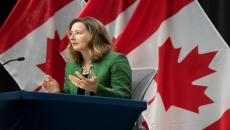
Environment Minister Steven Guilbeault published draft regulations Tuesday outlining how Canada will ban the manufacture, sale and import of these items, along with plastic cutlery, stir sticks, straws and six-pack rings, by the end of next year.
The regulations outline how each of the products is to be defined — plastics bags for example are those made of plastic film which will break or tear if used to carry 10 kilograms back and forth 53 times.
Cutlery includes forks, knives, spoons, sporks and chopsticks that will start to melt if immersed in hot but not boiling water.
There are some exceptions for single-use plastic flexible straws to accommodate people with disabilities and those needing them for medical purposes.
The public can provide written comment on the draft regulations until March 5, and the timing of the final regulations will depend on how much feedback is received. World Trade Organization rules mean Canada has to allow a six-month phase-in period once the final regulations are published, but Guilbeault said he expects them to take effect by the end of 2022.
He said the ban is only part of the story because what isn't being banned has got to be recycled.
"I mean, rightly so a lot of people are focusing on the ban and that's important," he said. "But one of the bigger challenges we have is to get our house in order when it comes to recycling."
A 2019 Deloitte report commissioned by Environment and Climate Change Canada said 3.3 million tonnes of plastic waste was tossed in 2016 and less than one-tenth of it was recycled.
There were then only 12 recycling companies nationwide. Canada set a target to recycle 90 per cent of plastic waste by 2030 and Guilbeault said there is work underway to standardize and co-ordinate recycling across provinces. Standards for plastics to make them easier to recycle, as well as a requirement that half of all plastic packaging must be made of recycled material, are also coming, he said.
In 2016, almost 30,000 tonnes of waste ended up in the environment, polluting rivers, beaches and forests with discarded coffee cups, water bottles, grocery bags and food wrappers.
"People are tired of seeing this litter in our streets and I think some of the powerful images we've seen around the world of plastic waste affecting our ecosystem has really gotten to people," Guilbeault added. "So they want us to move and we're moving."
Sarah King, head of Greenpeace Canada's oceans and plastics campaign, said the government is moving too slowly and isn't going far enough. King wanted to see all single-use plastics banned, including plastic bottles, cigarette filters, coffee cups and food wrappers.
"Canadians have been waiting a long time for the federal government to take strong and urgent action to tackle plastic waste and pollution and these regulations definitely don't reflect that call to action," she said.
King said the government also needs to focus its energy and money on transitioning from single use and recycling to reuse and refill strategies.
Prime Minister Justin Trudeau said in June 2019 that a ban on single-use plastics would be in place as early as this year, but the pandemic delayed the scientific assessment that ultimately declared plastics as "toxic" and work on which ones to target.
In May, companies came together under the banner Responsible Plastic Use Coalition, which has now sued the government over the designation of plastics as toxic.
The coalition argues the designation is defamatory and harmful to its industry, which produces many crucial products that are not harmful. A spokesman for the coalition said Tuesday the government should have waited until that case has concluded before moving on the ban.
Guilbeault said the lawsuit has no effect on the regulatory progress, "just like the lawsuit on carbon pricing didn't interfere with us implementing carbon pricing in Canada."