Thursday, June 18, 2026
ADVT 
National

Drenching rain predicted after B.C. drought, heat

Darpan News Desk The Canadian Press, 26 Oct, 2022 01:27 PM
  • Drenching rain predicted after B.C. drought, heat

VANCOUVER - An atmospheric river packing "narrow bands of heavy precipitation" is forecast for parts of British Columbia just a week after numerous high temperature records were set amid concerns of drought.

A bulletin issued by the Public Safety Ministry warns that residents in the Lower Mainland, on Vancouver Island and on the north and central coasts can expect stormy weather through to Halloween.

It says that at the end of a drought, this influx can cause flooding, although extreme weather, such as the disastrous rain last November, is not in the forecast.

The ministry statement says the central coast could see between 50 and 100 millimetres of rain by Thursday, while 40 to 80 millimetres is forecast for Howe Sound, the Sunshine Coast, west coast of Vancouver Island and Vancouver's North Shore mountains.

Environment Canada has also posted wind warnings for the central coast and Chilcotin region, but the weather office predicts heavy rain will miss the southern Interior.

The ministry says the River Forecast Centre is monitoring weather patterns and river conditions for flood hazards, while Emergency Management BC is working with communities to prepare for possible floods.

People in low-lying areas are being told to prepare for possible flooding by moving equipment and other assets to higher ground, and to make a grab-and-go bag with essentials for each member of their household if they are forced to evacuate.

A series of atmospheric rivers over several days last November washed away highways, flooded homes and farmland and prompted landslides that killed five people.

Many of the areas expecting heavy rain have been experiencing record-setting drought conditions and high temperatures for several weeks.

The province warned residents earlier this month to prepare for flooding because prolonged dry weather or drought can increase run-off and river flows.

Dry soil doesn't absorb water as well, it said, so people living near rivers or streams need to monitor the weather and river conditions closely during the transition to wet weather.

MORE National ARTICLES

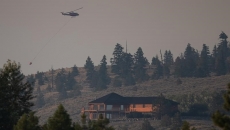
Homes lost to wildfire east of Kamloops, B.C.

Homes lost to wildfire east of Kamloops, B.C.
Hundreds of properties in communities east and west of Monte Lake were already under evacuation order, but further evacuation orders had been issued by Friday morning.

Homes lost to wildfire east of Kamloops, B.C.

U.S. acted honourably says Canada attorney general

U.S. acted honourably says Canada attorney general
Monika Rahman told a British Columbia Supreme Court that the United States has a "very high" standard on what evidence to give in making its case for extradition and the lack of evidence doesn't justify a stay of proceedings.

U.S. acted honourably says Canada attorney general

White Rock Lake fire jumps Highway 97

White Rock Lake fire jumps Highway 97
Fire information officer Hannah Swift says the BC Wildfire Service doesn't have an update on the perimeter of the fire, last measured at 325-square kilometres, because crews are focused on suppressing the blaze and helping people get out of the area.

White Rock Lake fire jumps Highway 97

Voting in federal election can be done safely: Tam

Voting in federal election can be done safely: Tam
Dr. Theresa Tam says safety protocols can be put in place to minimize the risk of voting in person, as has been done in recent provincial elections.    

Voting in federal election can be done safely: Tam

402 COVID19 cases for Thursday

402 COVID19 cases for Thursday
81.7% (3,785,216) of eligible people 12 and older in B.C. have received their first dose of COVID-19 vaccine and 68.4% (3,172,287) have received their second dose.

402 COVID19 cases for Thursday

Most B.C. COVID cases are in 20- to 40-year-olds with one or fewer doses: top doctor

Most B.C. COVID cases are in 20- to 40-year-olds with one or fewer doses: top doctor
British Columbia's top doctor says the surge in COVID-19 cases is fuelled by those between the ages of 20 and 40 who are unvaccinated or have only had one dose.

Most B.C. COVID cases are in 20- to 40-year-olds with one or fewer doses: top doctor