VANCOUVER — Experts say Canada's permissive approach to regulating commercial drones has made it a world leader in the burgeoning field, while others warn that inadequate enforcement of the soaring number of amateur flyers is putting the public at risk.
People have been increasingly taking to the skies now that recreational drones are more affordable than ever.
That upswing in popularity, the lack of public-awareness campaigns and skimpy enforcement efforts have put the unmanned aircraft on a collision course with their manned counterparts.
A rise in incidents involving recreational drones interfering with planes and helicopters has some calling for Transport Canada to sanction unlawful recreational drone users.
"Public awareness and enforcement is lacking," said Ernie Zeisman, president of a drone training outfit in the British Columbia Interior. "They need to begin clamping down."
Currently, a recreational pilot operating a drone weighing under 35 kilograms doesn't require either a licence or a special permit to fly but must follow a list of Transport Canada safety guidelines. These include stipulations such as staying nine kilometres from an airport, flying under 90 metres and always keeping their craft within eyesight.
Zeisman said a shortage of resources are mostly to blame for the lack of enforcement.
Commercial drones — officially referred to as unmanned air vehicles, or UAVs — are a different matter, he said.
"Commercial operators very much stick to the regulations and want to be responsible," said Zeisman. "They don't want to lose their licence."
Drones used for research or commercial work must have a Special Flight Operating Permit, unless they're able to satisfy stringent exemption requirements, such as operating in extremely remote locations.
New regulations are currently working their way through the system and are in part designed to incorporate recreational drone use into the regulatory fold. They would also loosen permitting requirements for smaller-scale commercial operations, freeing up Transport Canada resources.
For commercial drones, Canada's regulatory framework is emerging as a world leader.
Jeremy Laliberte, a professor at the University of Carleton, says Canada has long been "ahead of the game," in part thanks to the country's decade-long history of regulating drone use. It's only been in recent years that the United States has made forays into the regulatory field.
"There's far more happening here than down there, to say the least," said Laliberte, a professor at Carleton University.
"But they're catching up," he added.

The United States has imposed a universal ban on all commercial drone operations, with some exemptions. So far, the Federal Aviation Administration has issued only 1,000 such allowances.
In contrast, Transport Canada granted 1,672 permits last year, 945 in 2013 and 345 the year before. Between Jan. 1 and April 30 of this year 330 permits were issued.
The head start has given the country a comparative advantage in the drone sector, said Robert Kendall, executive director of Unmanned Systems Canada.
Unmanned systems groups from Brazil and South Africa have come to Canada in recent years to learn about setting up their own regulatory frameworks, said Kendall.
Canada succeeded in drawing Amazon to British Columbia, where the online retail giant is testing a drone delivery service.
However, some industry representatives argued that Canadian regulations aren't going far enough or fast enough, and Canada risks losing its competitive advantage.
Jeremy Byatt, chief operating officer at ING Robotic Aviation, called for more government action in allowing drones equipped with collision-avoiding transponders to fly beyond visual sight of the operator.
"If Canada were the first country to properly integrate beyond-visual-line-of-sight flights outside combat zones for commercial purposes, this would help create an industry and keep us ahead of the U.S.," he said.
The United States is testing beyond-line-of-sight drone flights, which other countries have been reluctant to allow.
"We're falling behind the world," said Byatt. "The U.S. will pass us and what was a huge economic advantage will disappear."
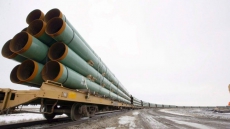
Several uses would apply, from counting wildlife to surveilling natural disasters to keeping an eye on remote pipelines, he said.
"We're sending people out on quad bikes in January in the middle of the wilderness (to monitor pipelines)," he said. "How dangerous is that?"