Monday, February 9, 2026
ADVT 
National

Experts say not enough proof expensive body cameras will reduce police violence

Darpan News Desk The Canadian Press, 09 Jun, 2020 09:34 PM
  • Experts say not enough proof expensive body cameras will reduce police violence

Ottawa is considering outfitting Canadian police with cameras following protests against violence by some officers, but experts say there is not enough proof the expensive technology is effective.

"There is no value for money in this," said Kevin Walby, associate criminal justice professor at the University of Winnipeg who has studied the use of body-worn cameras on police.

There have been demonstrations across the country and around the world since the death of George Floyd, a Black man in Minneapolis last month. A police officer knelt on his neck for several minutes as Floyd said he couldn't breathe.

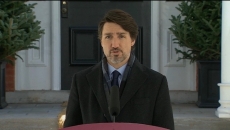
Prime Minister Justin Trudeau, who knelt with demonstrators Friday at an Ottawa anti-racism rally, said Monday that he would push premiers and RCMP to equip police with body-worn cameras. He said it was a relatively simple way to address complaints that officers in Canada treat racialized people unfairly.

Federal Public Safety Minister Bill Blair, a former Toronto police chief, said Tuesday that people are calling for accountability and transparency and cameras could enhance that.

"I know from some experience that video evidence can be the best possible evidence," Blair said.

There have been numerous pilot projects for the body cameras in police services across the country. Very few have made it standard practice.

Walby said studies in North America looking at the use of these cameras show mixed results. He added there is very little proof that use-of-force cases are significantly reduced. In some cases, Walby said police felt emboldened by the presence of the camera.

Adopting cameras in policing also comes with a significant price tag, Walby added.

"Some of the police officers in other killings of Black and Indigenous people in North America — the officers have had body cams on," he said, noting that the officers involved in the Floyd case were also wearing them.

Winnipeg Police Chief Danny Smyth threw his support behind bringing in body cameras this week but estimated it could cost up to $10 million for things such as data storage. A pilot project by the Edmonton Police Service cautioned moving forward with more cameras citing major issues with hardware and data management, as well as unexpected expenses.

Adding millions in new funds to police services is not what demonstrators have called for, Walby added.

"Why would we invest hundreds of millions of dollars into something that doesn't really work."

Protest organizers across the country shared similar sentiments about a move towards body cameras.

Jayda Hope, who co-organized a rally in Winnipeg that drew an estimated 15,000 people last week, tweeted "we don't want body cams, or to work together or compromise (with) the police ... We want abolition and defunding."

Cameras did not contribute to a significant increase in public confidence in police, said Samuel Tanner, an assistant professor of criminology at the Universite de Montreal, referencing a study he conducted recently in Montreal.

Increased transparency is also debatable, he said. When an incident is captured on the video, it isn't released publicly until a trial process. Even then, Tanner added that often the quality of image or audio is not good.

"It's not the magical solution."
MORE National ARTICLES

The latest developments on COVID-19 in Canada

The latest developments on COVID-19 in Canada
Federal Health Minister Patty Hajdu is leaving the door open to the federal government leading discussions with provinces around the creation of new standards for long-term care facilities.

The latest developments on COVID-19 in Canada

Police-escorted motorcade to accompany remains of helicopter crash victim

Police-escorted motorcade to accompany remains of helicopter crash victim
The remains of Sub-Lt. Abbigail Cowbrough, a Royal Canadian Navy sailor killed last month in a helicopter crash off the coast of Greece, were expected to arrive in Halifax on Monday. 

Police-escorted motorcade to accompany remains of helicopter crash victim

Virtual parliamentary proceedings cause spike in injuries for interpreters

Virtual parliamentary proceedings cause spike in injuries for interpreters
Virtual sittings of the House of Commons and parliamentary committees are causing headaches for interpreters — literally. Coping with iffy audio quality, occasional feedback loops, new technology and MPs who speak too quickly has resulted in a steep increase in interpreters reporting workplace injuries, according to the union that represents some 70 accredited interpreters who translate English into French and vice versa.

Virtual parliamentary proceedings cause spike in injuries for interpreters

Peter MacKay calls for China sanctions over COVID-19

Peter MacKay calls for China sanctions over COVID-19
Conservative leadership hopeful Peter MacKay is calling for use of the Magnitsky Act if specific individuals in China can be identified as having suppressed information related to COVID-19 A full inquiry, perhaps an international one, into how the novel coronavirus turned into a pandemic is required, MacKay told supporters.    

Peter MacKay calls for China sanctions over COVID-19

Despite jarring jobs numbers, Canada, U.S. charting different courses

Despite jarring jobs numbers, Canada, U.S. charting different courses
Prime Minister Justin Trudeau says it's a fundamental principle of life in Canada that no one should have to go to work if they don't feel safe doing so. Trudeau made the comments today as the country confronted some of the worst unemployment numbers in history — nearly two million jobs lost last month and an unemployment rate of 13 per cent.    

Despite jarring jobs numbers, Canada, U.S. charting different courses

B.C. government, Translink make agreement to keep transit rolling amid COVID

B.C. government, Translink make agreement to keep transit rolling amid COVID
Metro Vancouver's transportation authority has reversed its plans to cut service and rescinded layoff notices to 1,500 people as it works out an emergency funding plan with the provincial government. Translink and the province say in a joint news release that they are working on a comprehensive solution to address the financial impact on the service because of the COVID-19 pandemic.

B.C. government, Translink make agreement to keep transit rolling amid COVID