Sunday, February 8, 2026
ADVT 
National

Experts say not enough proof expensive body cameras will reduce police violence

Darpan News Desk The Canadian Press, 09 Jun, 2020 09:34 PM
  • Experts say not enough proof expensive body cameras will reduce police violence

Ottawa is considering outfitting Canadian police with cameras following protests against violence by some officers, but experts say there is not enough proof the expensive technology is effective.

"There is no value for money in this," said Kevin Walby, associate criminal justice professor at the University of Winnipeg who has studied the use of body-worn cameras on police.

There have been demonstrations across the country and around the world since the death of George Floyd, a Black man in Minneapolis last month. A police officer knelt on his neck for several minutes as Floyd said he couldn't breathe.

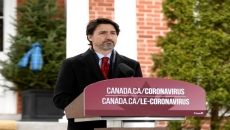
Prime Minister Justin Trudeau, who knelt with demonstrators Friday at an Ottawa anti-racism rally, said Monday that he would push premiers and RCMP to equip police with body-worn cameras. He said it was a relatively simple way to address complaints that officers in Canada treat racialized people unfairly.

Federal Public Safety Minister Bill Blair, a former Toronto police chief, said Tuesday that people are calling for accountability and transparency and cameras could enhance that.

"I know from some experience that video evidence can be the best possible evidence," Blair said.

There have been numerous pilot projects for the body cameras in police services across the country. Very few have made it standard practice.

Walby said studies in North America looking at the use of these cameras show mixed results. He added there is very little proof that use-of-force cases are significantly reduced. In some cases, Walby said police felt emboldened by the presence of the camera.

Adopting cameras in policing also comes with a significant price tag, Walby added.

"Some of the police officers in other killings of Black and Indigenous people in North America — the officers have had body cams on," he said, noting that the officers involved in the Floyd case were also wearing them.

Winnipeg Police Chief Danny Smyth threw his support behind bringing in body cameras this week but estimated it could cost up to $10 million for things such as data storage. A pilot project by the Edmonton Police Service cautioned moving forward with more cameras citing major issues with hardware and data management, as well as unexpected expenses.

Adding millions in new funds to police services is not what demonstrators have called for, Walby added.

"Why would we invest hundreds of millions of dollars into something that doesn't really work."

Protest organizers across the country shared similar sentiments about a move towards body cameras.

Jayda Hope, who co-organized a rally in Winnipeg that drew an estimated 15,000 people last week, tweeted "we don't want body cams, or to work together or compromise (with) the police ... We want abolition and defunding."

Cameras did not contribute to a significant increase in public confidence in police, said Samuel Tanner, an assistant professor of criminology at the Universite de Montreal, referencing a study he conducted recently in Montreal.

Increased transparency is also debatable, he said. When an incident is captured on the video, it isn't released publicly until a trial process. Even then, Tanner added that often the quality of image or audio is not good.

"It's not the magical solution."
MORE National ARTICLES

Trudeau says wage-subsidy program to be extended as steep job losses continue

Trudeau says wage-subsidy program to be extended as steep job losses continue
Prime Minister Justin Trudeau says the federal government's emergency wage-subsidy program will be extended beyond its early-June endpoint. The program covers 75 per cent of worker pay up to $847 a week to try to help employers keep employees on the job in the face of steep declines in revenue due to the COVID-19 pandemic.

Trudeau says wage-subsidy program to be extended as steep job losses continue

Huge job losses in B.C. indicate a 'hard road ahead': finance minister

Huge job losses in B.C. indicate a 'hard road ahead': finance minister
British Columbia Finance Minister Carole James says she doesn't want to sugar coat what will be a hard road ahead as labour force figures show the province lost a quarter of a million jobs in April. Combined with jobless figures in March, almost 400,000 people were unemployed.

Huge job losses in B.C. indicate a 'hard road ahead': finance minister

Canadians trust doctors, scientists and government more since pandemic began

Canadians trust doctors, scientists and government more since pandemic began
A new survey suggests the COVID-19 pandemic has given Canadians almost absolute trust in doctors. The Proof Strategies annual trust index is usually completed in January but when Canada went into a nationwide lockdown to slow the spread of the novel coronavirus the public-relations firm decided to ask the same questions again in early May.    

Canadians trust doctors, scientists and government more since pandemic began

Greyhound Canada to shut down temporarily all bus routes as ridership plunges

Greyhound Canada to shut down temporarily all bus routes as ridership plunges
Greyhound Canada is temporarily slamming the brakes on all of its bus routes and services as ridership plummets amid the COVID-19 pandemic. The transportation company says starting May 13 it will halt all routes until passenger demand recovers. 

Greyhound Canada to shut down temporarily all bus routes as ridership plunges

Canadian Forces still unsure how to raise helicopter that crashed

Canadian Forces still unsure how to raise helicopter that crashed
The Canadian military is still determining how to raise the wreckage of a military helicopter that crashed into the Mediterranean Sea last week, Defence Minister Harjit Sajjan said Thursday. The crash killed six members of the Canadian Forces, though the remains of only one, Sub-Lt. Abbigail Cowbrough, have been recovered.

Canadian Forces still unsure how to raise helicopter that crashed

Feds to partly cover 'top ups' for front-line workers on minimum wage

Feds to partly cover 'top ups' for front-line workers on minimum wage
Prime Minister Justin Trudeau says the federal government, provinces and territories will spend $4 billion to increase the wages of essential workers in the COVID-19 pandemic. He says the details are still to be finalized with some provinces.  

Feds to partly cover 'top ups' for front-line workers on minimum wage