WASHINGTON (AP) — Stock markets are plunging, consumers and businesses have started to sour on the economy, and economists are marking down their estimates for growth this year, with some even seeing rising odds of a recession.
The tech-heavy Nasdaq stock index slipped into a correction last week, defined as a 10% drop from its most recent peak. The broader S&P 500 neared that level Tuesday.
It’s a sharp shift from just a month ago, when stock indices were at record highs and consumer sentiment was rapidly improving. Many business executives were optimistic that President Donald Trump would cut taxes and pursue deregulation, which they expected would bolster growth.
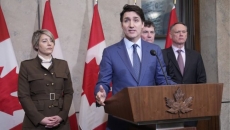
Instead, Trump has aggressively implemented tariffs — and tariff threats — against the United States' largest trading partners. On Tuesday, Trump boosted import taxes on steel and aluminum from Canada to 50%, from 25%, in response to Ontario's imposition of dutieson electricity it sends to the United States.
For now, the economy appears to be stable. Stock prices often fluctuate and sharp, temporary drops typically don't harm the economy. Most analysts still think the chances of a recession are fairly small. Goldman Sachs expects slower growth this year than last but still puts the odds of a recession at just 20%.
Still, fears of a downturn are rising as investors, economists, and business executives are realizing that Trump's import taxes are much more at the forefront of his economic policy this time than his last term in the White House. Tax cuts and deregulation appear for now to be on the back-burner. During Trump's first term, tax cuts came before the import duties.
Tariffs can slow the economy in a variety of ways: By raising prices for consumers, they can slow spending. Businesses may pull back on investing in new projects if they face higher costs from tariffs. And the uncertainty from Trump's on-again, off-again approach can also cause firms to delay hiring and investment.
“The longer the tariffs stay on, the more the risk of recession grows," says Luke Tilley, chief economist at M&T Bank/Wilmington Trust.
Here are some questions and answers about recessions:
Are there any signs a recession is imminent?
Not really. But one development that has sparked widespread fears is a real-time economy tracker maintained by the Federal Reserve's Atlanta branch. Last week it showed a sharp downshift and is now projecting that the U.S. economy will shrink at an annual rate of 2.4% in the first three months of this year.
The Atlanta Fed's tracker is not technically a forecast but instead a running tally that is updated as economic data is released. It turned negative after trade data showed a surge in imports in January, which likely reflected an effort by businesses to get ahead of tariffs.
Most economists still expect the U.S. economy to expand in the first quarter, though at a slower pace. JPMorgan sees growth slowing to just 1% at an annual rate in the first quarter, down from 2.3% in last year'sfourth quarter.
Typically, a recession occurs when some short of shock hits the economy, such as the pandemic in 2020, or the bursting of the housing bubble in 2007. It's not yet clear that tariffs will have a large enough impact to knock the economy into reverse.
Dan North, senior economist at Allianz, doesn't expect a recession, but says a “full-blown trade war” with all Trump's proposed tariffs taking effect and sparking retaliation by other countries overseas “could constitute a shock.”
What else has caused the stock markets to drop?
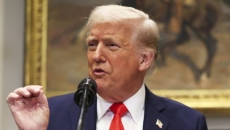
Trump helped spark the sharp market selloff Monday by refusing to rule out a recession during a Sunday interview on Fox Business News.
When asked whether he expected a recession this year, Trump said, “I hate to predict things like that. There is a period of transition because what we’re doing is very big. ... It takes a little time.”
Some of Trump's advisers, however, have dismissed recession concerns and have said the economy should continue to grow.
Why didn't Trump's tariffs spark recession fears last time?
The import taxes Trump is threatening to impose this time are far more sweeping than the duties he put in place in 2018-2019, which were mostly focused on China and a few targeted items, such as steel, aluminum, and washing machines.
Now, Trump has placed 20% duties on all imports from China, has threatened to impose 25% tariffs on all imports from Canada and Mexico— the United States' two largest trading partners — and also says the U.S. will place reciprocal tariffs on all countries that have tariffs on U.S. exports, including Europe, India, and Japan.
All told, Jan Hatzius, chief economist at Goldman Sachs, estimates that the average U.S. tariff on imported items could rise 10 percentage points as a result, five times the increase he imposed in his first term.
And most economists say that Trump's 2018-2019 duties did cause a downturn in the manufacturing sector. The Federal Reserve ended up cutting its benchmark interest rate three times in 2019 to shore up the economy.
Other things also could take a toll on the economy: Elon Musk's Department of Government Efficiency, or DOGE, is seeking to cut tens of thousands of federal government jobs and sharply cut government spending, which could weigh on the economy. Major commercial airlines said this week that they are seeing a slowdown in government travel.
Delta Air Lines said Monday that declining consumer and business confidence amid widespread economic uncertainty is weakening demand.
What signals would suggest that a recession has begun?
The clearest signal would be a steady rise in job losses and a surge in unemployment. Companies generally stop hiring, and sometimes lay off workers, if they see their business shrinking.
The unemployment rate did tick up last month, to 4.1% from 4%, though that is still quite low. But employers added 151,000 jobs, a sign that businesses are still seeking to add workers.
Many economists monitor the number of people who seek unemployment benefits each week, a gauge that indicates whether layoffs are worsening. Weekly applications for jobless aid remain quite low by historical standards.
Who decides when a recession has started?
Recessions are officially declared by the obscure-sounding National Bureau of Economic Research, a group of economists whose Business Cycle Dating Committee defines a recession as “a significant decline in economic activity that is spread across the economy and lasts more than a few months.”
The committee considers trends in hiring. It also assesses many other data points, including gauges of income, employment, inflation-adjusted spending, retail sales and factory output. It assigns heavy weight to a measure of inflation-adjusted income that excludes government support payments like Social Security.
Yet the organization typically doesn’t declare a recession until well after one has begun, sometimes as long as a year afterward.