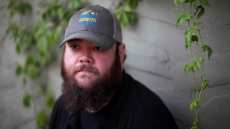
VANCOUVER — Sean Chuma describes it as a spiritual moment, standing on the railing of the Perrine Bridge, 150 metres above the meandering Snake River in southern Idaho.
Moments later, his mind completely focused on the present, he said he hurled himself into the stifling afternoon air.
"I have a passion for flight," the BASE jumping enthusiast said by phone less than an hour later, having successfully completed the 3,767th jump of his career.
"The feeling is complete freedom. It's complete responsibility for yourself," he added. "It's just a beautiful thing."
BASE jumping, which stands for building, antenna, span and Earth, is an extreme sport that involves leaping from tall structures or cliffs with the help of a parachute or wingsuit. It's considered more dangerous than skydiving because of the low altitude jumps.
Avid jumpers such as Chuma dispute the widely held view that the adrenaline rush fuels athletes' passion for the extreme sport.
They describe it instead as a spiritual activity, that isn't done impulsively but rather follows years of meticulous research, planning and study.
On Sunday, longtime jumper and former U.S. marine Gary Kremer of Seattle died when his parachute failed to open after leaping from the Stawamus Chief Mountain outside Squamish, B.C.
His girlfriend, Paige Anderson, said Kremer fell in love with the extreme sport after picking it up nine years ago and had jumped from the Stawamus Chief many times before.
Sports psychologist Holly Thorpe of New Zealand's Waikato University says that while mainstream society usually responds with shock after hearing about the death of yet another extreme athlete, it is important to remember that people who participate in such sports aren't crazy.
Most of them wouldn't consider themselves big risk takers, she said by phone from New Zealand.
"It doesn't feel like they're doing something completely crazy because it's a constant progression," said Thorpe, explaining that extreme athletes tend to challenge themselves incrementally. That can amount to significant changes in behaviour over an extended period of time, she added.
"They are every day pushing it just a little bit. And sometimes I think that what may happen is they get a bit detached from the real consequence of what might happen."
Tom Aiello first BASE jumped two decades ago and eight years later he founded a BASE jumping school in Twin Falls, Idaho.
It's a calming, meditative experience, he said in an interview.
"You have a chance to focus on yourself and the rest of the world goes away," he said. "It sounds kind of cheesy but it's sort of active meditation.
"You don't have to worry about paying the bills or picking the kids up from school or whatever else you're doing. It sort of gives you your own space."
Aiello agreed the sport's appeal is a spiritual one, but he said he also recognizes the risk associated with the pastime.
That danger has led some people to call on the government to introduce laws regulating the practice.
Jon Heshka, a law professor from Thomson River University in Kamloops, B.C., said it would be both difficult and unwise to introduce and enforce legislation controlling the sport.
"(Pierre) Trudeau once talked about the state not having the right in the bedrooms of the nation. Well, I'm not sure whether the state ought to get into the backpacks of the nation either," Heshka said.
"If people want to huck big air while they're skiing or do big water while they're kayaking or launch off the top of the Chief then that's their right. Most of the time things are fine, but when they aren't I'm not sure we should overreact and regulate it and make it illegal."