Friday, June 26, 2026
ADVT 
National

Fact File: Posts falsely claim Canada revoked China's equal trade status

Darpan News Desk The Canadian Press, 11 Dec, 2025 11:52 AM
  • Fact File: Posts falsely claim Canada revoked China's equal trade status

Chinese language posts that appeared on social media the past few weeks claimed Canada was one of 32 countries to revoke China's "most favoured nation" trade status on Dec. 1. 


The claim originates from a 2021 rumour that conflates most favoured nation status with "generalized system of preference" certificates, which China stopped issuing to Canada and other countries on Dec. 1 that year. 


China remains a most favoured nation by Canada, meaning it is entitled to equal treatment as a trading partner.


THE CLAIM


Since November, several Chinese language posts across western social media claimed Canada was one of 32 countries to revoke China's "most favoured nation" status. 


Most favoured nation refers to a trade principle that entitles trading partners to equal status. Countries that trade as World Trade Organization members are required to provide the same trade benefits to all countries, with some exceptions. 


An image posted to the X platform, formerly Twitter, and multiple times on Facebook claimed Canada is one of 32 countries that removed China's most favoured nation trade status as of Dec. 1.
Similar claims appeared several times on Threads, as well as YouTube. 


THE FACTS


A keyword search of the Chinese language text shows this isn't the first time the claim appeared online. 


In 2021, Hong Kong-based HKBU Fact Check reported on the claim, which seemingly originated from a Facebook post. The post made an identical claim about 32 countries removing China's most favoured nation status on Dec. 1. 


However, a further keyword search shows the original announcement made by the General Administration of Customs China that references the 32 countries.


In the announcement, the customs agency said it would stop issuing generalized system of preference (GSP) certificate of origins for goods exported to 32 countries, including Canada and the European Union. 


The certificates grant preferential tariffs to imports from developing countries, according to the World Trade Organization. 


The Chinese customs agency said some countries pulled their GSP treatment for China over the years, since rapid economic development meant China was no longer considered a low-income country. The agency said it would stop issuing GSP certificates of origin to the 32 countries on Dec. 1. 


A 2021 article from China Briefing discussed the confusion over the announcement, noting the 32 countries stopped giving China GSP status over several years and not all at once. Canada removed its version of the GSP for China and 71 other countries as of Jan. 1, 2015. 


China and Canada are both part of the World Trade Organization, and remain entitled to most favoured nation status. China remains on Canada's list of countries afforded that status. 


Canada removed most favoured nation status from Russia and Belarus on March 2, 2022 in response to the Russian invasion of Ukraine, and imposed a general tariff of 35 per cent to most goods.

However, it made an exception for cobalt-60, a radioactive isotope used in some medical goods, as the government said it was unable to source enough elsewhere. 

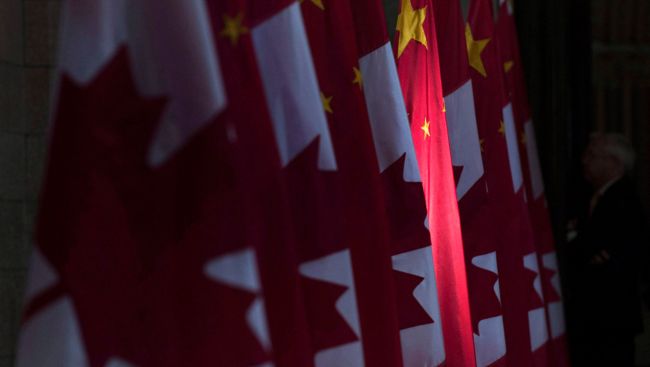
Picture Courtesy: THE CANADIAN PRESS/Adrian Wyld

MORE National ARTICLES

B.C. to change law to stop employers from asking for 'unnecessary' doctor sick notes

B.C. to change law to stop employers from asking for 'unnecessary' doctor sick notes
She said employers may have been "quite concerned" about employees using sick days inappropriately, but disallowing them from requiring notes "is a big move in the right direction." 

B.C. to change law to stop employers from asking for 'unnecessary' doctor sick notes

Smith's Alberta government unveils promised mandatory addiction treatment law

Smith's Alberta government unveils promised mandatory addiction treatment law
Alberta Premier Danielle Smith's government has introduced promised legislation to allow for people to be forced into addiction treatment facilities. If the bill passes, parents, family members, health-care professionals, police or peace officers can apply for a treatment order from a new provincial commission.

Smith's Alberta government unveils promised mandatory addiction treatment law

Here's how people without ID or fixed address can vote in the federal election

Here's how people without ID or fixed address can vote in the federal election
Anyone who wants to register to vote in the April 28 federalelection has to be able to prove who they are and where they live.Elections Canada realizes both of those things can be a challenge for someone without a home or standard ID cards, said spokesperson Diane Benson.

Here's how people without ID or fixed address can vote in the federal election

Do you eat a meal in 20 minutes or less? It might be time to slow down

Do you eat a meal in 20 minutes or less? It might be time to slow down
Experts tend to focus on the kinds of foods you can eat to improve your health. But the speed at which you devour your dinner matters just as much. There are risks with eating too fast — think stuck food and the potential to overeat before your brain tells you to stop. (Inhaling your food also risks annoying your slower-paced dining companions or the person who took the time to cook your meal.)

Do you eat a meal in 20 minutes or less? It might be time to slow down

Bank of Canada holds key rate steady amid trade war, economic uncertainty

Bank of Canada holds key rate steady amid trade war, economic uncertainty
The Bank of Canada left its benchmark interest rateunchanged Wednesday as it waits to get a clearer picture ofhow global trade uncertainty is going to impact the Canadian economy.

Bank of Canada holds key rate steady amid trade war, economic uncertainty

Ontario to loosen internal trade, remove barriers on alcohol and labour mobility

Ontario to loosen internal trade, remove barriers on alcohol and labour mobility
Ontario has tabled legislation to make trade between provinces easier, as a way to shore up the economy against the effects of American tariffs.

Ontario to loosen internal trade, remove barriers on alcohol and labour mobility