
Saturday, June 27, 2026
ADVT 
National

Fact File: Posts falsely claim Canada revoked China's equal trade status

Darpan News Desk The Canadian Press, 11 Dec, 2025 11:52 AM
  • Fact File: Posts falsely claim Canada revoked China's equal trade status

Chinese language posts that appeared on social media the past few weeks claimed Canada was one of 32 countries to revoke China's "most favoured nation" trade status on Dec. 1. 


The claim originates from a 2021 rumour that conflates most favoured nation status with "generalized system of preference" certificates, which China stopped issuing to Canada and other countries on Dec. 1 that year. 


China remains a most favoured nation by Canada, meaning it is entitled to equal treatment as a trading partner.


THE CLAIM


Since November, several Chinese language posts across western social media claimed Canada was one of 32 countries to revoke China's "most favoured nation" status. 


Most favoured nation refers to a trade principle that entitles trading partners to equal status. Countries that trade as World Trade Organization members are required to provide the same trade benefits to all countries, with some exceptions. 


An image posted to the X platform, formerly Twitter, and multiple times on Facebook claimed Canada is one of 32 countries that removed China's most favoured nation trade status as of Dec. 1.
Similar claims appeared several times on Threads, as well as YouTube. 


THE FACTS


A keyword search of the Chinese language text shows this isn't the first time the claim appeared online. 


In 2021, Hong Kong-based HKBU Fact Check reported on the claim, which seemingly originated from a Facebook post. The post made an identical claim about 32 countries removing China's most favoured nation status on Dec. 1. 


However, a further keyword search shows the original announcement made by the General Administration of Customs China that references the 32 countries.


In the announcement, the customs agency said it would stop issuing generalized system of preference (GSP) certificate of origins for goods exported to 32 countries, including Canada and the European Union. 


The certificates grant preferential tariffs to imports from developing countries, according to the World Trade Organization. 


The Chinese customs agency said some countries pulled their GSP treatment for China over the years, since rapid economic development meant China was no longer considered a low-income country. The agency said it would stop issuing GSP certificates of origin to the 32 countries on Dec. 1. 


A 2021 article from China Briefing discussed the confusion over the announcement, noting the 32 countries stopped giving China GSP status over several years and not all at once. Canada removed its version of the GSP for China and 71 other countries as of Jan. 1, 2015. 


China and Canada are both part of the World Trade Organization, and remain entitled to most favoured nation status. China remains on Canada's list of countries afforded that status. 


Canada removed most favoured nation status from Russia and Belarus on March 2, 2022 in response to the Russian invasion of Ukraine, and imposed a general tariff of 35 per cent to most goods.

However, it made an exception for cobalt-60, a radioactive isotope used in some medical goods, as the government said it was unable to source enough elsewhere. 

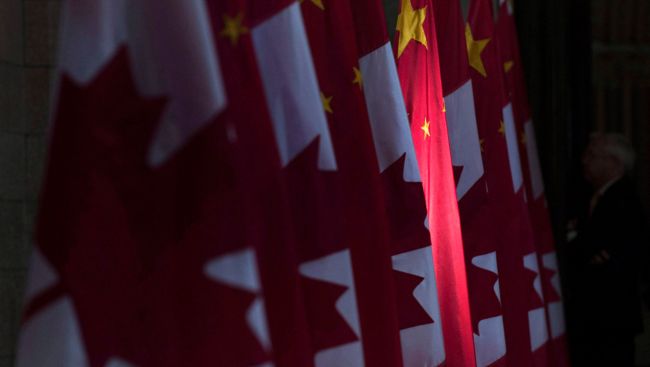
Picture Courtesy: THE CANADIAN PRESS/Adrian Wyld

MORE National ARTICLES

Federal government commits $187M to rebuild critical infrastructure in Jasper

Federal government commits $187M to rebuild critical infrastructure in Jasper
More financial support is on the way for fire-ravaged Jasper, Alta., as the federal government has announced $187 million in new funding for the town's rebuild. It is the largest funding package to be announced since a runaway wildfire ripped through Jasper National Park and destroyed a third of the town last July.

Federal government commits $187M to rebuild critical infrastructure in Jasper

Confused about Mark Carney's blind trust? Here's how they work

Confused about Mark Carney's blind trust? Here's how they work
Prime Minister Mark Carney's critics have been asking pointed questions lately about the assets in the former central banker's blind trust — a tool meant to allow politicians to avoid conflicts of interest. How do blind trusts work?

Confused about Mark Carney's blind trust? Here's how they work

B.C. Greens want answers about New Democrats' emergency powers legislation

B.C. Greens want answers about New Democrats' emergency powers legislation
Interim Leader Jeremy Valeriote said in a statement that while he understands the "urgency of the situation" given the ongoing trade strife with the United States, the proposed Bill 7 in its current form has "vague wording" and "could allow for sweeping economic decisions without clear limits or transparency."

B.C. Greens want answers about New Democrats' emergency powers legislation

Poilievre wants 'shovel ready zones' with pre-approved construction permits

Poilievre wants 'shovel ready zones' with pre-approved construction permits
Conservative Leader Pierre Poilievre wants to create what he calls "shovel ready zones" that would have pre-approved permits for major projects resources or energy projects. In a media statement, Poilievre says that the goal is to permits in place for a mine, liquefied natural gas plant, pipeline or other major project. 

Poilievre wants 'shovel ready zones' with pre-approved construction permits

Federal union concerned about planned cuts to Translation Bureau

Federal union concerned about planned cuts to Translation Bureau
A major federal union says it's worried about a plan to eliminate more than 300 positions at Canada’s Translation Bureau. In a news release, the Canadian Association of Professional Employees says it’s condemning a five-year business plan that would shrink the bureau’s workforce by almost 25 per cent.

Federal union concerned about planned cuts to Translation Bureau

Prime Minister Mark Carney expected to call federal election on Sunday

Prime Minister Mark Carney expected to call federal election on Sunday
Prime Minister Mark Carney is expected to launch a federal election campaign on Sunday and send Canadians to the polls as soon as April 28. While sources would not confirm the date of the vote, federal campaigns must run at least 37 days.

Prime Minister Mark Carney expected to call federal election on Sunday