
Monday, June 29, 2026
ADVT 
National

Fact File: Posts falsely claim Canada revoked China's equal trade status

Darpan News Desk The Canadian Press, 11 Dec, 2025 11:52 AM
  • Fact File: Posts falsely claim Canada revoked China's equal trade status

Chinese language posts that appeared on social media the past few weeks claimed Canada was one of 32 countries to revoke China's "most favoured nation" trade status on Dec. 1. 


The claim originates from a 2021 rumour that conflates most favoured nation status with "generalized system of preference" certificates, which China stopped issuing to Canada and other countries on Dec. 1 that year. 


China remains a most favoured nation by Canada, meaning it is entitled to equal treatment as a trading partner.


THE CLAIM


Since November, several Chinese language posts across western social media claimed Canada was one of 32 countries to revoke China's "most favoured nation" status. 


Most favoured nation refers to a trade principle that entitles trading partners to equal status. Countries that trade as World Trade Organization members are required to provide the same trade benefits to all countries, with some exceptions. 


An image posted to the X platform, formerly Twitter, and multiple times on Facebook claimed Canada is one of 32 countries that removed China's most favoured nation trade status as of Dec. 1.
Similar claims appeared several times on Threads, as well as YouTube. 


THE FACTS


A keyword search of the Chinese language text shows this isn't the first time the claim appeared online. 


In 2021, Hong Kong-based HKBU Fact Check reported on the claim, which seemingly originated from a Facebook post. The post made an identical claim about 32 countries removing China's most favoured nation status on Dec. 1. 


However, a further keyword search shows the original announcement made by the General Administration of Customs China that references the 32 countries.


In the announcement, the customs agency said it would stop issuing generalized system of preference (GSP) certificate of origins for goods exported to 32 countries, including Canada and the European Union. 


The certificates grant preferential tariffs to imports from developing countries, according to the World Trade Organization. 


The Chinese customs agency said some countries pulled their GSP treatment for China over the years, since rapid economic development meant China was no longer considered a low-income country. The agency said it would stop issuing GSP certificates of origin to the 32 countries on Dec. 1. 


A 2021 article from China Briefing discussed the confusion over the announcement, noting the 32 countries stopped giving China GSP status over several years and not all at once. Canada removed its version of the GSP for China and 71 other countries as of Jan. 1, 2015. 


China and Canada are both part of the World Trade Organization, and remain entitled to most favoured nation status. China remains on Canada's list of countries afforded that status. 


Canada removed most favoured nation status from Russia and Belarus on March 2, 2022 in response to the Russian invasion of Ukraine, and imposed a general tariff of 35 per cent to most goods.

However, it made an exception for cobalt-60, a radioactive isotope used in some medical goods, as the government said it was unable to source enough elsewhere. 

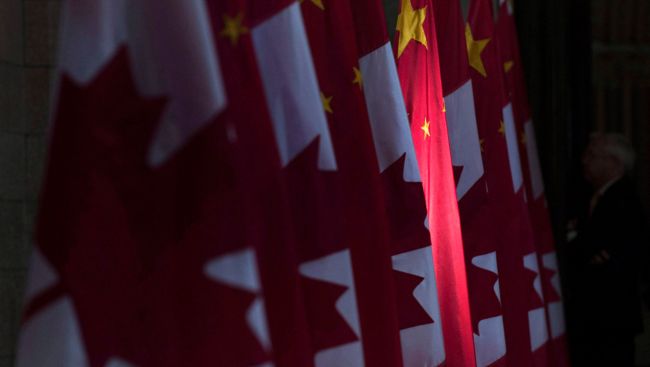
Picture Courtesy: THE CANADIAN PRESS/Adrian Wyld

MORE National ARTICLES

Polls suggest a close race as federal election approaches

Polls suggest a close race as federal election approaches
Multiple polls now suggest the next federal election — which could begin in a matter of weeks — will be a tight race. At least one major pollster has the Liberals in the lead and ahead of the Conservatives for the first time in nearly four years.

Polls suggest a close race as federal election approaches

Canada, Germany working on diversifying trade in face of U.S. threats

Canada, Germany working on diversifying trade in face of U.S. threats
Canadian companies and diplomats are working with their European colleagues to find ways to diversify trade as the U.S. threatens to impose steep tariffs. Germany's Ambassador to Canada Tjorven Bellmann says European ambassadors in Ottawa have been in touch with corporations on both sides of the Atlantic to discuss how they can boost trade.

Canada, Germany working on diversifying trade in face of U.S. threats

Supreme Court of Canada moving away from social media platform X

Supreme Court of Canada moving away from social media platform X
The Supreme Court of Canada says it's moving away from the social media platform X. In an apparent farewell post to its more than 45,000 subscribers, the top court says it will focus its communication efforts on other platforms.

Supreme Court of Canada moving away from social media platform X

The Tories say Carney is being 'sneaky' about his assets. What do the rules say?

The Tories say Carney is being 'sneaky' about his assets. What do the rules say?
In a series of press conferences in recent weeks, the federal Conservatives have demanded that Liberal leadership candidate Mark Carney comply with the conflict of interest rules that apply to members of Parliament and cabinet ministers. Carney, who is neither an MP nor a member of cabinet, has said he will comply with the rules when they apply to him.

The Tories say Carney is being 'sneaky' about his assets. What do the rules say?

Liberals advance voting begins, Mark Carney still frontrunner

Liberals advance voting begins, Mark Carney still frontrunner
With the debates now done, Liberal party members can start casting advance ballots today to select their next leader a little under two weeks from now. They can cast their ranked ballot choices by mail or in some instances by phone, and each electoral district counts for 100 points in the race.

Liberals advance voting begins, Mark Carney still frontrunner

Media, telecom firms ask CRTC to ease up on regulation as they compete with streaming

Media, telecom firms ask CRTC to ease up on regulation as they compete with streaming
The Canadian Radio-television and Telecommunications Commission (CRTC) is holding consultations on how the Canadian broadcasting system can survive the shift away from traditional TV to international streamers. It’s a part of the regulator’s work on implementing the Online Streaming Act, which updated broadcasting laws to capture online platforms.

Media, telecom firms ask CRTC to ease up on regulation as they compete with streaming