
Wednesday, July 1, 2026
ADVT 
National

Fact File: Posts falsely claim Canada revoked China's equal trade status

Darpan News Desk The Canadian Press, 11 Dec, 2025 11:52 AM
  • Fact File: Posts falsely claim Canada revoked China's equal trade status

Chinese language posts that appeared on social media the past few weeks claimed Canada was one of 32 countries to revoke China's "most favoured nation" trade status on Dec. 1. 


The claim originates from a 2021 rumour that conflates most favoured nation status with "generalized system of preference" certificates, which China stopped issuing to Canada and other countries on Dec. 1 that year. 


China remains a most favoured nation by Canada, meaning it is entitled to equal treatment as a trading partner.


THE CLAIM


Since November, several Chinese language posts across western social media claimed Canada was one of 32 countries to revoke China's "most favoured nation" status. 


Most favoured nation refers to a trade principle that entitles trading partners to equal status. Countries that trade as World Trade Organization members are required to provide the same trade benefits to all countries, with some exceptions. 


An image posted to the X platform, formerly Twitter, and multiple times on Facebook claimed Canada is one of 32 countries that removed China's most favoured nation trade status as of Dec. 1.
Similar claims appeared several times on Threads, as well as YouTube. 


THE FACTS


A keyword search of the Chinese language text shows this isn't the first time the claim appeared online. 


In 2021, Hong Kong-based HKBU Fact Check reported on the claim, which seemingly originated from a Facebook post. The post made an identical claim about 32 countries removing China's most favoured nation status on Dec. 1. 


However, a further keyword search shows the original announcement made by the General Administration of Customs China that references the 32 countries.


In the announcement, the customs agency said it would stop issuing generalized system of preference (GSP) certificate of origins for goods exported to 32 countries, including Canada and the European Union. 


The certificates grant preferential tariffs to imports from developing countries, according to the World Trade Organization. 


The Chinese customs agency said some countries pulled their GSP treatment for China over the years, since rapid economic development meant China was no longer considered a low-income country. The agency said it would stop issuing GSP certificates of origin to the 32 countries on Dec. 1. 


A 2021 article from China Briefing discussed the confusion over the announcement, noting the 32 countries stopped giving China GSP status over several years and not all at once. Canada removed its version of the GSP for China and 71 other countries as of Jan. 1, 2015. 


China and Canada are both part of the World Trade Organization, and remain entitled to most favoured nation status. China remains on Canada's list of countries afforded that status. 


Canada removed most favoured nation status from Russia and Belarus on March 2, 2022 in response to the Russian invasion of Ukraine, and imposed a general tariff of 35 per cent to most goods.

However, it made an exception for cobalt-60, a radioactive isotope used in some medical goods, as the government said it was unable to source enough elsewhere. 

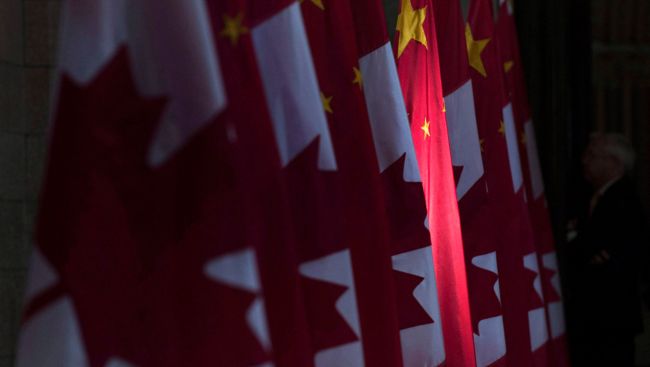
Picture Courtesy: THE CANADIAN PRESS/Adrian Wyld

MORE National ARTICLES

Ontario, Quebec and B.C. among provinces pulling U.S. booze from provincial retailers

Ontario, Quebec and B.C. among provinces pulling U.S. booze from provincial retailers
Canadian alcohol producers are cheering decisions from several provinces to yank U.S. booze from provincial liquor stores. They say the move will deliver a boost to homegrown business while adding ammunition to a federal plan aimed at getting the U.S. to back down from tariffs.

Ontario, Quebec and B.C. among provinces pulling U.S. booze from provincial retailers

Canada slaps retaliatory tariffs on hundreds of U.S. goods, outlines response plan

Canada slaps retaliatory tariffs on hundreds of U.S. goods, outlines response plan
Ottawa is imposing 25 per cent tariffs on hundreds of goods originating in the United States — from meat and milk to carpets and curtains — in response to steep new American levies against Canada. A federal official also signalled that Canada will pursue available legal remedies in response to the U.S. breaching its international trade commitments.

Canada slaps retaliatory tariffs on hundreds of U.S. goods, outlines response plan

Employment Outlook 2025: Opportunities and Challenges in BC and Canada

Employment Outlook 2025: Opportunities and Challenges in BC and Canada
The employment landscape in British Columbia (BC) and Canada is undergoing dynamic transformations shaped by economic shifts, evolving labor market demands, and demographic changes. As we move into 2025, a comprehensive outlook reveals both opportunities and challenges for job seekers, particularly for immigrants, underrepresented groups, and youth entering the workforce.  

Employment Outlook 2025: Opportunities and Challenges in BC and Canada

Ottawa defers effective date of capital gains changes to 2026, promises exemptions

Ottawa defers effective date of capital gains changes to 2026, promises exemptions
The federal government says it is deferring the implementation of a hike to the capital gains inclusion rate to next year and plans to introduce new exemptions to ensure most middle-class Canadians do not pay more tax if the rate becomes official. The deferral announced by Finance Minister Dominic LeBlanc on Friday delays the implementation of the change from June 25, 2024 to Jan. 1, 2026.

Ottawa defers effective date of capital gains changes to 2026, promises exemptions

Surrey mayor joins alliance of border communities ahead of possible tariffs

Surrey mayor joins alliance of border communities ahead of possible tariffs
Surrey Mayor Brenda Locke said potential U.S. tariffs would put hundreds of jobs in her community at risk, as she became the latest mayor to join an alliance advocating for Canadian border communities. Locke said Thursday that more than 20 per cent of businesses in Surrey have direct trade ties with the United States amounting to roughly $2.8 billion in cross-border commerce each year.

Surrey mayor joins alliance of border communities ahead of possible tariffs

Wendy Cocchia sworn in as B.C.'s 31st lieutenant-governor

Wendy Cocchia sworn in as B.C.'s 31st lieutenant-governor
Premier David Eby has introduced British Columbia's new lieutenant-governor, saying Wendy Cocchia's lifelong leadership and dedication to community service sets an example for everyone. Cocchia, a longtime businesswoman and philanthropist, was sworn in at a ceremony at B.C.'s Parliament buildings on Thursday before an audience of family, friends, Indigenous leaders, members of the legislature and other dignitaries.

Wendy Cocchia sworn in as B.C.'s 31st lieutenant-governor