The federal government says it will introduce legislation to implement open banking at its "earliest opportunity" as some advocates warn the project's momentum may have stalled.
Open banking — or consumer-driven banking, as Ottawa calls it — is about allowing Canadians and businesses to securely share their financial data with third parties other than their banks.
Open banking could let Canadians with multiple accounts across different banks see their entire financial picture on one convenient dashboard. It also could help renters build their credit scores just by paying their rent on time every month.
Other nations have implemented open banking systems and the federal Liberals passed initial legislation last year to break ground on open banking in Canada.
But getting to that point — and keeping up the pressure to get the second half of that legislation tabled — has been "a slog," said Fintechs Canada executive director Alex Vronces.
"I don't think the government at first understood really what consumer-driven banking was," he said.
After years of study, Ottawa got the ball rolling on open banking through the legislation to implement the 2024 federal budget roughly a year ago.
That bill gave the Financial Consumer Agency of Canada a mandate to head up the country's open banking framework. Legislation is still required to implement a plan to accredit service providers and set the common rules that financial institutions will have to follow.
The Liberal government said in the 2024 fall economic statement that it's looking at early 2026 for implementation of open banking.
But Canada has gone through a federal election since those plans were made — and while the Liberals were returned to power with another minority government, references to consumer-driven banking were absent from the party's election platform.
And the government of Prime Minister Mark Carney did not table a spring budget, which it normally would use to outline its legislative priorities.
Natacha Boudrias, leader of the National Bank of Canada's open banking strategy, said the industry lacks "clarity" on the future shape of consumer-driven banking. She said the spring election likely stalled movement on the file.
"We're certainly hoping that the government is going to kick-start the effort sooner rather than later so that we don't get stuck in a loop of consultation," she said.
A Finance Canada official said in a media statement that the government is still committed to consumer-driven banking.
"The remaining elements of the consumer-driven banking framework will be introduced at the earliest opportunity, to ensure that Canadian consumers and business can securely benefit from tools that help them reduce costs and improve their financial outcomes," the statement says.
Instead of waiting on Ottawa, the National Bank has moved forward on its own open-banking framework that lets fintechs — financial technology firms that develop apps for Canadians and businesses — essentially plug into their databases to share information securely when users give their permission.
The status quo for financial data sharing is "screen scraping," a process that usually sees an individual share banking credentials with a third party to access the information an app needs to run.
But Boudrias said there's no control over how much or how little data is shared through screen scraping — it's all or nothing, making it a potential privacy nightmare.
Open banking ideally takes that firehose of data and narrows it, giving users control over the information a fintech sees and how long it can access it.
"It's about putting the rails of trust in place," Boudrias said.
Financial Consumer Agency of Canada commissioner Shereen Benzvy Miller addressed the risks of screen scraping in notes for her keynote address at the Open Banking Expo in Toronto on Tuesday.
Benzvy Miller said Canadians are already sharing data widely with fintechs but they may not know much about the privacy risks involved. She said part of the agency's task will be to drive consumer awareness of open banking to build trust.
"We envision a future — not far off — where consumers can securely share their financial data with trusted providers at the tap of a button," she said in a copy of the speech shared with The Canadian Press.
The Financial Consumer Agency of Canada will be in charge of building and vetting a public registry of fintechs that Canadians and financial service providers can trust to handle data securely. These fintechs will be granted a handy visual logo to mark their accreditation.
Benzvy Miller said the agency is also working with Finance Canada on setting out common rules for the system and the agency is looking forward to seeing legislative amendments from the finance minister.
But if that final legislation isn't tabled soon, Vronces said, the agency will be stuck in "regulatory purgatory."
"They'll have a mandate but they won't be able to do anything with it," he said.
Getting to this point has been a long haul for Vronces, who has been lobbying on behalf of Canadian fintechs for roughly seven years.
He said he has reasons to believe Carney will be a champion of consumer-driven banking. Carney was governor of the Bank of England when the United Kingdom introduced such a system in 2017.
The opportunity to implement open banking comes as a pivotal time, Vronces said, as Carney looks to overhaul the Canadian economy and improve productivity in the face of global trade upheaval.
Open banking could light a fire under Canada's financial sector, he said, because big banks would be forced to diversify their services and compete with the wider fintech industry.
Vronces said early conversations with the federal government give him hope that the second half of the legislation will be tabled soon, possibly alongside the federal budget in the fall.
He compared the open banking file to a magazine that's already had the articles written and the layout set, with just a few finishing touches remaining.
"It's really not a lot of work for the government to complete its promise," he said. "It just needs to hit print."
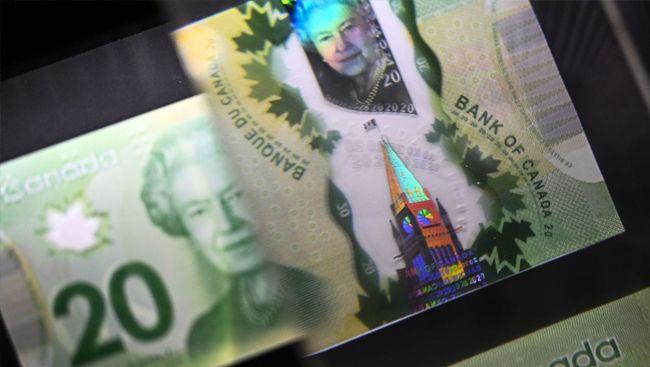
Picture Courtesy: THE CANADIAN PRESS/Justin Tang