Sunday, June 14, 2026
ADVT 
National

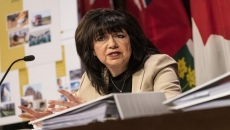
Federal pay-equity commissioner reappointed

Darpan News Desk The Canadian Press, 18 Sep, 2020 10:52 PM
  • Federal pay-equity commissioner reappointed

Canada's first national pay-equity commissioner is having her term extended amid delays getting new pay-equity legislation into action.

Karen Jensen was appointed a year ago to the Canadian Human Rights Commission with a mandate to help establish a new pay-equity division in preparation for the new law to take effect in 2020. She was to officially become the pay-equity commissioner as soon as the law was in force.

But Labour Minister Filomena Tassi said Friday it is taking a bit longer to get the regulations in place for the Pay Equity Act and that it won't happen now until 2021.

"COVID-19 as you know has presented some challenges," said Tassi.

Consultations for the proposed pay-equity rules ended in June 2019, but when COVID-19 hit in March, Tassi's department became mostly consumed with the health and safety of workers during the pandemic.

"Having said that, this remains a priority and we're looking forward to full implementation of the act by next year," she said. "It will be in force by next year."

Cabinet last week issued an order to extend Jensen's appointment to reflect the delay.

A right to equal pay for equal work was enshrined in the Canadian Human Rights Act in 1977, but a national law to require federally regulated employers to actively pursue pay equity did not get passed until December 2018.

Jensen is to help employers implement the needed changes, ensure workers know their rights and help resolve disputes.

On average in Canada, women earn 12 per cent less than men, the third largest gender pay gap among G7 countries and the seventh largest in the OECD. On an hourly basis, that is a difference of $3.87.

Statistics Canada shows in some fields the pay disparity is greater than the norm, such as in education and social service jobs, where on average females earn 81 cents for every $1 earned by men. In manufacturing and utility jobs, the average pay for women is 75 cents for every $1 earned by men.

The gap is smallest in health-care fields and natural and applied sciences.

MORE National ARTICLES

Plane's altitude 60 metres when it went missing: TSB

Plane's altitude 60 metres when it went missing: TSB
The Transportation Safety Board says a plane that went missing last month in British Columbia with two people on board was last recorded travelling at an altitude of about 60 metres.

Plane's altitude 60 metres when it went missing: TSB

Charges approved against B.C. RCMP officer

Charges approved against B.C. RCMP officer
An RCMP officer in British Columbia has been charged with breach of trust in connection with the duties of his office, criminal harassment and forcible entry.

Charges approved against B.C. RCMP officer

Experts say "airborne" incorrect term for COVID

Experts say
A group of 239 scientists and physicians urging the World Health Organization to recognize the potential for airborne transmission of the novel coronavirus have sparked debate over how COVID-19 is spreading.

Experts say "airborne" incorrect term for COVID

Calls grow for media to address own failures with systemic racism

Calls grow for media to address own failures with systemic racism
Journalists have not had to go far to uncover searing stories of racism in Canada — they're finding them in their own newsrooms, among their co-workers and involving their bosses.

Calls grow for media to address own failures with systemic racism

Border crossers cost $81M, not $200M, AG says

Border crossers cost $81M, not $200M, AG says
Ontario significantly overstated the costs of providing services to asylum seekers coming into Canada from the United States, the province's auditor general said Wednesday.

Border crossers cost $81M, not $200M, AG says

Feds post non-existent volunteer positions

Feds post non-existent volunteer positions
The federal website advertising volunteer positions for students hoping to earn money for their educations through a $900-million government aid program contains hundreds — if not thousands — of positions that might not actually exist.

Feds post non-existent volunteer positions