Sunday, December 21, 2025
ADVT 
National

Feds add $305M to Indigenous COVID-19 response

Darpan News Desk The Canadian Press, 12 Aug, 2020 07:39 PM
  • Feds add $305M to Indigenous COVID-19 response

The federal government has announced an additional $305 million to help Indigenous Peoples combat COVID-19.

Indigenous Services Minister Marc Miller says the money is meant to help Indigenous communities prepare for emergencies and prevent the spread of the new coronavirus.

He says communities can also use the money for a variety of other measures, including helping elders and vulnerable people, food insecurity, educational and other supports for children and mental health assistance.

The new money will flow through the Indigenous community support fund, bringing the total amount to $685 million this year.

Some funding will also go to First Nations living off-reserve as well as Inuit and Metis people living in urban centres, distributed based on need through an application process.

Miller says Ottawa is committed to ensuring Indigenous leaders have the tools and support they need to implement the various aspects of their pandemic plans.

"This funding will provide crucial support to key community initiatives that strive to prevent, prepare for and respond to COVID-19 in First Nations, Inuit and Metis communities," he said.

"This approach aligns with our commitment to support Indigenous leadership's approaches to community wellness while providing the flexibility to respond to emerging needs, for example in response to an outbreak of COVID-19."

To date there have been 425 confirmed cases of COVID-19 on First Nations reserves, with 34 people hospitalized. Of these, 393 have recovered from the virus. There have also been 17 cases in the Nunavik region in northern Quebec. All have recovered.

The federal government has acknowledged that COVID-19 case counts among Indigenous Peoples do not reflect the true impact on Indigenous communities and individuals, as they only capture statistics from those living on reserves or in Inuit territories. The majority of Indigenous people in Canada live off reserve.

MORE National ARTICLES

Senate ethics committee urges censure of Tory senator over trip to China

Senate ethics committee urges censure of Tory senator over trip to China
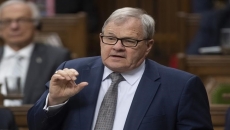
The Senate's ethics committee is recommending that a Conservative senator be censured for breaching the upper house’s ethics code when he accepted an all-expenses paid trip to China in 2017.

Senate ethics committee urges censure of Tory senator over trip to China

Surrey RCMP recover items stolen from schools

Surrey RCMP recover items stolen from schools
Search warrants executed at three separate residences, led Surrey RCMP to the seizure of items stolen from Surrey schools during a series of break and enters.

Surrey RCMP recover items stolen from schools

New data sees small increase in veterans' historical risk of suicide

New data sees small increase in veterans' historical risk of suicide
The federal government has released updated figures showing once again that Canadian veterans are at greater risk of suicide than those who have never served in uniform.

New data sees small increase in veterans' historical risk of suicide

Prices faced by consumers rising faster than inflation rate, BoC deputy says

Prices faced by consumers rising faster than inflation rate, BoC deputy says
The prices Canadians have reported paying for goods and services have been rising more than the official inflation rate, a senior Bank of Canada official says.

Prices faced by consumers rising faster than inflation rate, BoC deputy says

Pandemic-related changes to court system might become permanent: top judge

Pandemic-related changes to court system might become permanent: top judge
Canada's top judge says some of the innovations that courts have embraced during the COVID-19 pandemic might become permanent.

Pandemic-related changes to court system might become permanent: top judge

Too many visitors forces B.C. to shut park on Canada-U.S. boundary

Too many visitors forces B.C. to shut park on Canada-U.S. boundary
The British Columbia park that straddles the 49th parallel with Washington state will be closed because it's overwhelmed with visitors using it as a cross-border meeting point.

Too many visitors forces B.C. to shut park on Canada-U.S. boundary