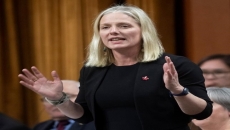
Canada is looking to crack down on unscrupulous schools that are cashing in on the big bucks of international student tuition fees without putting any thought into where those students are going to live, Housing Minister Sean Fraser said Monday.
He was speaking in Charlottetown just before the first session of a three-day Liberal cabinet retreat where the country's worsening housing crisis is expected to dominate discussions.
Fraser acknowledged the housing crisis is a complex problem rooted in decades of underinvestment, particularly in social housing, by previous Liberal and Conservative governments alike. But he said one area that needs immediate attention is the explosive growth in international students recruited to Canada in recent years.
Fraser said putting a cap on those enrolments is an option, but first the government has to meet with the schools to look at what role they can play to alleviate the pressure on housing. He was careful to say not all schools are part of the problem.
"When you see stories about the exploitation of international students with some institutions, if I can be completely candid, that I'm convinced have come to exist purely to profit off the backs of vulnerable international students rather than provide quality education to the future permanent residents and citizens of Canada," Fraser said.
He said you have to ask "some pretty tough questions" when schools that already have "five to six times as many students enrolled as they have spaces for" in student housing continue to recruit and increase enrolments.
In 2014, Canada set a target to increase international student enrolment from about 240,000 to more than 450,000 by 2022. Immigration, Refugees and Citizenship Canada reported that there were more than 807,000 international study permit holders in Canada in December.
That came after a sharp spike in permits: 541,405 new permits were issued in 2022, up 24 per cent from 2021.
The annual end-of-summer cabinet retreat is always designed to help the government's front bench team set its priorities for the upcoming fall sitting of Parliament, which starts Sept. 18.
Prime Minister Justin Trudeau has signalled housing will be at the forefront of that agenda.
Canada is the best country in the world – and at our Cabinet retreat this week, we’re focused on making it even better. We’ll do that by making life more affordable, building more housing, fighting climate change, and making progress on other issues that matter to Canadians.
— Justin Trudeau (@JustinTrudeau) August 21, 2023
In Ottawa, Conservative Leader Pierre Poilievre blamed the government for the sky-high housing costs, saying Trudeau is spending vast amounts of money without tangible results.
Surreal.
— Pierre Poilievre (@PierrePoilievre) August 21, 2023
We used to take loans to buy a place.
In Trudeau’s Canada, we take out loans to pay rent.
At rates as high as 30%.
Sunny ways, my friends!https://t.co/HpD7UKg1zf
"Now he wants Canadians to forget all that and blame immigrants; he wants to divide people to distract from his failings," Poilievre told reporters on Parliament Hill.
LIVE: Trudeau's Holds Housing “Retreat” after he doubled costs
— Pierre Poilievre (@PierrePoilievre) August 21, 2023
We don’t need another meeting to fix the Trudeau Housing Crisis.
We need to start building homes.https://t.co/w049cbKhuH
Poilievre would not say whether he would lower immigration levels, and instead said that Ottawa needs to crack down on slow-moving municipal bureaucracies that make it harder to start construction projects.
Fraser said overall "we have to be really, really careful" not to blame immigrants for Canada's housing crisis, and he dismissed Poilievre's criticism entirely.
He said the things the Conservatives are calling for — like funding new housing near public transit — are things the Liberals have campaigned on and worked toward for years.
The government will spend part of the time considering a new report co-authored by three national experts on housing and homelessness, which made 10 recommendations on specific things the federal government can do to alleviate housing pressures.
That includes eliminating federal sales taxes on the construction of housing units built specifically to be rentals, and to play a leadership role in creating a new national housing accord with other levels of government, for-profit builders and not-for-profit housing agencies.
Two of the authors will brief cabinet on that report Tuesday in Charlottetown, and Fraser said that briefing has to happen and cabinet needs to dive deeper into the issue before it commits to enacting all 10 recommendations.
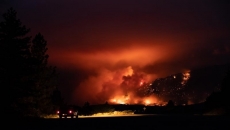
Beyond housing, climate change and the "apocalyptic devastation" from wildfires this summer will also play heavily into the conversations over the next 48 hours in Prince Edward Island, Trudeau said Monday.
Before the full cabinet met Monday evening, he convened another session of the government's incident response group to stay on top of the emergency situations in British Columbia and Northwest Territories.
"This is a scary and heartbreaking time for people," Trudeau said.
About 50,000 people in B.C. and N.W.T. are under evacuation orders, and thousands more on standby to possibly flee as flames near homes in places including Kelowna and Yellowknife.
Emergency Preparedness Minister Harjit Sajjan, who represents a Vancouver riding in the House of Commons, attended the meeting and the retreat remotely. He is staying in B.C. to help with the response to the fires.
This has by far been Canada's worst fire season on record. More than 5,800 recorded fires have burned 141,000 square kilometres, an area greater in size than all of Nova Scotia, New Brunswick and Prince Edward Island put together.
More than 1,000 fires are still burning across Canada, and 60 per cent of them are in B.C. and N.W.T.
This is just the second time this version of Trudeau's cabinet is meeting since he made major changes in a shuffle in July. There are seven new faces at the table, and 19 others, including Fraser, are in new roles.
The retreat is also Trudeau's first public appearances since he and his wife, Sophie Grégoire Trudeau, announced they would be separating after 18 years of marriage. The two spent 10 days in British Columbia with their children: Xavier, 15, Ella-Grace, 14, and Hadrien, 9.
Trudeau thanked Canadians for being generously respectful of the family's privacy, saying it made things easier for them.
"I got a really good 10 days with the family to focus on the kids, to focus on being together and moving forward," he said.