Saturday, June 6, 2026
ADVT 
National

First Nations want more B.C. COVID-19 data

Darpan News Desk The Canadian Press, 15 Sep, 2020 09:27 PM
  • First Nations want more B.C. COVID-19 data

A coalition of First Nations is asking British Columbia's privacy commissioner to compel the Health Ministry to disclose presumptive COVID-19 cases in their communities.

The Heiltsuk, Nuu-chah-nulth and Tsilhqot'in governments said Tuesday they filed the application because the B.C. government refuses to share the information, arguing that poses risk of significant harm to their communities.

Heiltsuk Nation Chief Marilyn Slett said in a statement that having an outbreak before the province will share the information "is reckless and colonial" and goes against the province's promises of reconciliation.

Health Minister Adrian Dix said he met with First Nations leaders on Monday and the ministry has worked with various communities to address matters related to COVID-19 transmission when it occurs.

"There are issues to balance here in terms of people's right to privacy, which is closely connected with their willingness to engage with us in the health-care system," he said.

Similar calls to identify communities with COVID-19 cases have been raised since the beginning of the pandemic by both the Interior Health Authority and the Island Health Authority, Dix said.

"We're just going to continue to work through these issues to ensure that we control the transmission of COVID-19, particularly in Indigenous communities but also in rural and remote communities."

The First Nations said provincial health officer Dr. Bonnie Henry has acknowledged the unique threat COVID-19 poses to remote Indigenous communities, yet the Health Ministry hasn't explained why presumptive COVID-19 cases don't present a risk to them.

Henry told a news conference Monday that the government has been working on the issue, but she also has a responsibility for the protection of personal health information.

"I will say that in many cases, the community will know before we know when somebody is ill and before they go for testing," Henry said. "Where we get notified is when the tests come back positive."

The B.C. Freedom of Information and Privacy Association is supporting the request. Association president Mike Larson said disclosing the information so the First Nations can conduct contact tracing is in the public interest.

The Health Ministry's policy of disregarding First Nations' efforts to govern during the pandemic is wrong, said Judith Sayers, president of the Nuu-chah-nulth Tribal Council.

"We must have access to the same health datasets the B.C. government has, on a government-to-government basis, if we are going to get through this pandemic together."

The First Nations said past pandemics, including smallpox and the Spanish flu, have devastated First Nation communities and taken the lives of their elders.

MORE National ARTICLES

Here are some of the deadliest mass killings in recent Canadian history:

Here are some of the deadliest mass killings in recent Canadian history:
April 19, 2020: Seventeen people are killed after a man who at one point wore a police uniform and drove a mock-up cruiser travelled across northern Nova Scotia. An RCMP officer is among the dead. Police say the suspected shooter, 51-year-old Gabriel Wortman, was killed after being intercepted by officers in Enfield, N.S.

Here are some of the deadliest mass killings in recent Canadian history:

Those who knew Nova Scotia gunman shocked by rampage

Those who knew Nova Scotia gunman shocked by rampage
Neighbours and schoolmates of the man responsible for a killing rampage that left at least 19 people dead in northern Nova Scotia were attempting Monday to come to terms with the tragedy.  A 23 year member of the RCMP police force Const Heidi Stevenson was killed, a mother of two, and another officer is recovering from non life threating injuries. 

Those who knew Nova Scotia gunman shocked by rampage

COVID-19 prompts bus driver layoffs, service cuts for Metro Vancouver transit

COVID-19 prompts bus driver layoffs, service cuts for Metro Vancouver transit
There have been significant layoffs of bus drivers and deep service cuts on buses, SeaBus, SkyTrain and West Coast Express across Metro Vancouver. Nearly 1,500 bus drivers and other transit workers across Metro Vancouver are being laid off as TransLink faces plunging ridership during the COVID-19 pandemic.    

COVID-19 prompts bus driver layoffs, service cuts for Metro Vancouver transit

Demand will fuel B.C. real estate in 2021 after COVID recession: report

Demand will fuel B.C. real estate in 2021 after COVID recession: report
A report from the B.C. Real Estate Association says the 2020 COVID-driven recession will be deep, although it could be shorter than other Canadian economic downturns. The market intelligence report released Monday by the association says it expects home sales to sink 30 to 40 per cent for April 2020. 

Demand will fuel B.C. real estate in 2021 after COVID recession: report

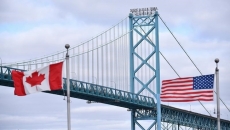
Prime Minister Justin Trudeau confirms border closure, which began on March 21 and was set to expire on Tuesday.

Prime Minister Justin Trudeau confirms border closure, which began on March 21 and was set to expire on Tuesday.
Canadian officials acknowledged some regions of the country could be closer to re-opening parts of the economy than others, but continued to stress a careful approach as the border closure with the hard-hit United States was extended for another 30 days during the COVID-19 crisis. Prime Minister Justin Trudeau confirmed the extension on Saturday for the closure restricting non-essential travel across the border, which began on March 21 and was set to expire on Tuesday.

Prime Minister Justin Trudeau confirms border closure, which began on March 21 and was set to expire on Tuesday.

Feds pledge $306M aid for Indigenous businesses suffering COVID-19 losses

Feds pledge $306M aid for Indigenous businesses suffering COVID-19 losses
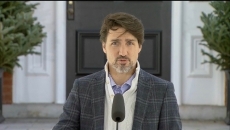
Prime Minister Justin Trudeau says the government will provide $306 million in funding to help small and medium-sized Indigenous businesses suffering the economic effects of the COVID-19 pandemic. 

Feds pledge $306M aid for Indigenous businesses suffering COVID-19 losses