Friday, June 26, 2026
ADVT 
National

Five things to know about the Supreme Court's assisted dying ruling

Darpan News Desk The Canadian Press, 06 Feb, 2015 02:11 PM

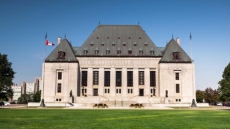
    OTTAWA — The Supreme Court of Canada has unanimously overturned its own 1993 decision and struck down a ban on providing a doctor-assisted death to mentally competent but suffering and "irremediable" patients. Here are five things to know about the decision.

    ---

    In 1993, in the Sue Rodriguez case, the court ruled 5-4 that the ban on assisted suicide was a violation of the Charter of Rights and Freedoms, but was reasonable under Sec. 1 of the charter. The two cases, while similar on their face, actually pivoted on different points of constitutional law.

    ---

    In the latest case, a British Columbia judge said she was justified in revisiting Rodriguez and the Supreme Court agreed. "Trial courts may reconsider settled rulings of higher courts in two situations: (1) where a new legal issue is raised; and (2) where there is a change in the circumstances or evidence that fundamentally shifts the parameters of the debate. Here, both conditions were met."

    ---

    The high court pointed out that in 1993, assisted suicide was a rarity around the world, with some jurisdictions turning a blind eye to the practice while officially outlawing it. "By 2010, however, eight jurisdictions permitted some form of assisted dying: the Netherlands, Belgium, Luxembourg, Switzerland, Oregon, Washington, Montana and Colombia."

    ---

    In ruling that the blanket prohibition on assisted suicide is unconstitutional, the justices suspended the decision for a year to allow the federal government to draft legislation that recognizes the right of plainly consenting adults who are enduring intolerable suffering — physical or mental — to seek medical help to end their lives.

    ---

    The decision will be a political bomb in a Parliament already counting down to an October election. Tory MP Steven Fletcher, a quadriplegic who has two private bills on assisted dying before the Commons, says the government could easily take the issue off the election radar by acting before Parliament rises in June. Justice Minister Peter MacKay says only that the government will take its time.

    MORE National ARTICLES

    Striking B.C. teachers step up pressure tactics as school year looms

    Striking B.C. teachers step up pressure tactics as school year looms
    Secondary schools in Vancouver are expected to be behind picket lines this week as part of a province-wide attempt to pressure the British Columbia government.

    Striking B.C. teachers step up pressure tactics as school year looms

    Kids removed from Manitoba home: parents charged with confinement, sex abuse

    Kids removed from Manitoba home: parents charged with confinement, sex abuse
    Police in western Manitoba have charged a couple with confining, starving and sexually abusing their children.

    Kids removed from Manitoba home: parents charged with confinement, sex abuse

    Quebec calls inquiry into fire that killed 32 people at seniors' residence

    Quebec calls inquiry into fire that killed 32 people at seniors' residence
    The Quebec government has called a public inquiry into the fire that killed 32 people at a seniors' residence last January.

    Quebec calls inquiry into fire that killed 32 people at seniors' residence

    Saskatoons or Juneberries? Name debate brewing between Canada and U.S.

    Saskatoons or Juneberries? Name debate brewing between Canada and U.S.
    A food fight of sorts could be growing between Canada and the United States over a tiny berry.

    Saskatoons or Juneberries? Name debate brewing between Canada and U.S.

    Newfoundland and Labrador appeals latest loss in hydro fight with Quebec

    Newfoundland and Labrador appeals latest loss in hydro fight with Quebec
    Newfoundland and Labrador is appealing its latest loss in a decades-long fight with Quebec over Churchill Falls power.

    Newfoundland and Labrador appeals latest loss in hydro fight with Quebec

    No charges in Trudeau home incident; police say it was a mistake

    No charges in Trudeau home incident; police say it was a mistake
    The mystery surrounding a late-night break-in at Justin Trudeau's house was officially solved on Tuesday when police said the culprit was a drunk 19-year-old who wandered into the wrong house in Ottawa's exclusive Rockcliffe Park neighbourhood.

    No charges in Trudeau home incident; police say it was a mistake